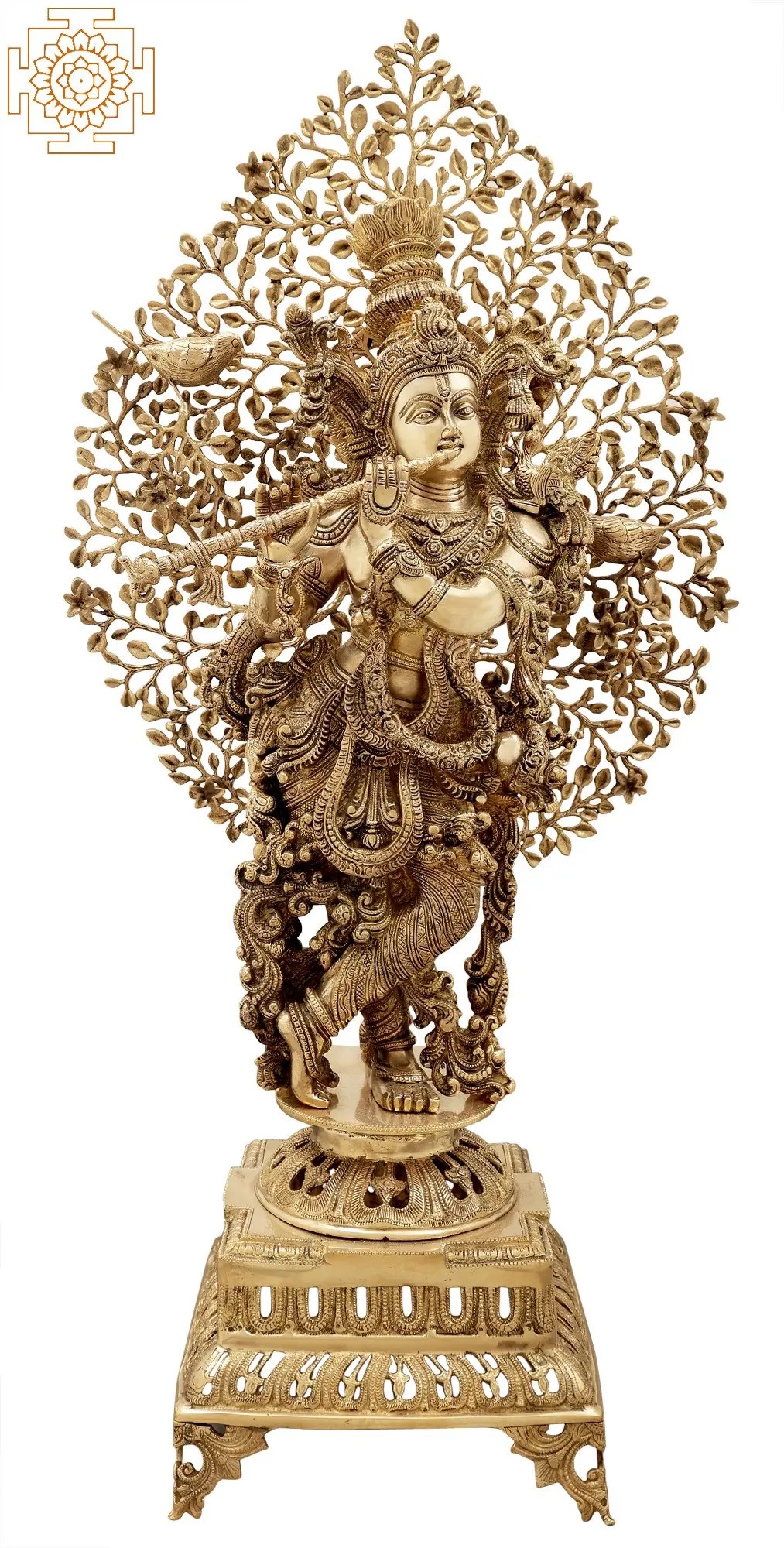
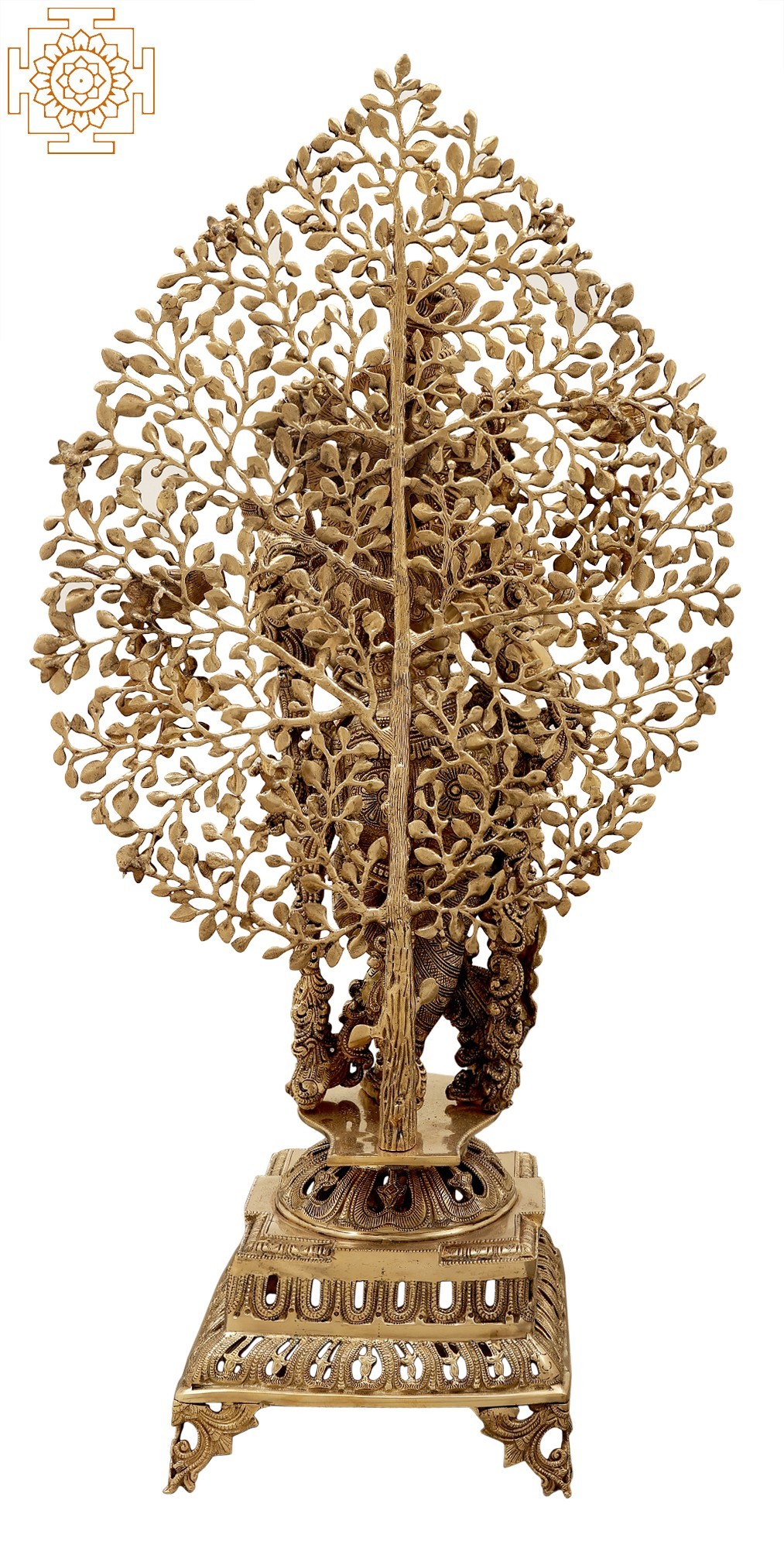
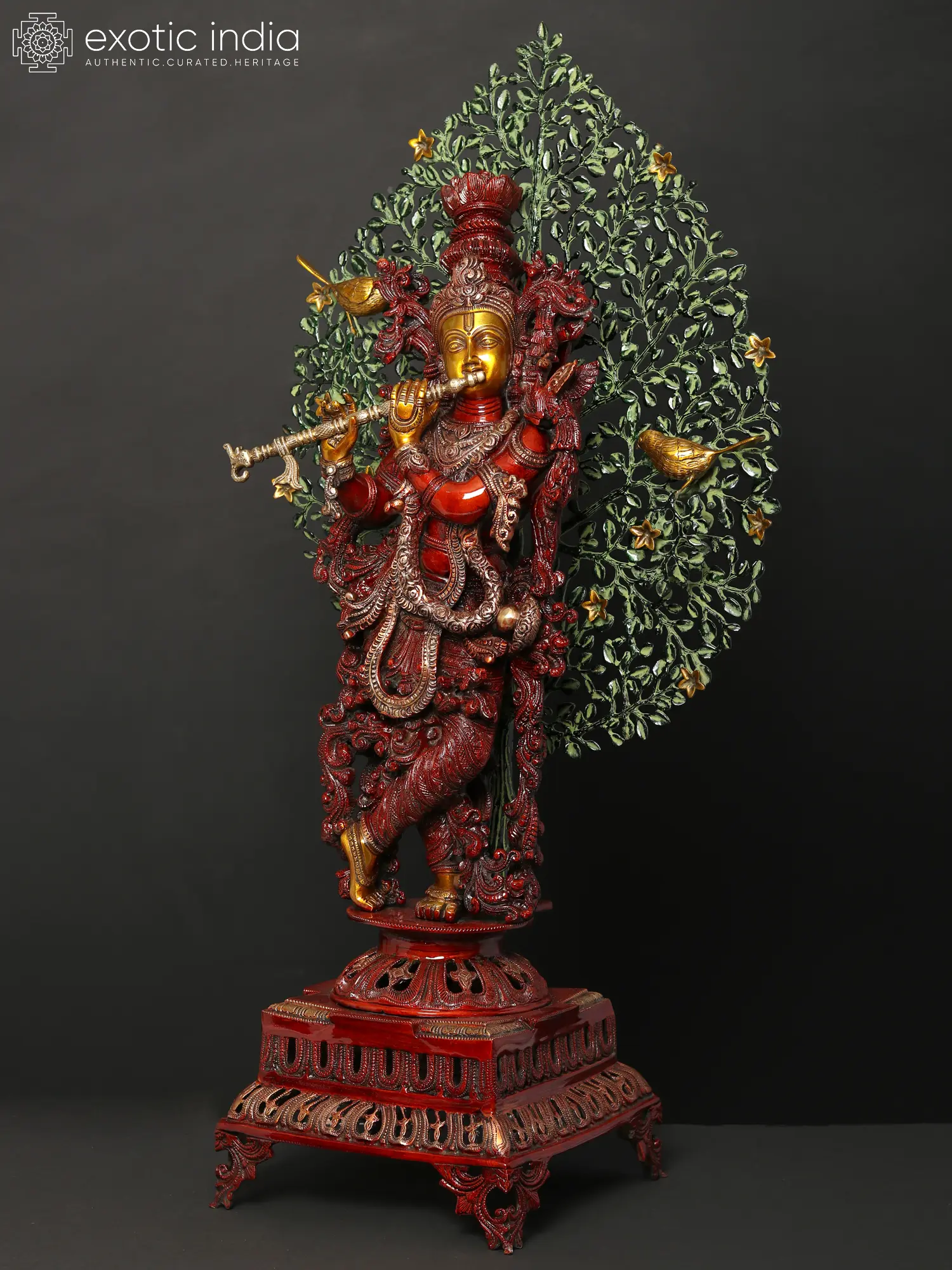
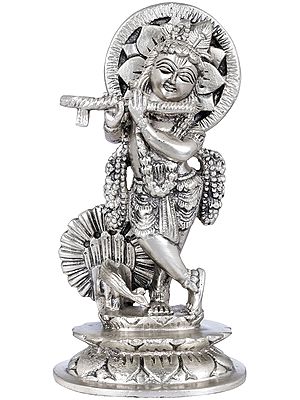
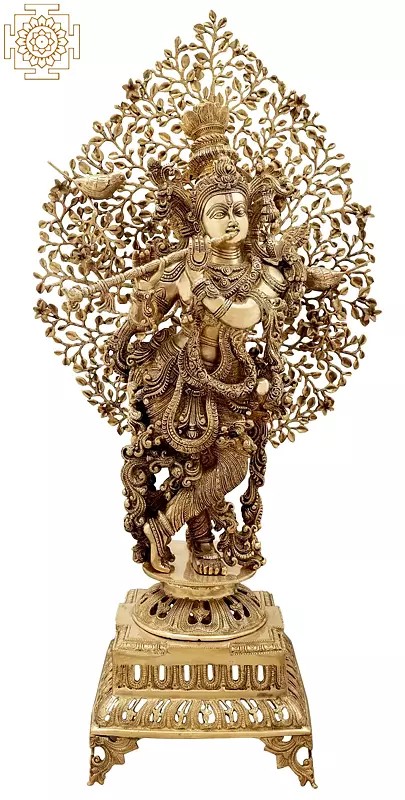
A luxuriant canopy, such as the one you see on this page, is a recurrent motif in the iconography of Krishna. Avatara of Vishnu, the young and handsome Vrindavan cowherd, it is said that the music that emanated from His flute could give and uplift life.
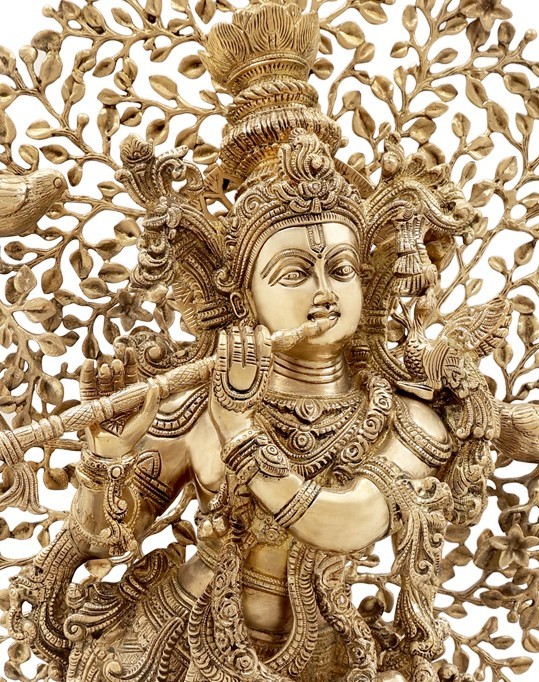
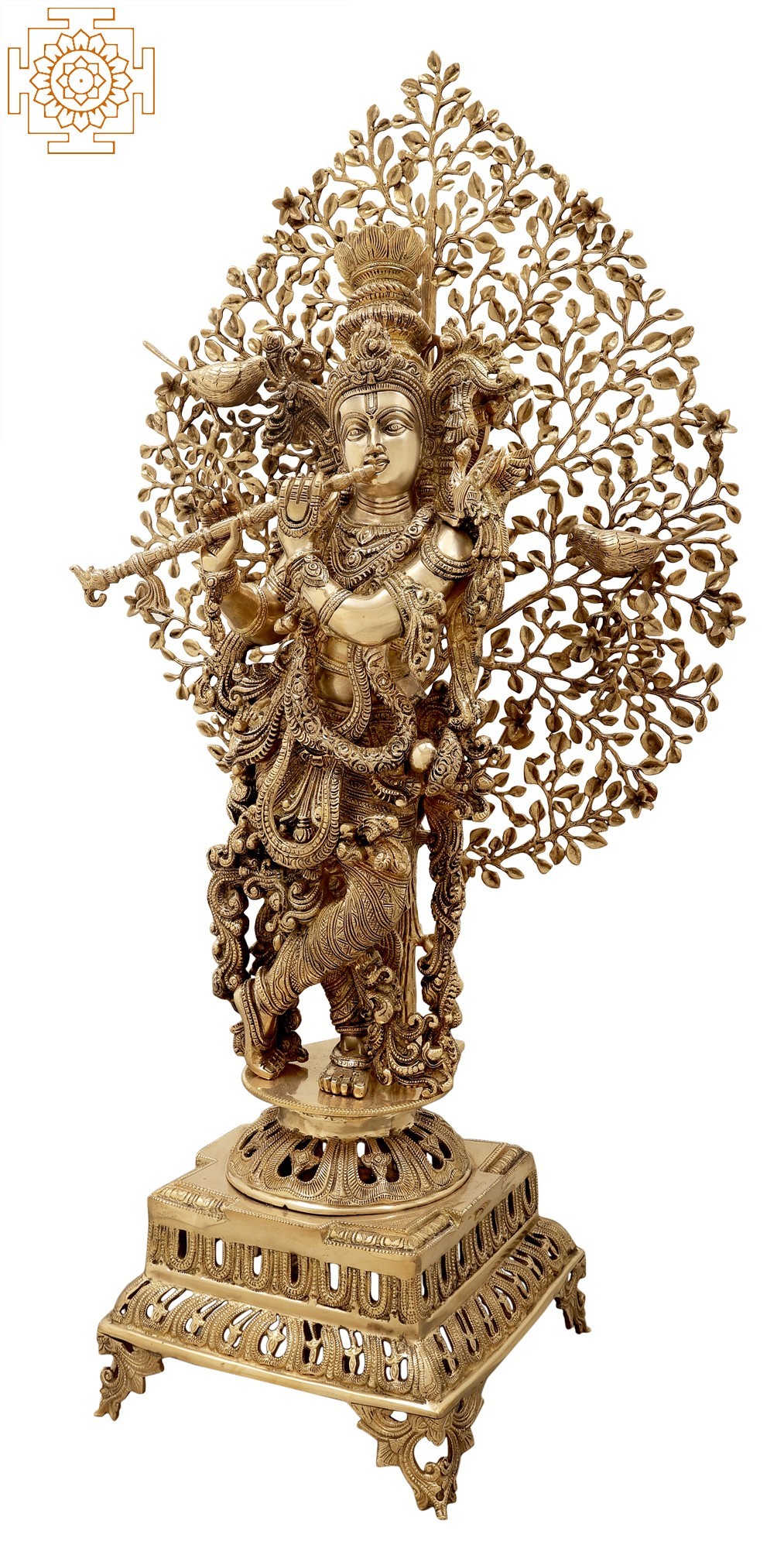
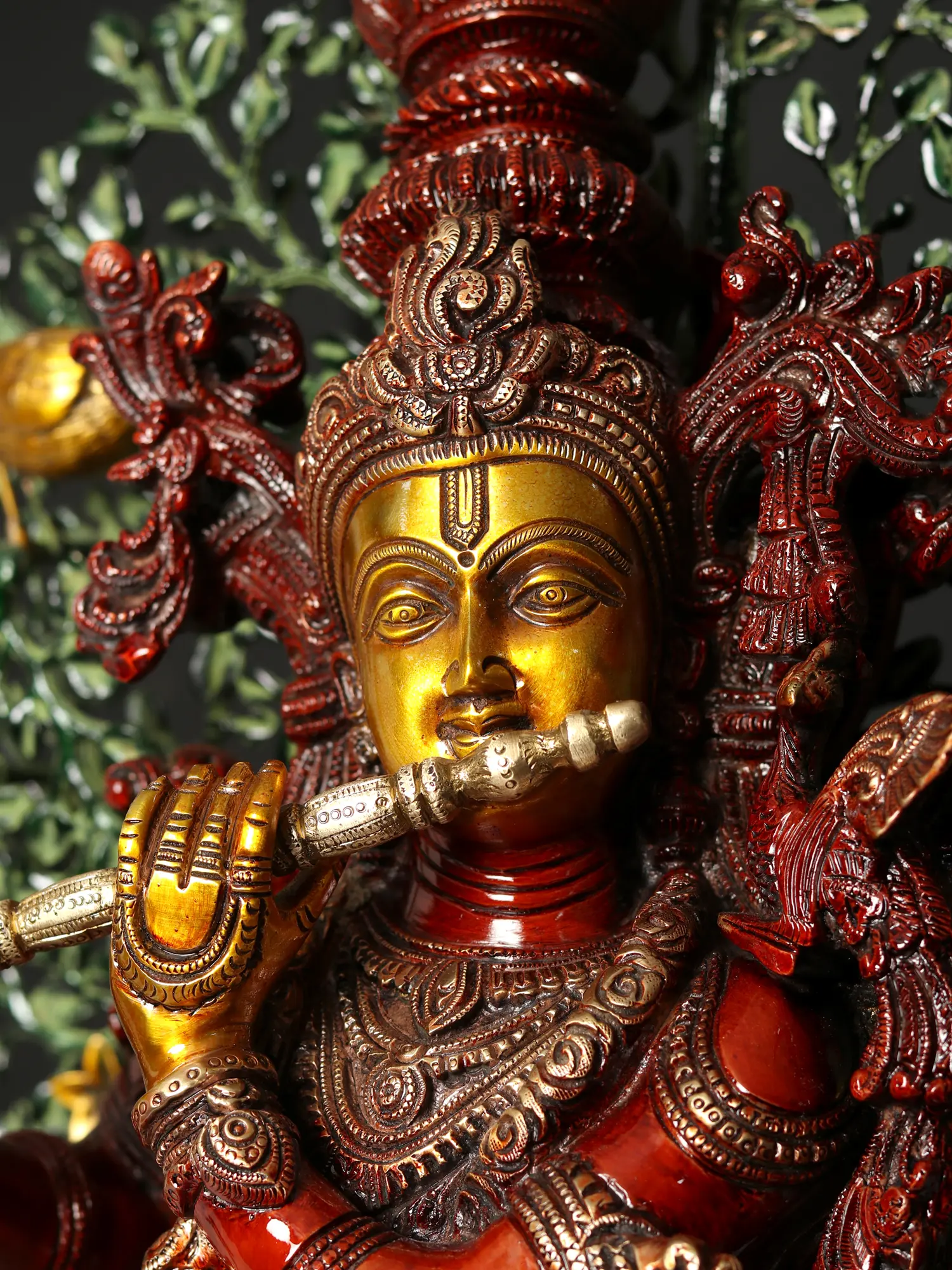
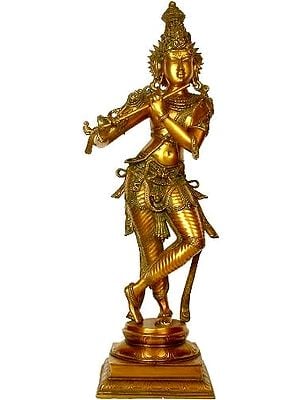
The murti of Him that you see on this page depicts Him breathing life and beauty into a tree by the sheer power of His flute. Standing in the tribhanga (jutting out laterally at three junctures) stance, the Lord sets His lips to the mouth of the flute.
His brow is grave and compassionate. An ethereal gaze emerges from them. He is clad in a dhoti of richly embroidered silk and adornments that bespeak His cosmic glamour.
A multitude of sashes emerges from His curvaceous hips and touches the surface of the lattice-worked pedestal, upon which rest His lotus-shaped feet.
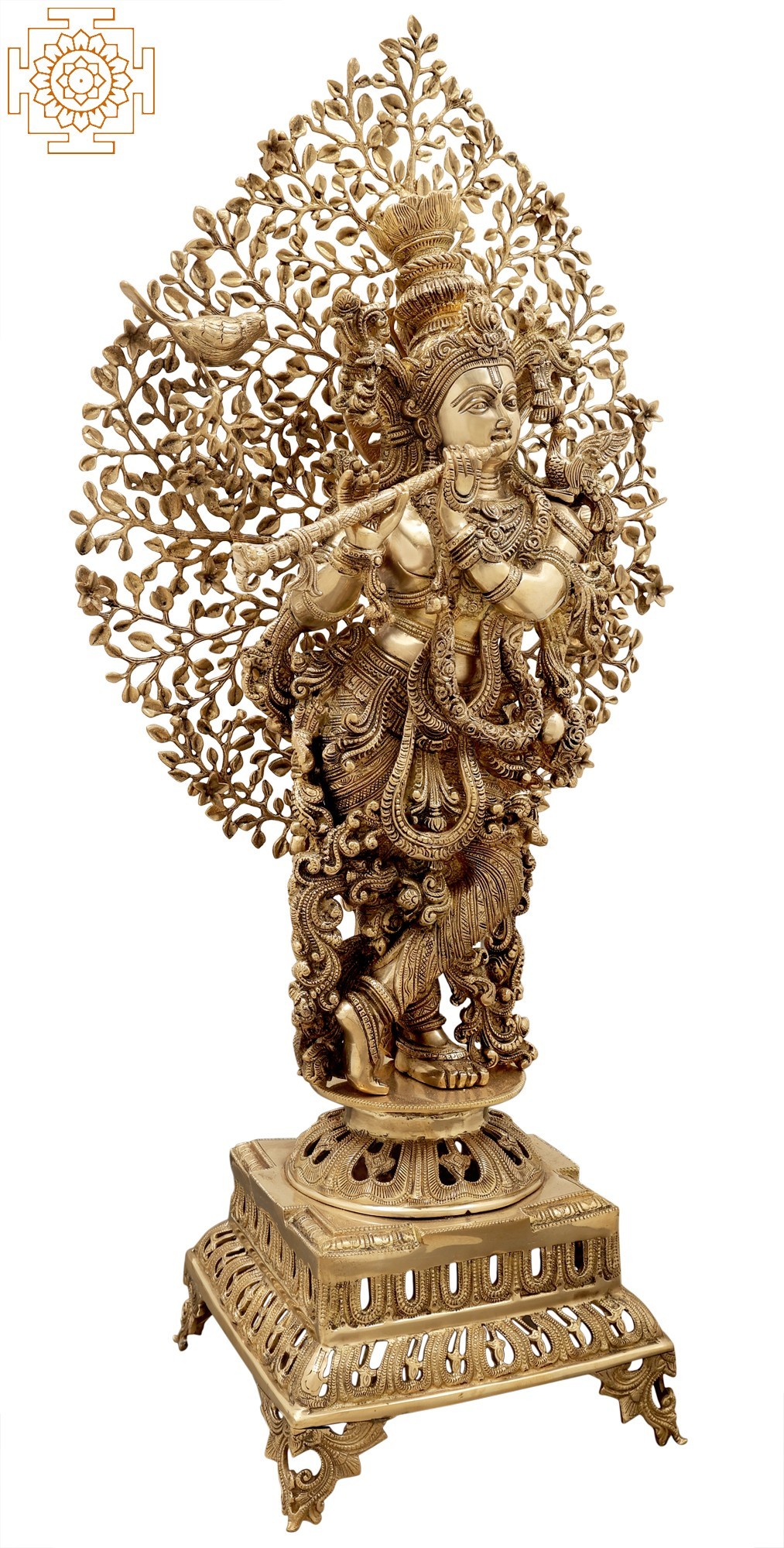
Yet the most striking aspect of this standing Krishna composition is the gorgeous canopy of the tree behind the figure. Its canopy is shaped in perfect symmetry, like one gigantic leaf with complex venation.
Each stalk and leaf and sign of life, bird or flower, has been sculpted with lifelike finesse. Observe the composition from the back to appreciate the flawless handiwork.
The Divine Enchanter: Krishna's Tribhanga Pose
Crafted from the finest brass, this statue captures the essence of Krishna, the mischievous yet divine cowherd, in a moment of transcendent beauty. Standing at an impressive 37 inches in height, this meticulously handcrafted idol is a testament to the artistry and devotion that defines Indian craftsmanship. The Lord is depicted in the Tribhanga pose, a graceful, thrice-bent posture that epitomizes elegance and balance, often seen in classical Indian art. This pose, while physically alluring, also symbolizes the harmonious blend of body, mind, and spirit.
The Murari Aspect: A Symphony of Love and Music
This depiction emphasizes Krishna as Murari, the flute player whose enchanting music captivates all who hear it. The divine melody emanating from Krishna’s flute is said to have the power to soothe the soul, evoke feelings of love and devotion, and even bring the inanimate to life. Legend tells that the birds, the cows, and even the trees of Vrindavan would become spellbound by his music, pausing their activities to listen in rapt attention.A Canopy of Life: Nature's Embrace
The figure is framed by a meticulously detailed canopy, a lush green backdrop dotted with delicate blooms. Two golden birds perch amidst the branches, listening intently to the melody escaping from Krishna's flute. The forest canopy represents the natural world, which Krishna is deeply connected. This portrayal reflects the deep reverence for nature that is woven into Hindu philosophy. The tree represents life, growth, and the interconnectedness of all beings, with Krishna's presence infusing it with divine energy.
A Timeless Treasure: Handcrafted with Devotion
Every detail of this brass idol, from the intricate jewelry adorning Krishna’s form to the delicate leaves of the canopy, has been painstakingly handcrafted. The reddish hue of Krishna's skin tone adds warmth and vitality to the idol, while the gold accents highlight the divine nature of the deity. The base, intricately designed, provides a sturdy foundation while also adding to the overall aesthetic appeal. This is more than just a statue; it is a tangible representation of devotion, artistry, and the enduring power of the Krishna legend. Displaying this piece in your home is an invitation to connect with the divine and to bring a sense of peace, beauty, and spiritual harmony into your life.
The Divine Beauty: Exploring the Meaning and Symbolism Behind
Krishna Statues
Lord Krishna is known by various other names such as Govinda,
Gopala, Giridhari, Madanmohan, Radharaman, Maakhanchor, etc. The
Vedic scriptures mention Him as the Supreme Lord, the cause of
all causes, and the controller of living entities. In the
Bhagavad Gita, Krishna Himself says that there is no Truth
superior to Him and that in all the Vedas, He is to be known.
Different people see Him differently. Some people see Him as
their son, some as their friend, some as their master, and some
as their beloved. He is the source of all pleasure and bliss.
There are so many pastimes described in the Vedic literature
where it is seen that whoever approached and served Lord Krishna
with full faith and devotion, was never bewildered even in the
greatest calamities, and was always protected by Him. Lord
Krishna is therefore the ocean of mercy.
Lord Krishna expands Himself into different forms to fulfill a
particular purpose in the material world. For example, to save
His five-year-old devotee Prahlad from the ghastly attacks of
his demoniac father Hiranyakashipu, the Lord assumed a special
form of half-lion and half-man, Narasimha, and appeared from a
stone pillar and killed the demon with His sharp nails. This
shows an interesting quality of Lord Krishna. He is very
possessive about His devotees. He never tolerates blasphemy
against them. Those who try to harm them in any way, the Lord
punishes them the hardest way.
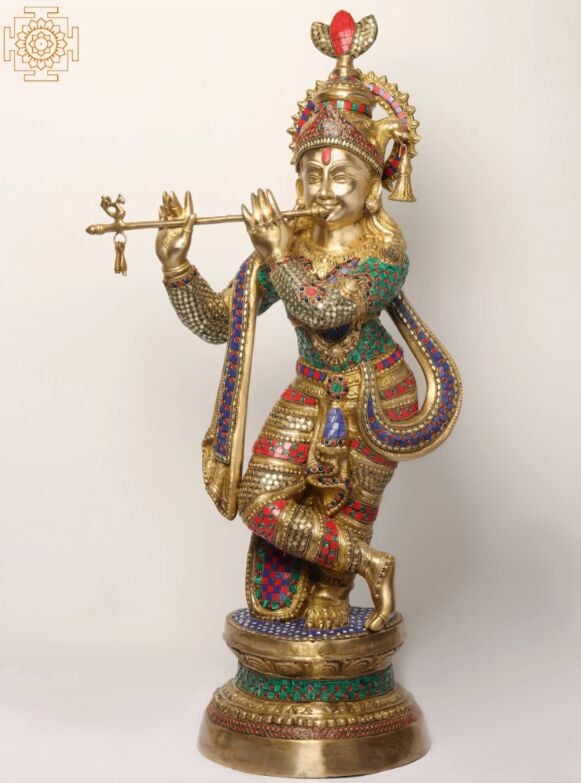
Is Krishna statue good at home?
If you want to please Lord Krishna with your service and
devotion, keeping the deity of the Lord will be good for you.
Wherever there is Krishna, there is opulence, victory,
extraordinary power, and morality. Worshiping the deity is one
of the easiest ways to build a strong relationship with the
Lord. There is no difference between the deity of Krishna and
Krishna Himself. The Lord said in the Bhagavad Gita that we can
worship Him by offering Him a leaf, a flower, water, or a fruit.
If the Lord is pleased, you will feel great satisfaction within
your heart and you will experience transcendental bliss.
Therefore, keeping the deity of Lord Krishna at home and
following the necessary rules and regulations in the deity
worship process is highly auspicious.
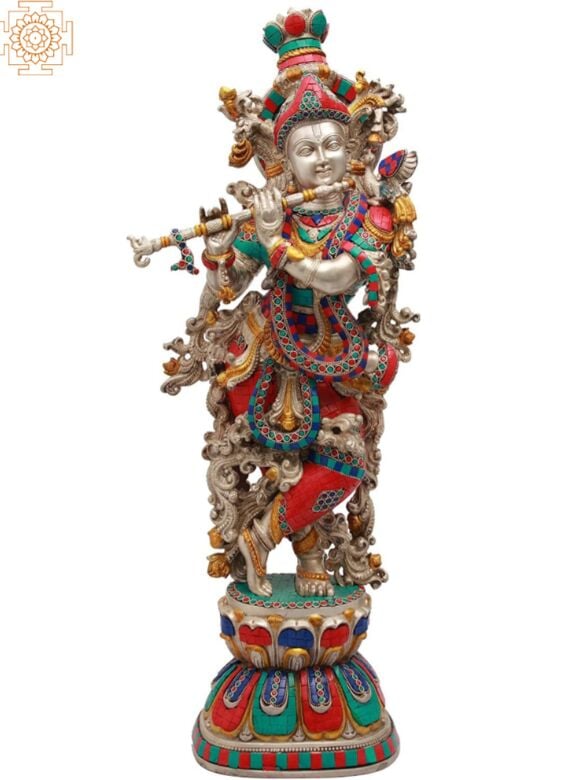
Which Krishna statue can be kept at home?
There is nothing more sublime than serving the lotus feet of
Lord Krishna for it is the very aim of human life. Therefore,
you can worship any form of Lord Krishna as your heart desires.
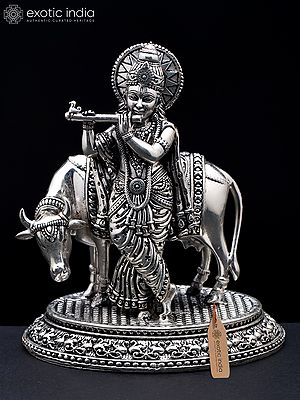
You can either keep the deity of the original two-handed form of
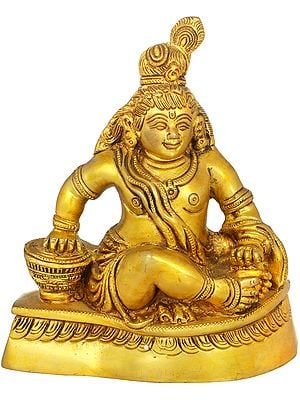
Krishna playing His flute or the childhood form of Krishna
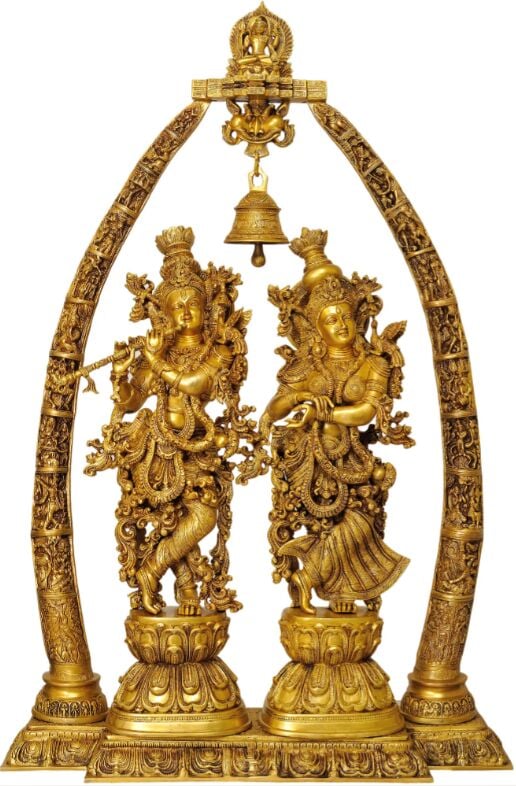
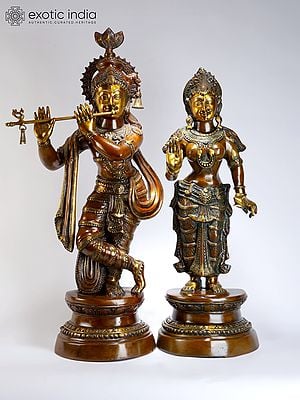
eating butter. You may also keep the deity of Krishna along with
Srimati Radharani, His internal potency. If you want to attract
the causeless mercy of the Lord and engage in His offenseless
service, worshiping the deity of Lord Jagannath, the most
merciful form of Lord Krishna would be the best for you. Lord
Jagannath does not take offenses of the devotees and only looks
at their good qualities and intentions.
How to keep a Brass statue well-maintained?
Brass statues are known and appreciated for their exquisite beauty and luster. The brilliant bright gold appearance of Brass makes it appropriate for casting aesthetic statues and sculptures. Brass is a metal alloy composed mainly of copper and zinc. This chemical composition makes brass a highly durable and corrosion-resistant material. Due to these properties, Brass statues and sculptures can be kept both indoors as well as outdoors. They also last for many decades without losing all their natural shine.
Brass statues can withstand even harsh weather conditions very well due to their corrosion-resistance properties. However, maintaining the luster and natural beauty of brass statues is essential if you want to prolong their life and appearance.
- The best and simplest way to maintain a brass statue is to clean it at least twice a week using a soft cloth or cotton rag. This will prevent dust from accumulating on the surface. Dusting is especially important for outdoor statues since it is prone to dust accumulation much more than indoors.
- To give a natural shine and luster to the statue, you may apply coconut or olive oil using cotton on every portion. You can use a toothbrush to get to the small crevices but do not be too harsh. This will make the brass statue appear fresh and new with a polished look.
In case you have a colored brass statue, you may apply mustard oil using a soft brush or clean cloth on the brass portion while for the colored portion of the statue, you may use coconut oil with a cotton cloth.
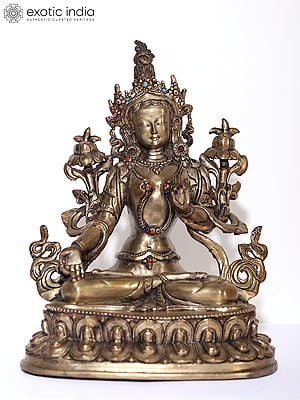
Brass idols of Hindu Gods and Goddesses are especially known for their intricate and detailed work of art. Nepalese sculptures are famous for small brass idols portraying Buddhist deities. These sculptures are beautified with gold gilding and inlay of precious or semi-precious stones. Religious brass statues can be kept at home altars. You can keep a decorative brass statue in your garden or roof to embellish the area and fill it with divinity.











 Upload an Image