A Divine Tapestry of Cosmic Interventions
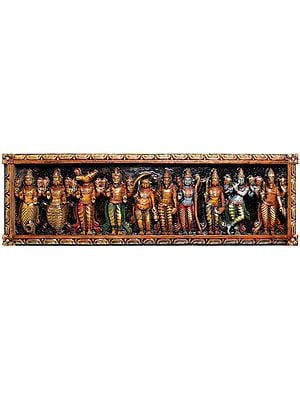
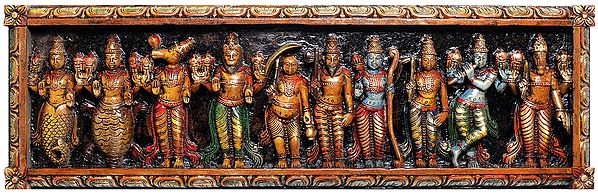
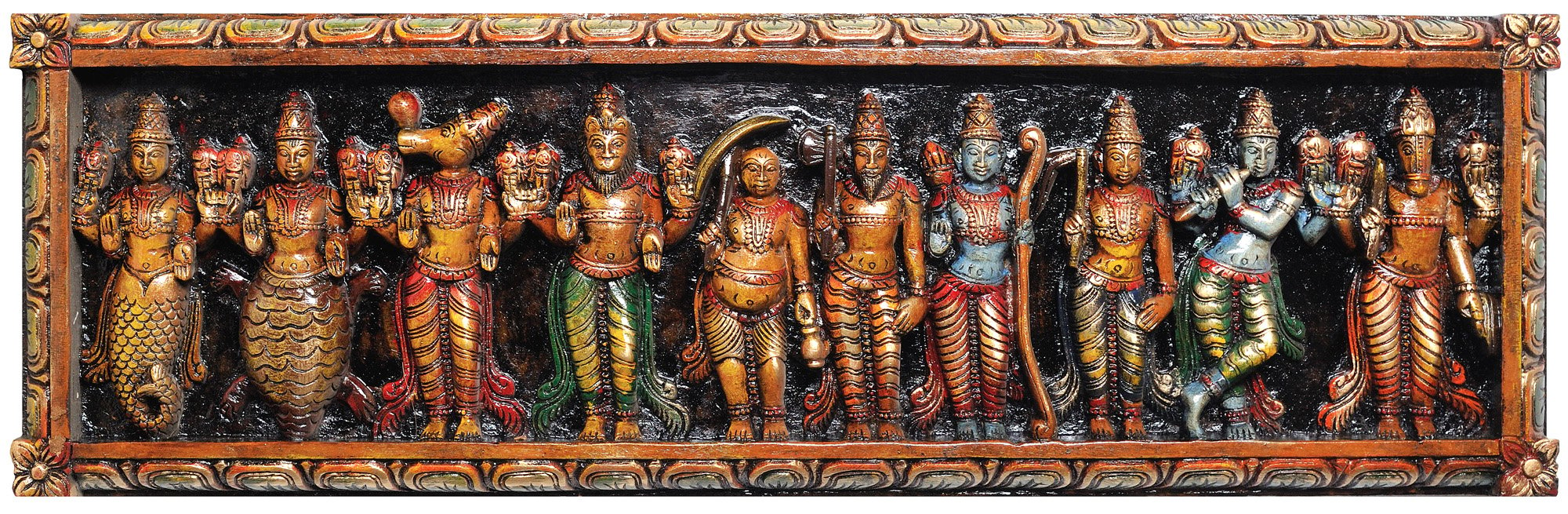
Immerse yourself in the divine narrative of Hindu cosmology with this exquisite South Indian temple wood carving. This meticulously crafted panel depicts the ten avatars, or incarnations, of Lord Vishnu, the preserver and protector of the universe. Each figure is rendered with a distinctive artistic style, showcasing the rich heritage and spiritual depth of traditional wood carving from the southern regions of India. The panel unfolds a visual saga of Vishnu's cosmic interventions, each avatar representing a specific era and a crucial intervention to restore dharma and cosmic balance.
––––––––––The Ten Incarnations: A Cycle of Protection
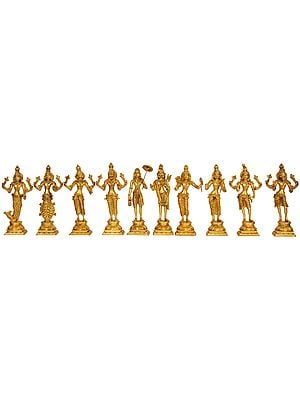
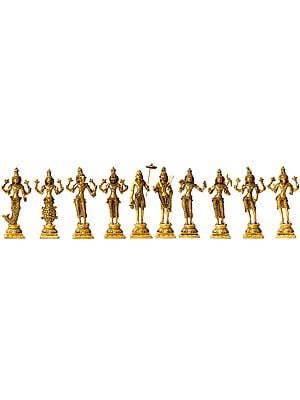
From left to right, the panel presents the Dashavatara in their chronological order, each embodying a unique form and purpose. We first encounter Matsya, the fish, who rescued the Vedas from the cosmic ocean. Next is Kurma, the tortoise, who bore Mount Mandara on his back during the churning of the ocean for the nectar of immortality. Varaha, the boar, emerges to lift the Earth from the depths of the primordial waters. The ferocious Narasimha, the man-lion, is depicted tearing through the divine pillar to vanquish the demon Hiranyakashipu. Vamana, the dwarf, tricking the demon king Bali with a promise of three paces of land, then expanding to cover the universe. Parashurama, the warrior with an axe, is shown as an avatar who rid the Earth of tyrannical kings. Rama, the prince and ideal king, embodies righteousness and duty, his story etched in the epic Ramayana. Balarama, Vishnu's elder brother, often depicted with a plough, represents strength and agriculture. Krishna, the divine cowherd and philosopher, whose teachings in the Bhagavad Gita guide souls. Finally, Kalki, the prophesied future avatar, who will appear on a white horse to usher in a new era of righteousness and destruction of evil.
––––––––––Artistry and Spirituality in Wood
This masterpiece is a testament to the skill of South Indian artisans who have transformed wood into a conduit of divine stories. The intricate details, from the expressive faces of each avatar to the flowing garments and symbolic weaponry, are a hallmark of temple carvings. The rich, warm tones of the wood, enhanced by subtle yet vibrant colors, bring each figure to life, inviting contemplation and devotion. The textured background further accentuates the divine presence of Vishnu and his manifold forms, creating a captivating visual experience. This carving is not merely a decorative piece but a sacred artifact, a tangible link to ancient myths and the enduring power of faith, perfect for adorning a spiritual space or as a unique and meaningful gift.Sculpting Serenity: Unveiling the Art of Crafting Wood Statues
Wood has been a preferred material for sculptures and statues since ancient times. It is easy to work with than most metals and stones and therefore requires less effort to shape it into any desired shape or form. The texture of the wood gives an element of realism to the sculpture. The selection of an appropriate wood type is necessary for carving. Woods that are too resinous or coniferous are not considered good for carving as their fiber is very soft and thus lacks strength. On the other hand, wood such as Mahogany, Oakwood, Walnut wood, Weet cherry wood, etc., are preferred by sculptors because their fiber is harder.
A wood sculptor uses various tools such as a pointed chisel in one hand and a mallet in another to bring the wood to the desired measurement and to make intricate details on it. A carving knife is used to cut and smooth the wood. Other tools such as the gouge, V-tool, and coping saw also serve as important tools in wood carving. Although the wood carving technique is not as complex and tough as stone carving or metal sculpting, nonetheless, a wood carver requires a high level of skills and expertise to create a stunning sculpture.
1. Selecting the right wood
The process of wood carving begins with selecting a chunk of wood that is required according to the type and shape of the statue to be created by the sculptor. Both hardwoods and softwoods are used for making artistic pieces, however, hardwoods are preferred more than softer woods because of their durability and longevity. But if heavy detailing is to be done on the statue, wood with fine grain would be needed as it would be difficult to work with hardwood.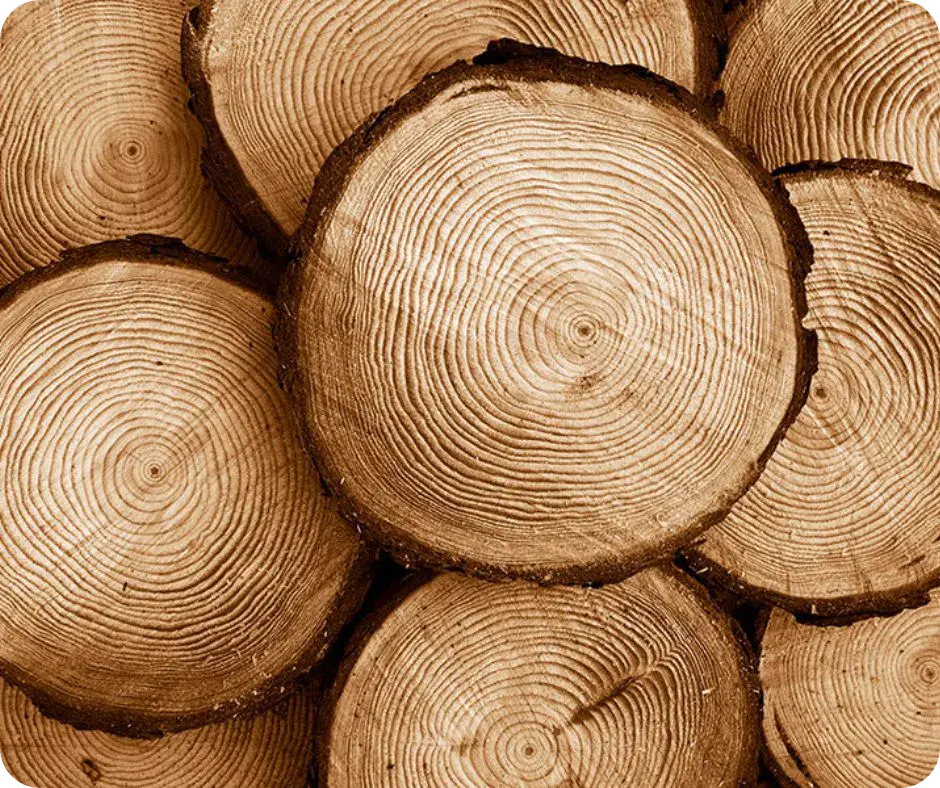
2. Shaping the wood
Once the wood type is selected, the wood carver begins the general shaping process using gouges of various sizes. A gouge is a tool having a curved cutting edge which is useful in removing large unwanted portions of wood easily without splitting the wood. The sculptor always carves the wood across the grain of the wood and not against it.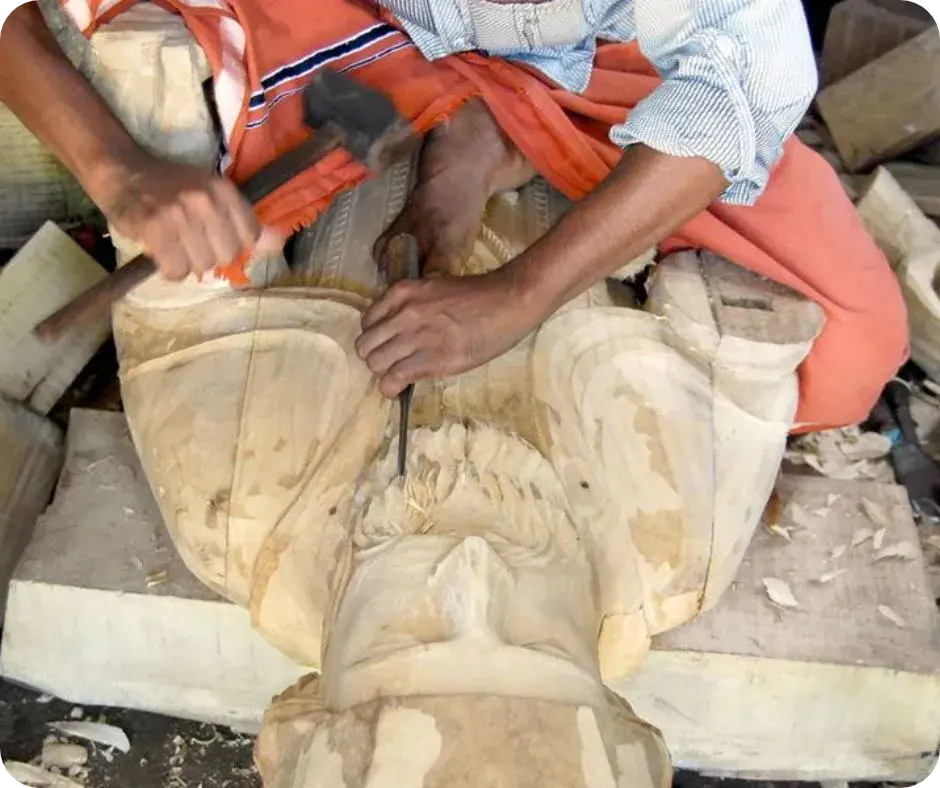
3. Adding detailing
When a refined shape of the statue is obtained, it is time for making details on the statue using different tools. This is achieved by using tools such as a veiner to make and a V-tool to create decorative and sharp cuts.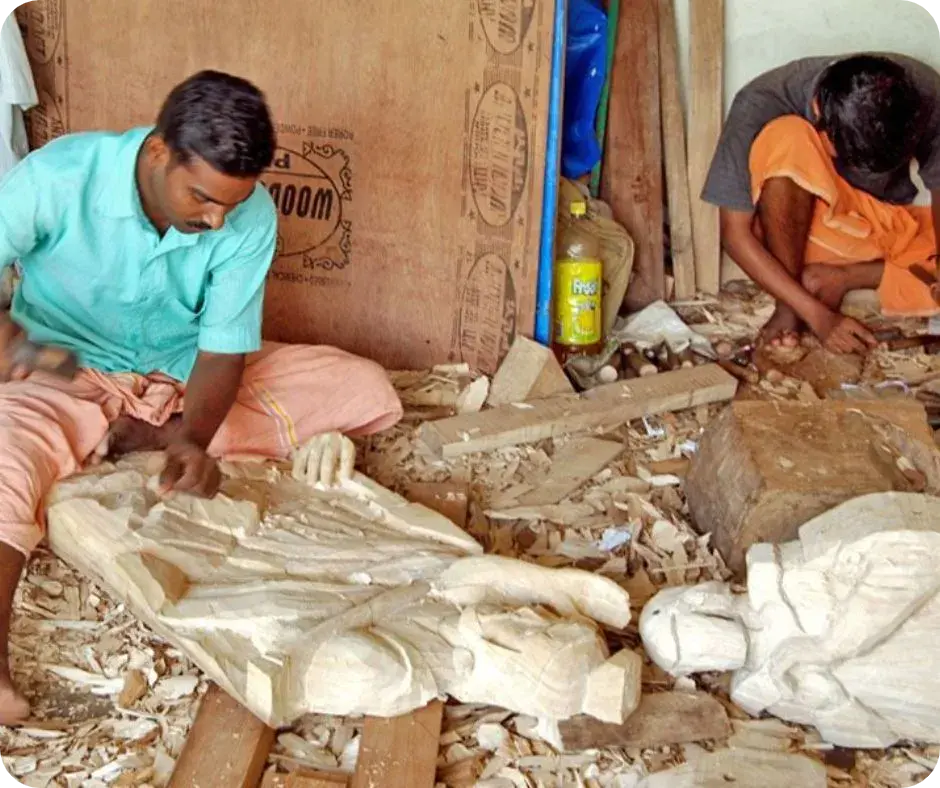
4. Surface finishing
Once finer details have been added, the sculptor is ready to smoothen the surface and give it a perfect finish. Tools such as rasps and rifflers are used to get a smooth surface. The finer polishing is obtained by rubbing the surface with sandpaper. If a textured surface is required, this step is skipped. Finally, to protect the statue from excessive dirt accumulation, the sculptor applies natural oils such as walnut or linseed oil all over it. This also brings a natural sheen to the statue.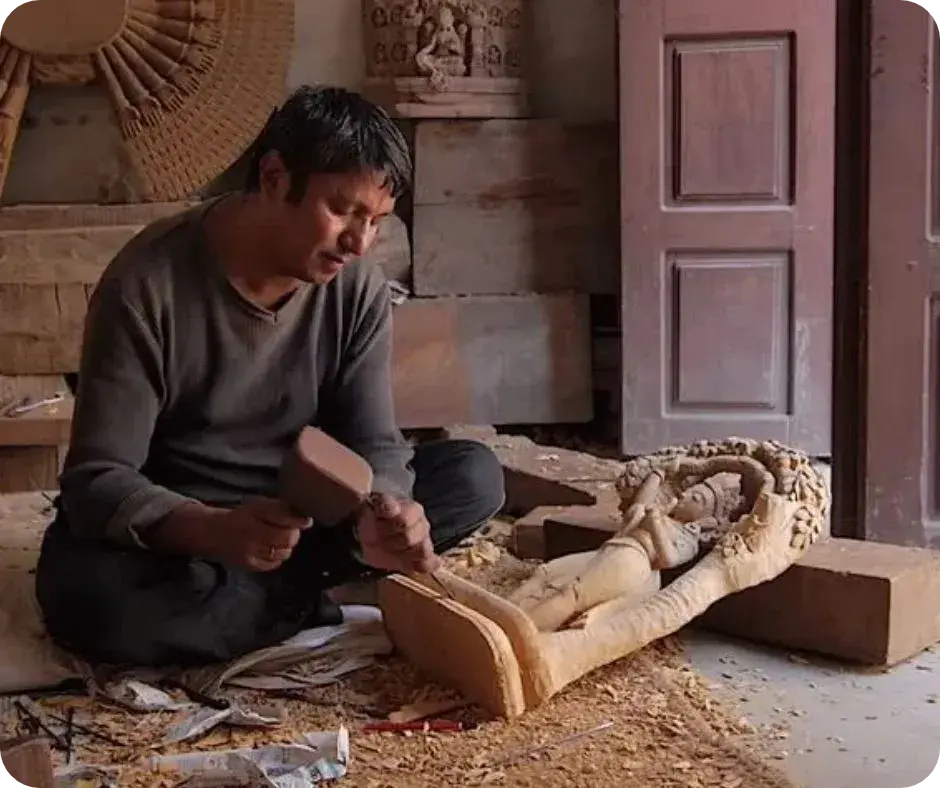
How to care for Wood Statues?
Wood is extensively used in sculpting especially in countries like China, Germany, and Japan. One feature that makes the wood extremely suitable for making statues and sculptures is that it is light and can take very fine detail. It is easier for artists to work with wood than with other materials such as metal or stone. Both hardwoods, as well as softwood, are used for making sculptures. Wood is mainly used for indoor sculptures because it is not as durable as stone. Changes in weather cause wooden sculptures to split or be attacked by insects or fungus. The principal woods for making sculptures and statues are cedar, pine, walnut, oak, and mahogany. The most common technique that sculptors use to make sculptures out of wood is carving with a chisel and a mallet. Since wooden statues are prone to damage, fire, and rot, they require proper care and maintenance.
- Wood tends to expand and contract even after it has been processed, thus it is always recommended to keep the wooden sculptures in rooms with little humidity. Excess moisture can harm your masterpiece.
- Periodical dusting of the finished piece is necessary to maintain its beauty as dust accumulation on the surface takes away the shine of the sculpture. You can use a clean and soft cloth or a hairbrush for this purpose.
- You must avoid applying any chemical-based solutions that may damage the wood from the inside. Instead, you can apply lemon oil or coconut oil using a cotton rag to the sculpture to bring out its natural shine. Lemon oil also helps to clean any stains on the sculpture.
- Applying a layer of beeswax protects the wood from sun damage and hides even the smallest imperfections on the wood.
It is extremely important to preserve and protect wooden sculptures with proper care. A little carelessness and negligence can lead to their decay, resulting in losing all their beauty and strength. Therefore, a regular clean-up of the sculptures is a must to prolong their age and to maintain their shine and luster.