Seemingly simplistic, batik is an ancient form of painting that involves a complex process. The first level of complexity starts with the fabric canvas, which is very difficult to work with. Secondly, the pigmented wax medium is a stubborn one. Finally, mastering the resist-dyeing method takes years of highly focussed skill. This form of Indian folk art is practised in the not-so-urban centres where families have the leisure, and intrinsic bent of mind, to practise their art across generations.
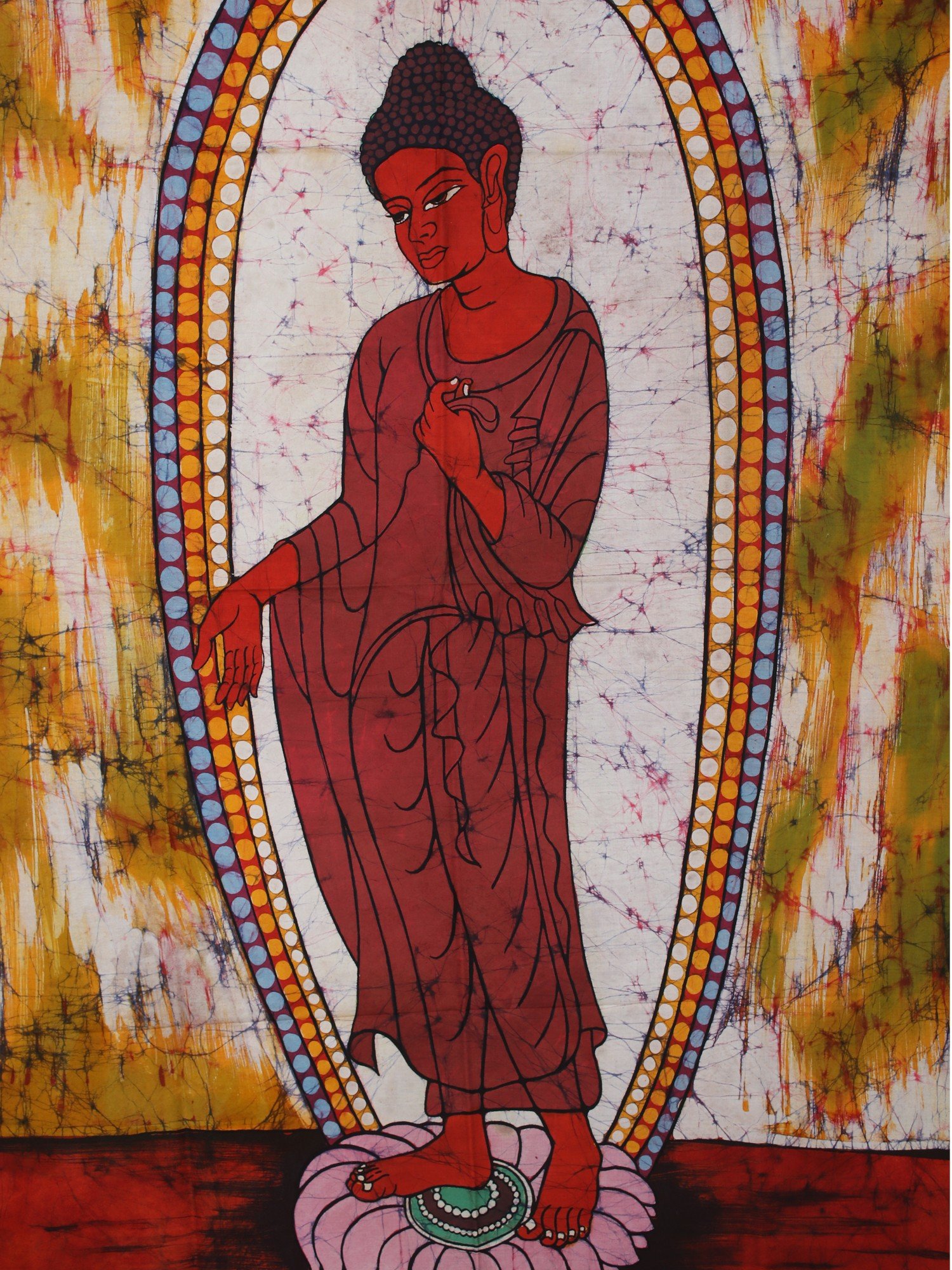
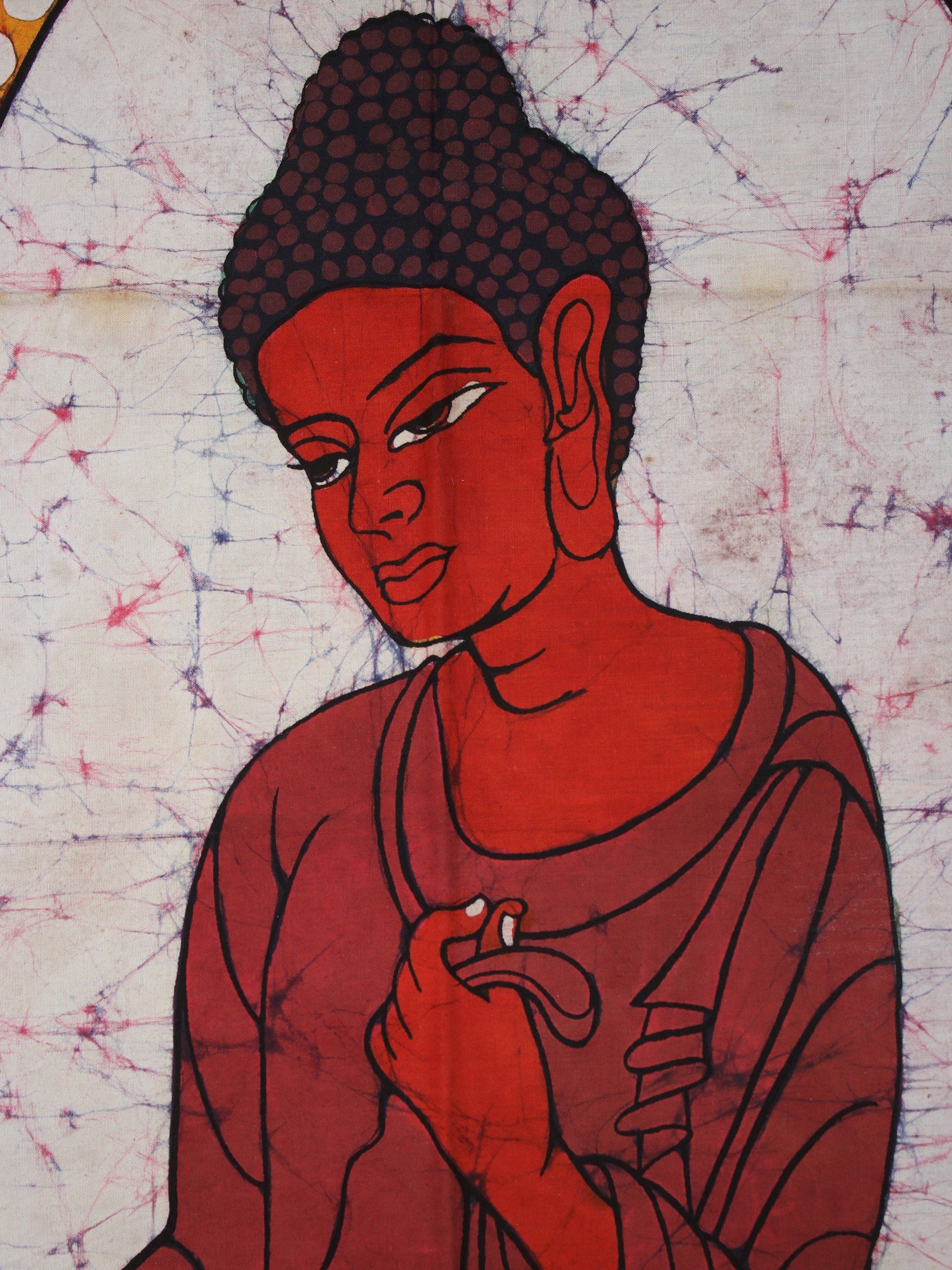
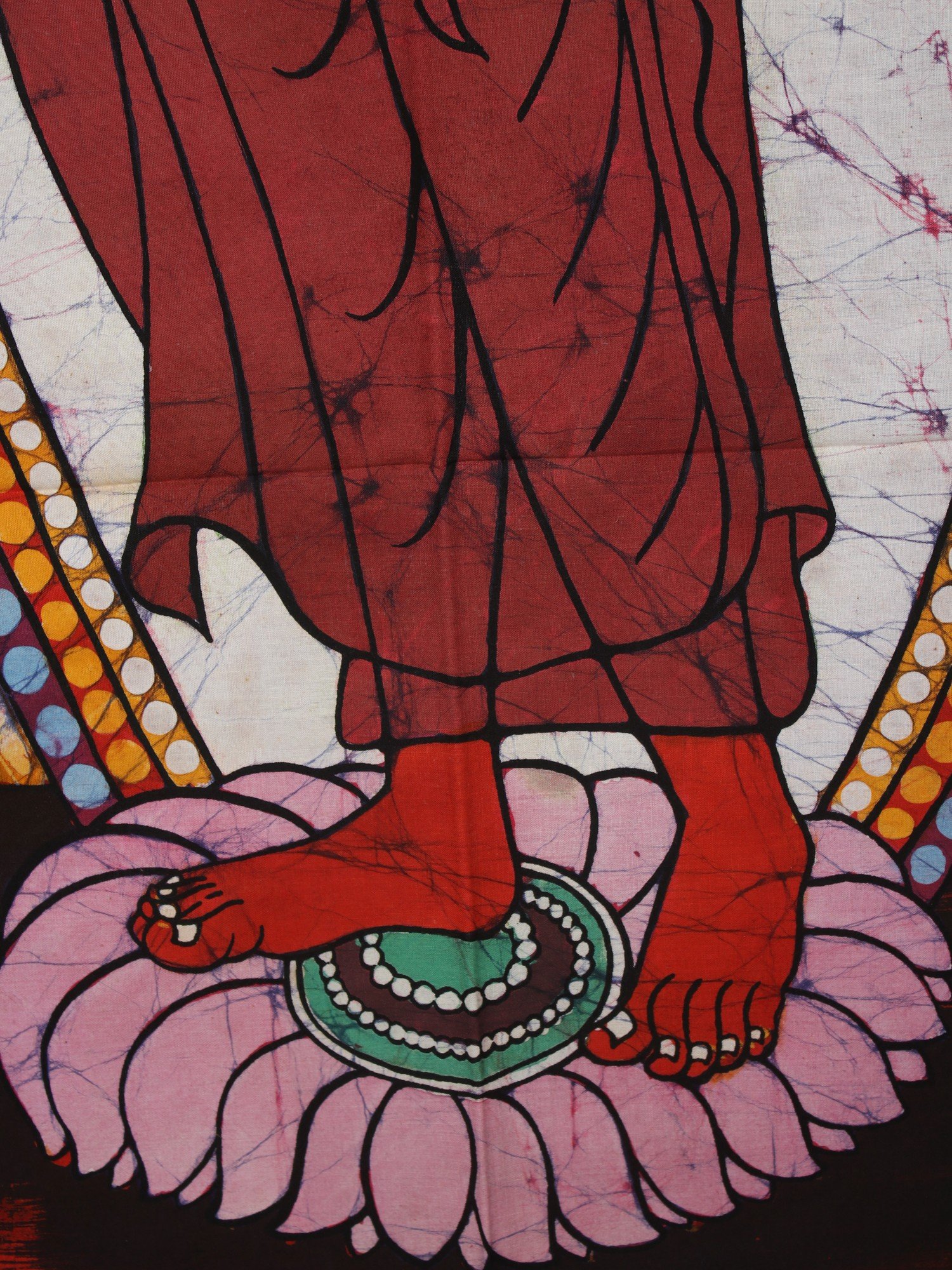
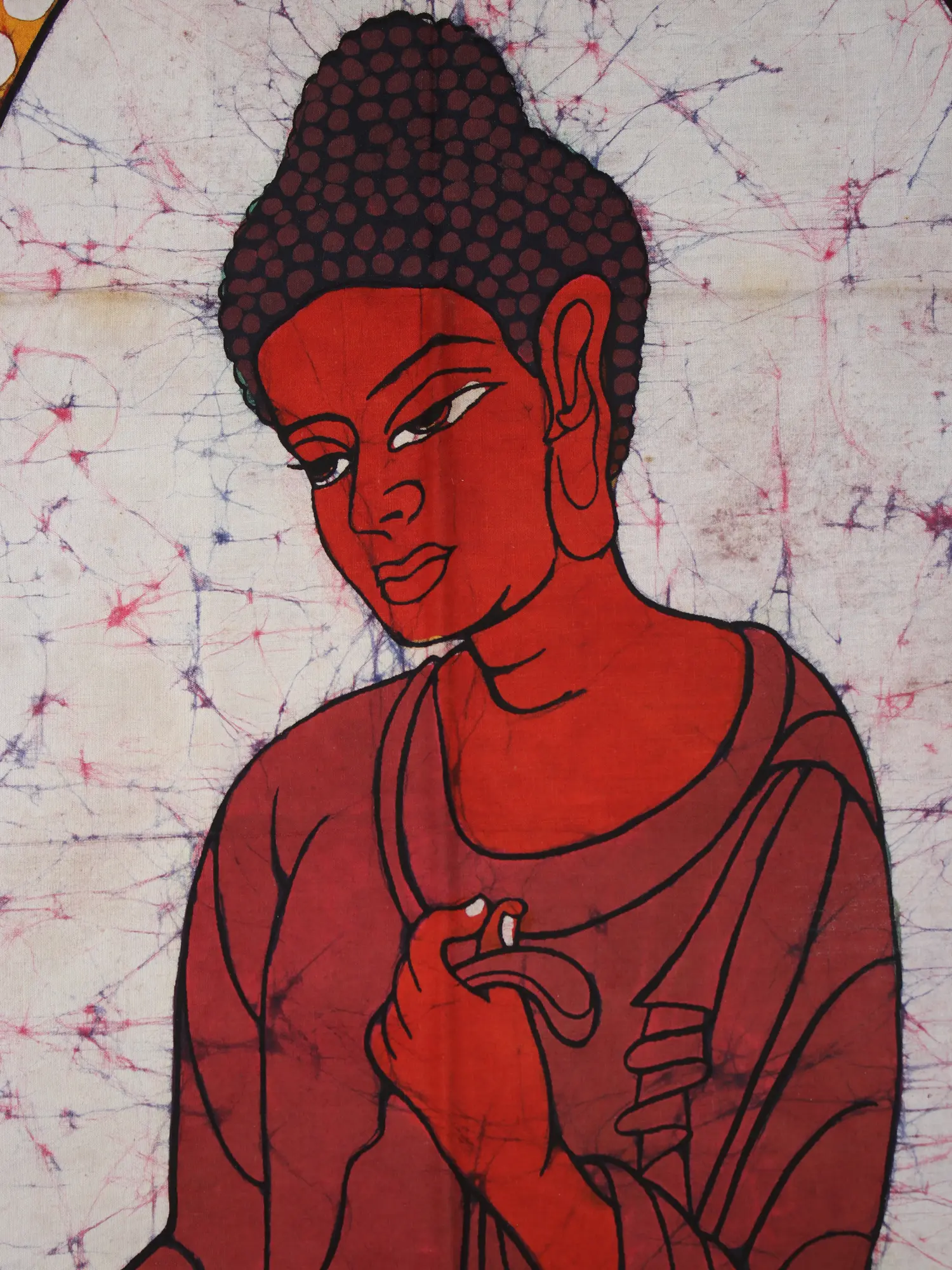
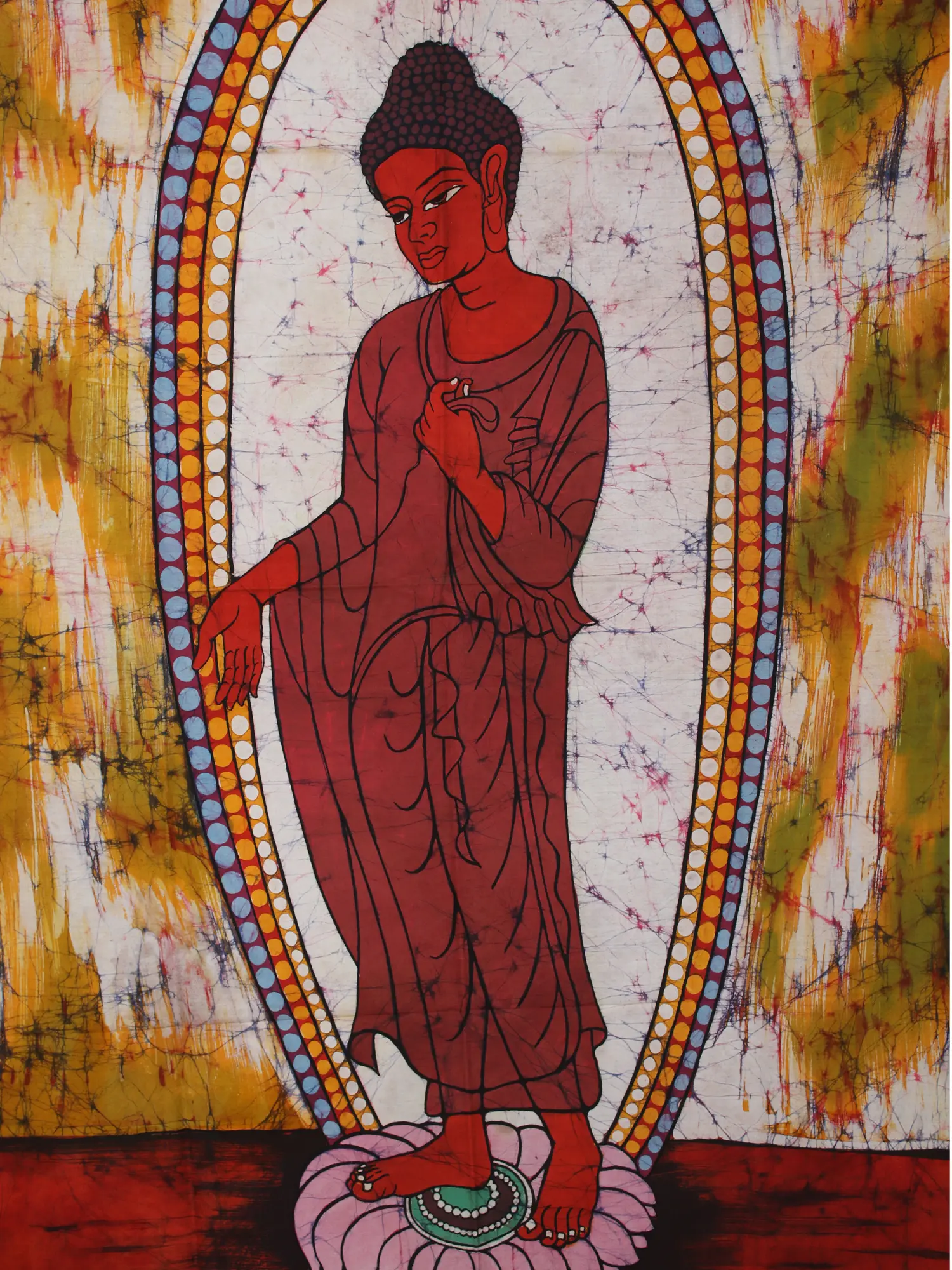
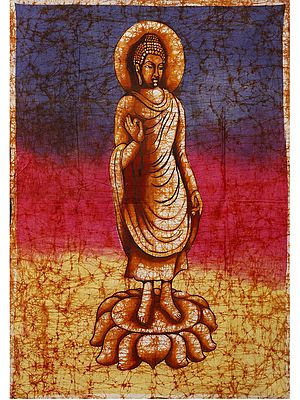
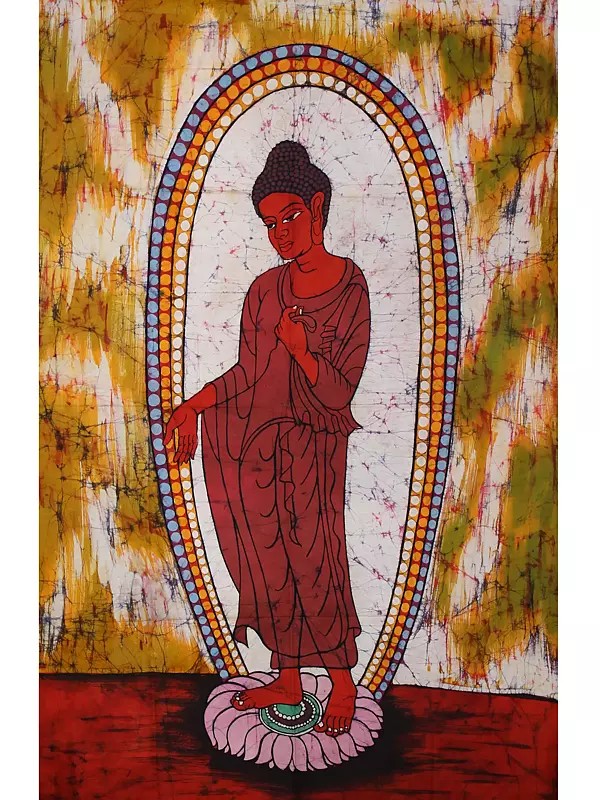
The one you see on this page keeps to the traditional spiritual themes of batik art. It depicts the Buddha standing, which in itself is unconventional. His feet are on the gigantic pistil of a pink lotus, and behind Him is a white minimalistic aureole. He is clad in red translucent robes, beneath which one could make out the skilfully done outline of His divine form. His face is marked by a composure of seedless calm, as could be gleaned from the half-shut eyes and the mouth that could only be described as shithil.
What makes this such a captivating work of art is the background. Powerful splotches of colour fill the canvas around the aureole. The foreground is a rich red colour that complements the green and the fire of the background. There seems to be a world of rajas in these colours, which contrasts sharply with the sattva of the Buddha’s presence.
Introducing Serenity: A Batik Depiction of the Buddha
This exquisite batik painting captures the essence of tranquility and enlightenment, presenting a standing Buddha in a moment of profound peace. The artist's skill is evident in the rich, deep colors and the intricate details of the garment and serene facial expression. The warm hues of the background beautifully complement the Buddha's burgundy robes, creating a visual harmony that is both captivating and meditative. This isn't just a painting; it's an invitation to mindfulness and a celebration of artistic mastery. The Buddha stands elegantly, embodying the very essence of peace, his posture radiating a calmness that speaks volumes. He seems to be in deep contemplation, ready to share wisdom and tranquility.The Art of Batik: A Timeless Tradition
The batik technique, a centuries-old Indonesian art form, involves applying wax resist to fabric before dyeing it. This process creates unique patterns and textures, lending each piece its own distinctive character. In this painting, the batik process adds a layer of depth and complexity to the already stunning image of the Buddha. The subtle variations in color and tone tell a story of patience, precision, and the rich cultural heritage behind this ancient art. The use of batik is particularly appropriate for depicting Buddha, as the process of creating batik itself is a meditative practice, mirroring the contemplative nature of Buddhist philosophy.The Lotus Throne: Symbolism and Significance
The Buddha stands gracefully on a lotus flower, a potent symbol in many Eastern cultures, particularly in Buddhism and Hinduism. The lotus, which emerges from murky water to bloom beautifully, represents purity, enlightenment, and spiritual awakening. Its delicate beauty mirrors the Buddha's serene presence, a reminder that even amidst life's challenges, inner peace and spiritual growth are possible. In many Buddhist traditions, the lotus flower is associated with the goddess Lakshmi, the embodiment of prosperity and beauty. The placement of the Buddha on a lotus thus speaks of his association with spiritual abundance and harmony.















 Upload an Image