A Glimpse into Rural Life: The Madhubani Painting
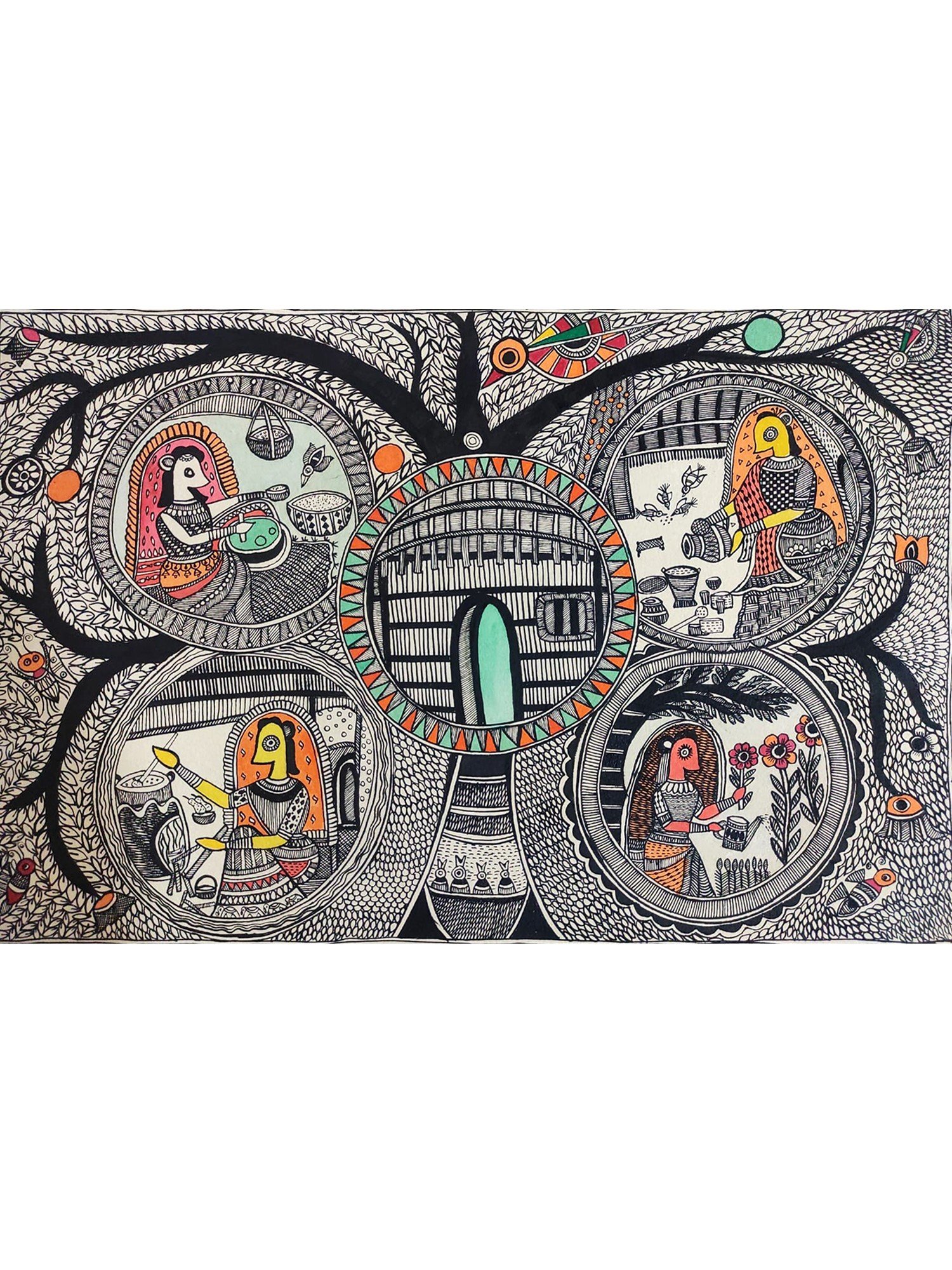
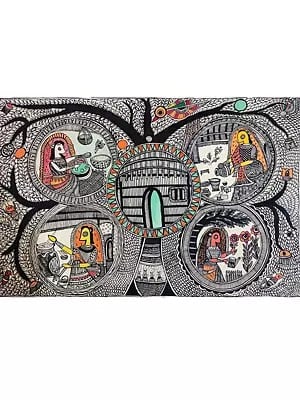
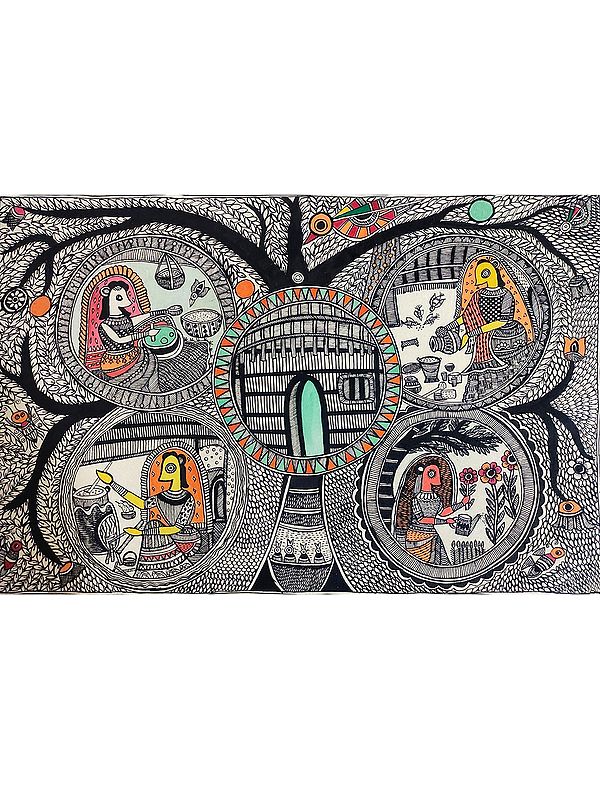
This captivating Madhubani painting, "Routine Work of Village Woman," by the talented Neelam Singh, offers a vibrant window into the daily life of women in rural India. The artwork, rendered in acrylics on a handmade sheet, measures 15 inches in height and 22 inches in width, making it a stunning addition to any home or collection. The intricate details and bold colors of this folk art form transport viewers to a world rich in tradition and cultural significance. Madhubani art, originating in the Mithila region of Bihar, India, is deeply rooted in mythology and religious narratives. Often adorning the walls of homes and temples, these paintings tell stories of gods, goddesses, and the everyday lives of the people, seamlessly blending the sacred and the secular. The use of natural pigments and the distinctive style, characterized by its bright colours and detailed line work makes each piece unique. This piece showcases the artist's skill in capturing the essence of this ancient art form.The Artist's Vision: Depicting Daily Rituals
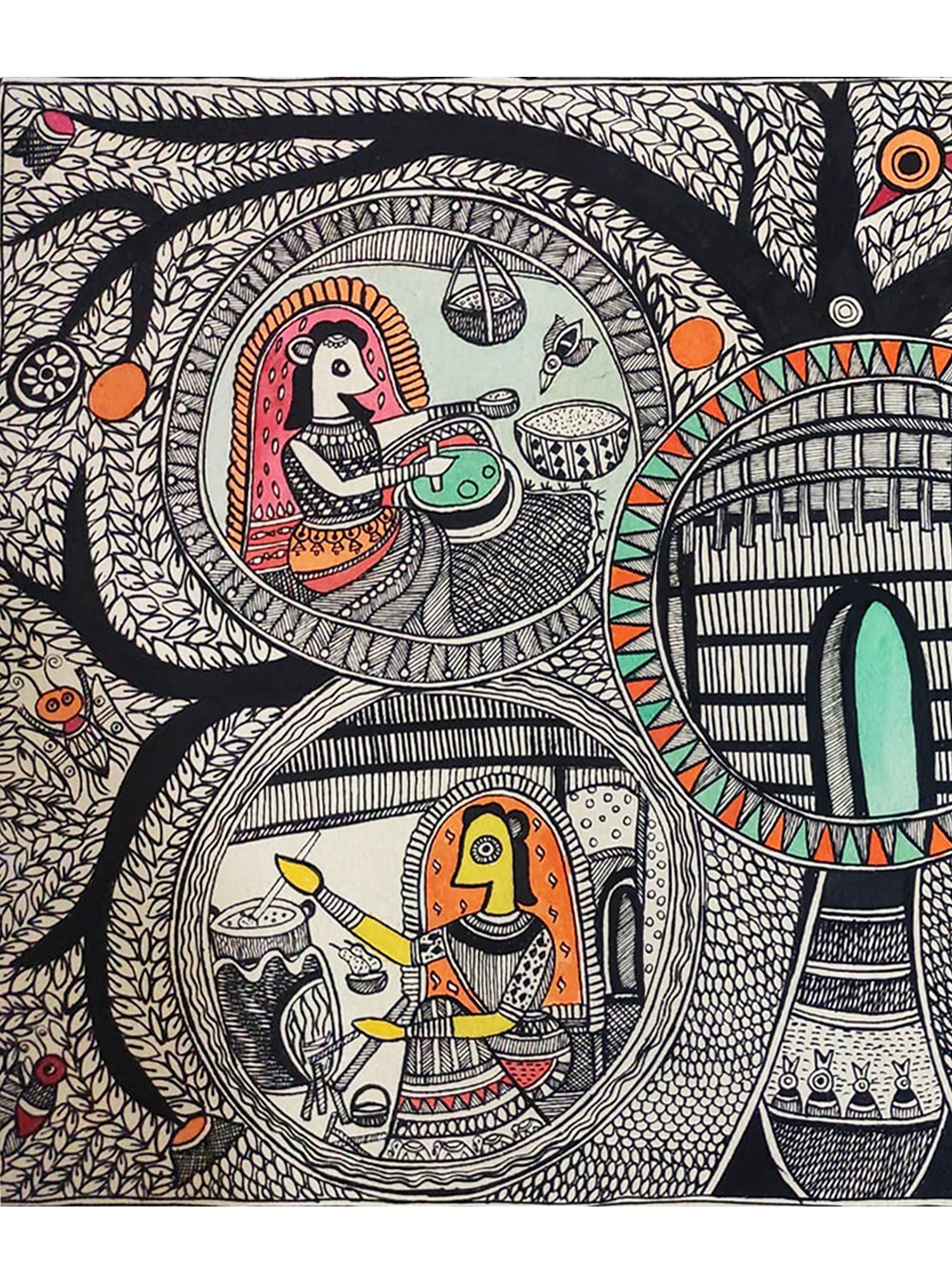
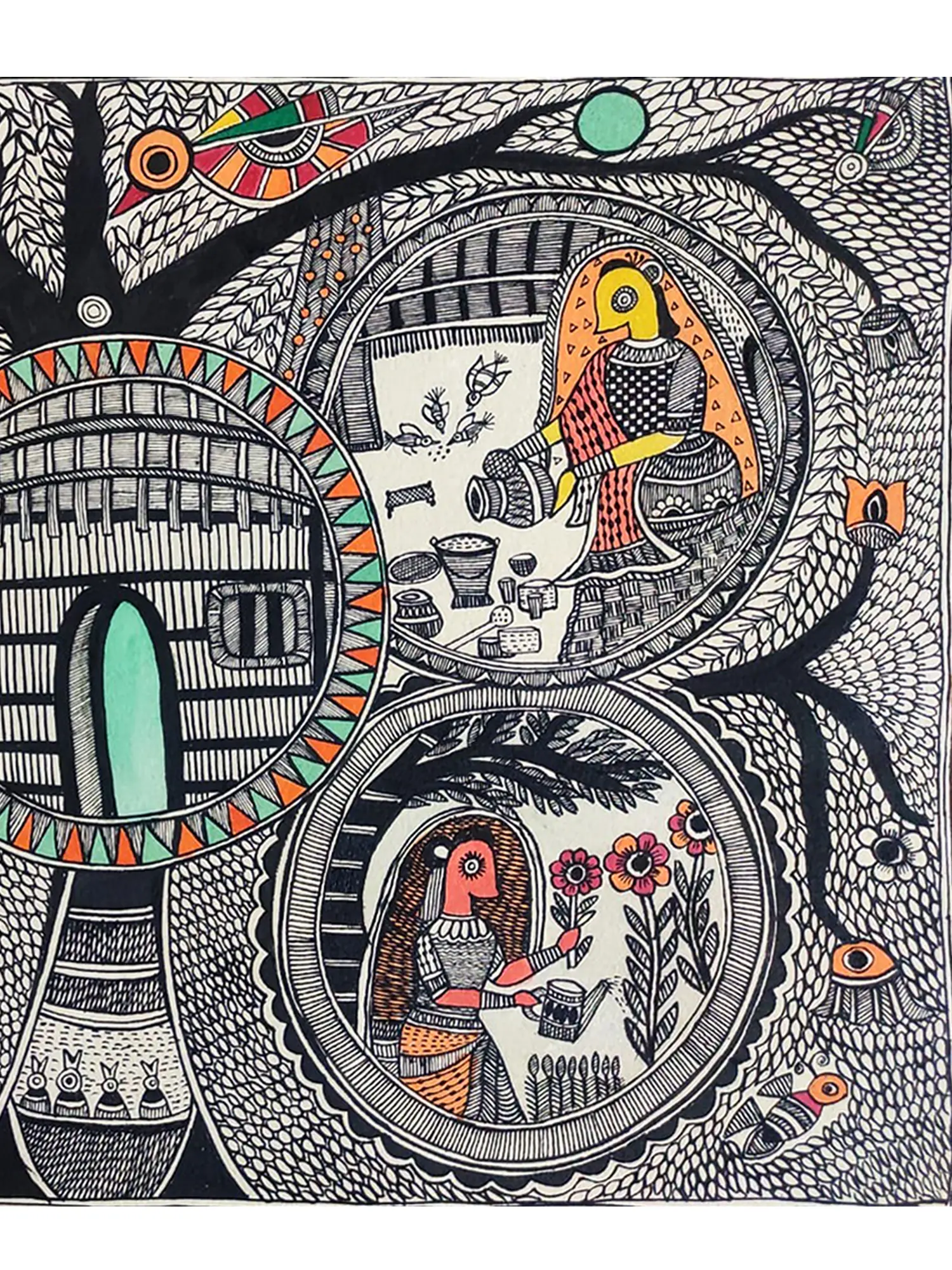
The central motif of the painting is a sprawling tree, its branches reaching out to encompass four distinct scenes representing the daily tasks of a village woman. This portrayal of the tree of life reflects the interconnectedness of village life, and the cyclical nature of daily activities. Each circular segment showcases a different aspect of her routine, reflecting her diligence and importance to the community. This work is more than just a visual representation; it's a narrative, a story told through colour and line. The rhythmic repetition of patterns and motifs is symbolic, suggesting the ongoing and often repetitive nature of rural work, yet within the cyclical movements we see a celebration of life. The artist utilizes bold, contrasting colours to draw attention to the various activities, while maintaining a consistent style throughout. The inclusion of birds and flowers adds to the organic flow of the narrative, reinforcing the relationship between the women and their environment.Mythological and Cultural Undertones
The Madhubani painting tradition is intrinsically linked to the ancient myths and legends of Mithila. Often featuring scenes from the Ramayana and Mahabharata, these paintings are considered sacred and imbued with spiritual significance. Though this particular painting doesn't directly depict mythological characters, the symbolic language employed aligns with the broader Madhubani tradition. The tree, for example, can be seen as a representation of the cosmic tree of life, connecting the earth to the heavens. The women, engaged in their daily chores, represent the strength, resilience, and spiritual connection to the land that are central themes within Mithila culture. The motifs, including birds and flowers, also hold symbolic meaning within the larger context of Mithila folklore. The colours used, while vibrant, also have cultural significance, often associated with particular deities or events. This rich tapestry of symbolism and cultural significance elevates this painting beyond mere decoration.












 Upload an Image