Crafting the Canvas: Mysore Inlay
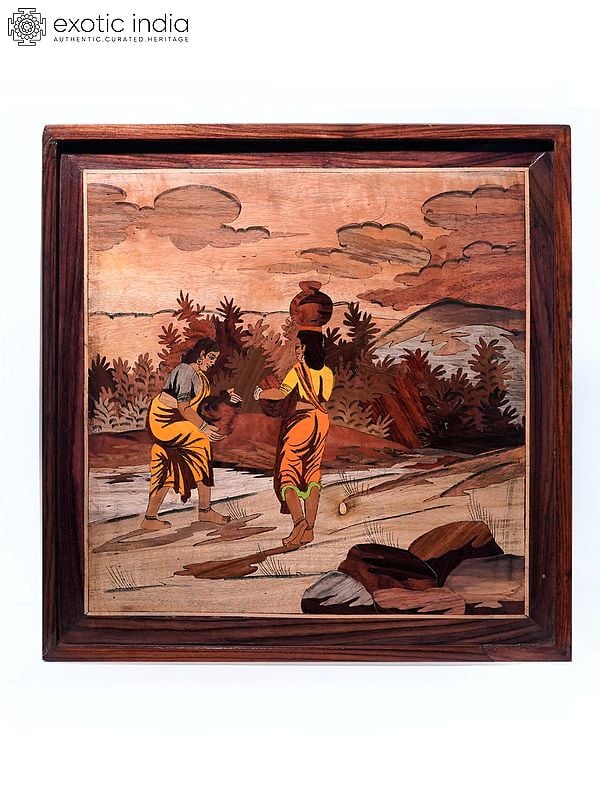
This stunning wooden panel is a testament to the enduring legacy of Mysore inlay, a traditional art form that has graced palaces and homes across India for centuries. The technique, known for its meticulous detail and intricate use of diverse materials, transforms simple wood into vibrant scenes of daily life, mythology, and nature. The practice flourished under the patronage of the Mysore Wodeyars, who not only commissioned elaborate works but also actively promoted the art form through workshops and training centers. Today, it continues to be a prized possession and a symbol of India's rich artistic heritage.
A Scene from Everyday Life
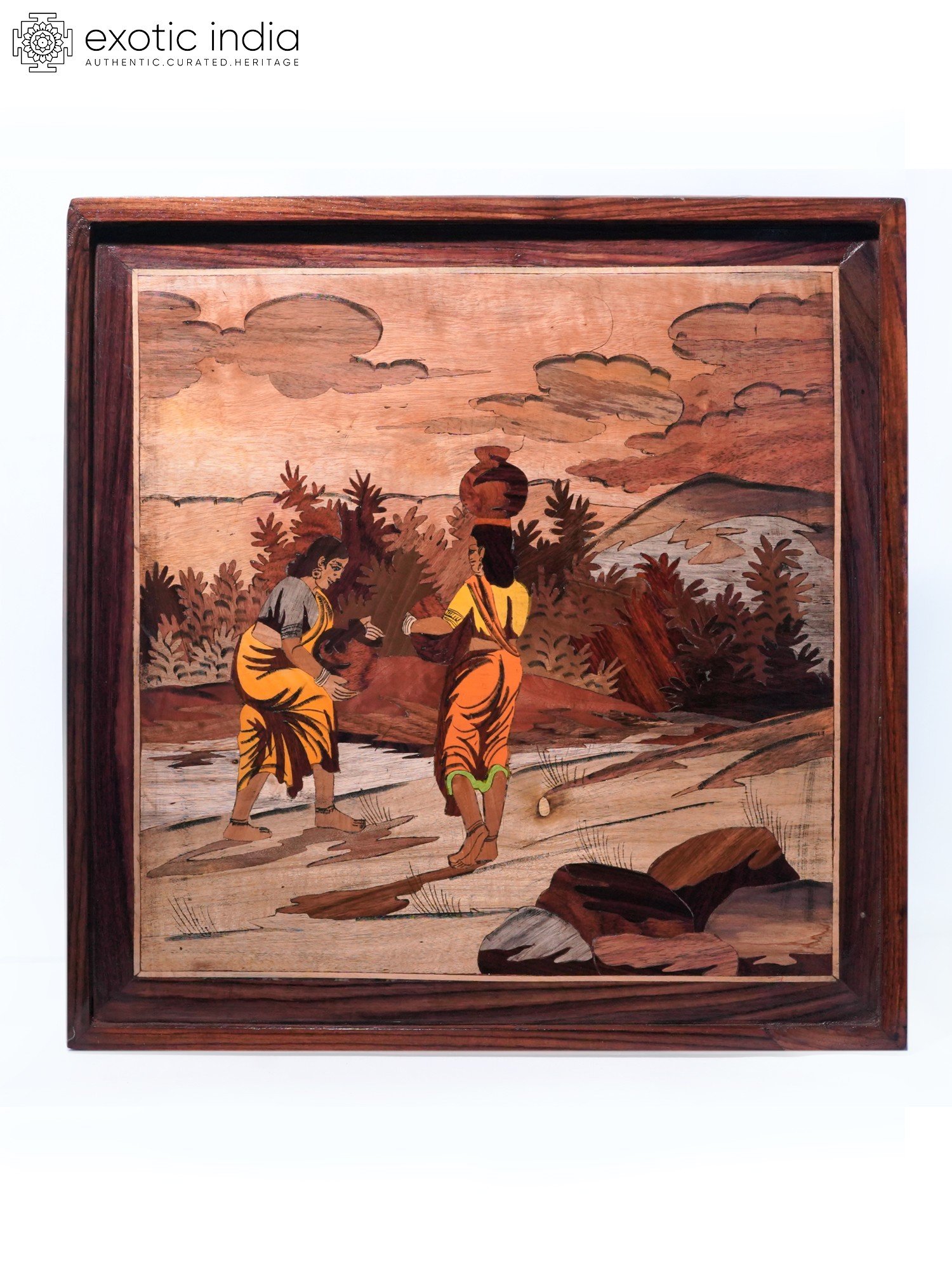
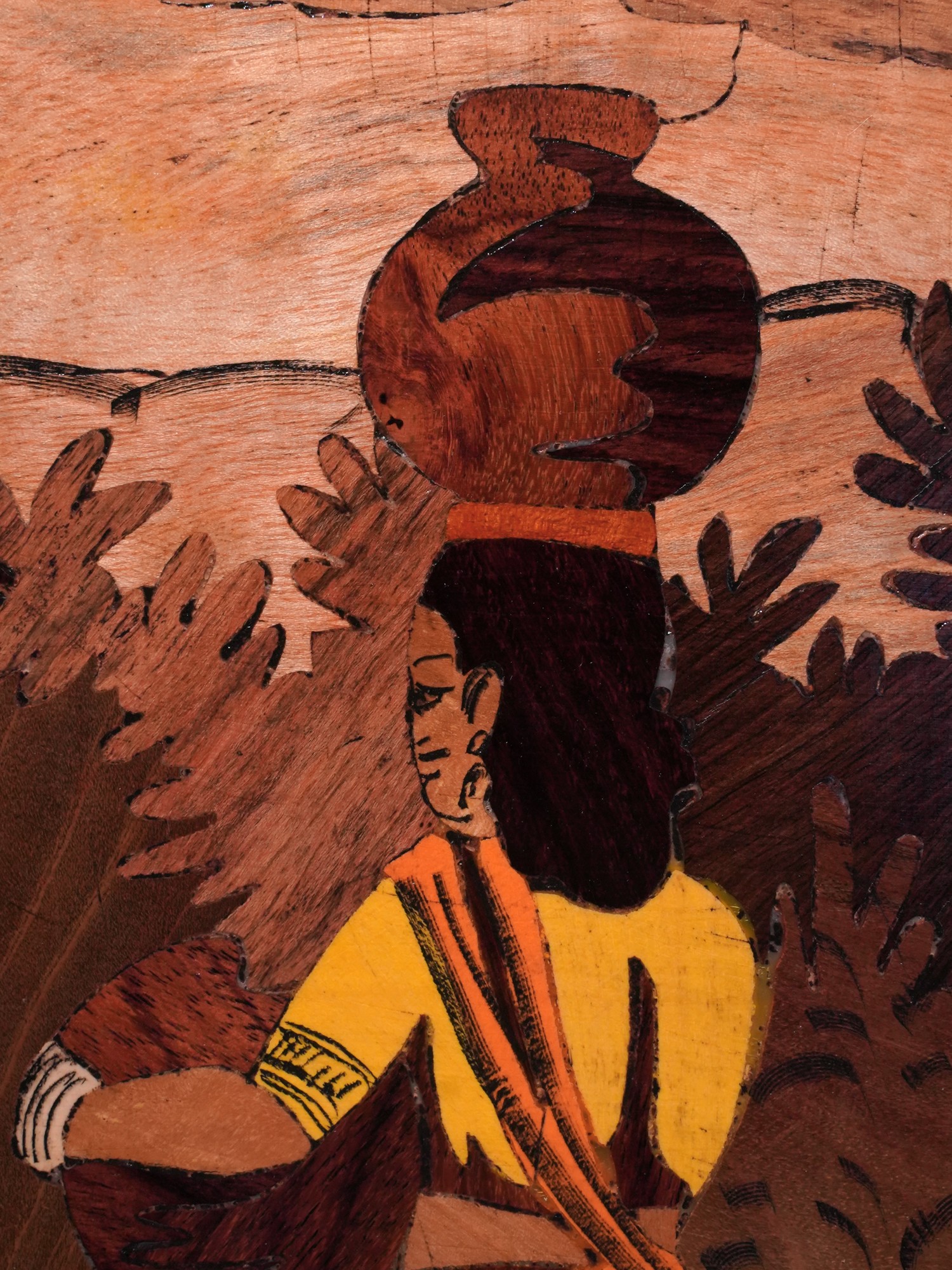
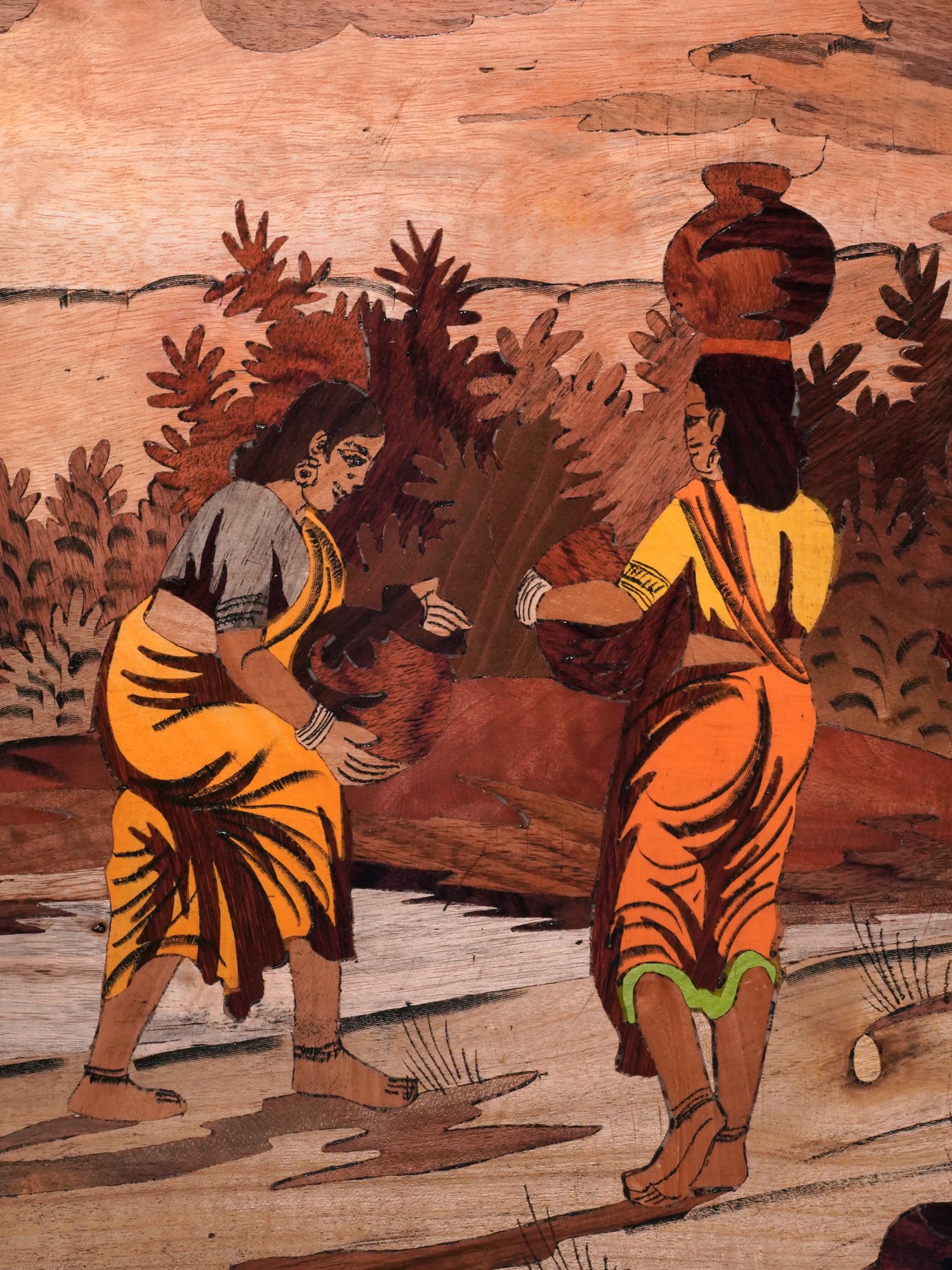
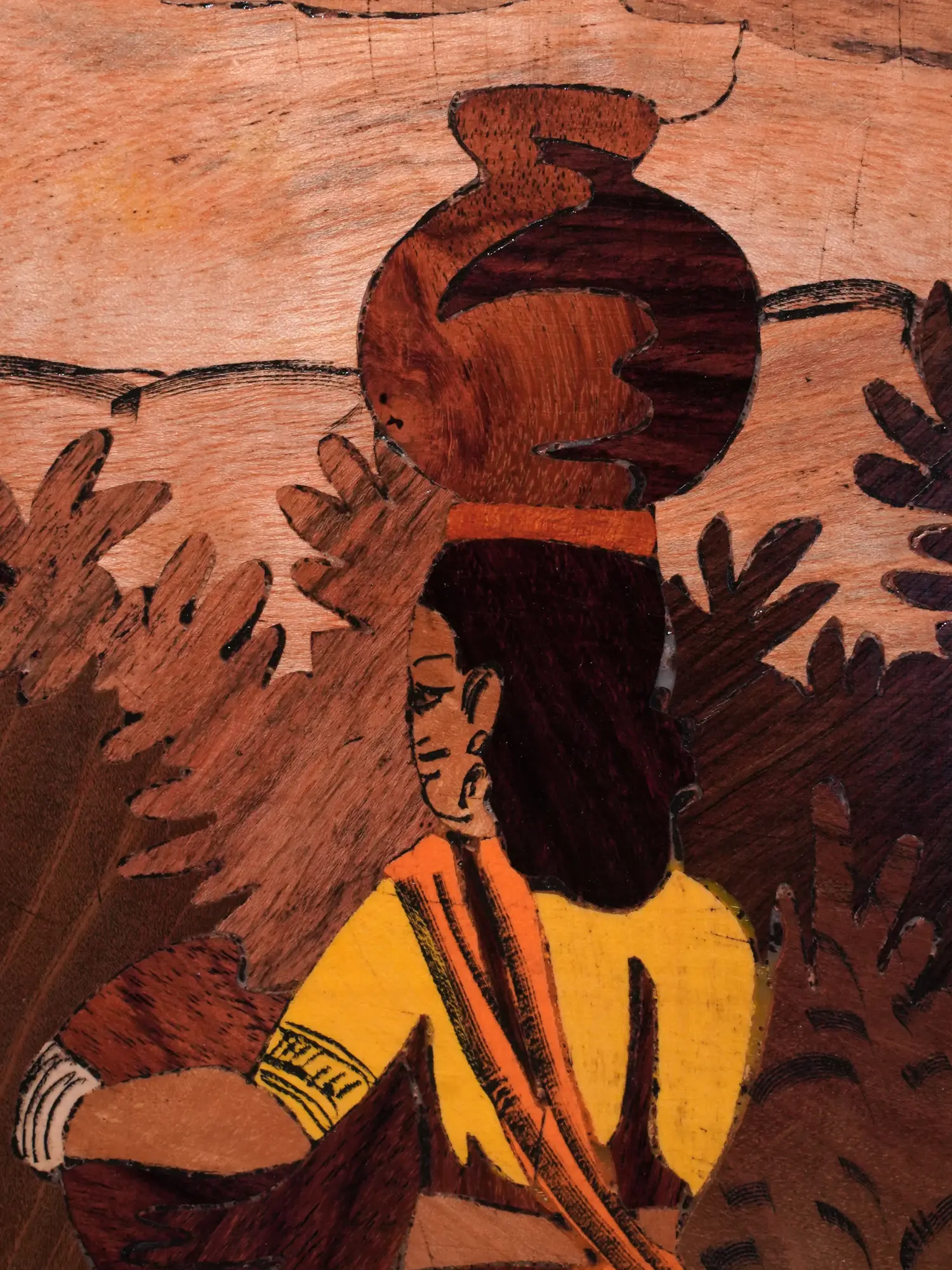
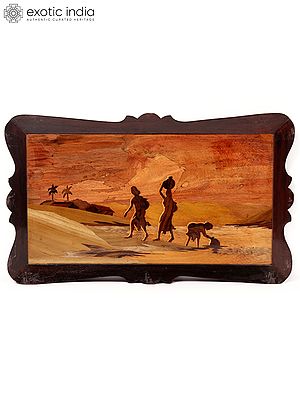
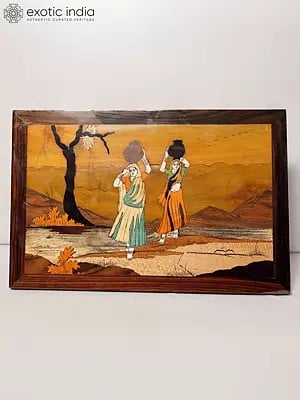
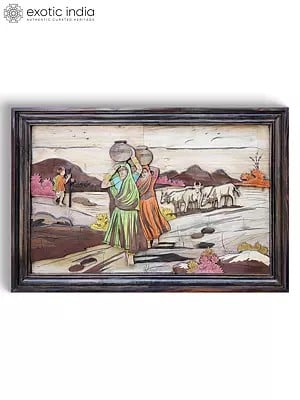
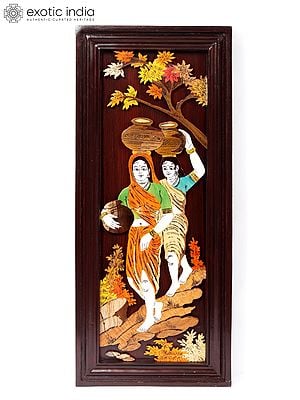
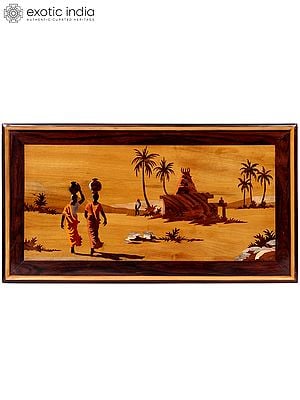
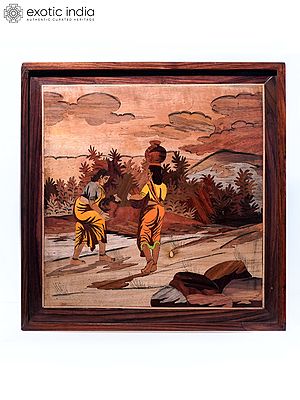
The artwork depicts two women in a rural landscape, their figures rendered with a captivating simplicity and grace. One woman, saree draped elegantly, carefully supports a “matka”—a traditional earthen pot—upon her head. These pots serve as vital vessels for carrying water, a daily necessity in many Indian villages. The second woman accompanies her, also engaged in collecting or carrying water.
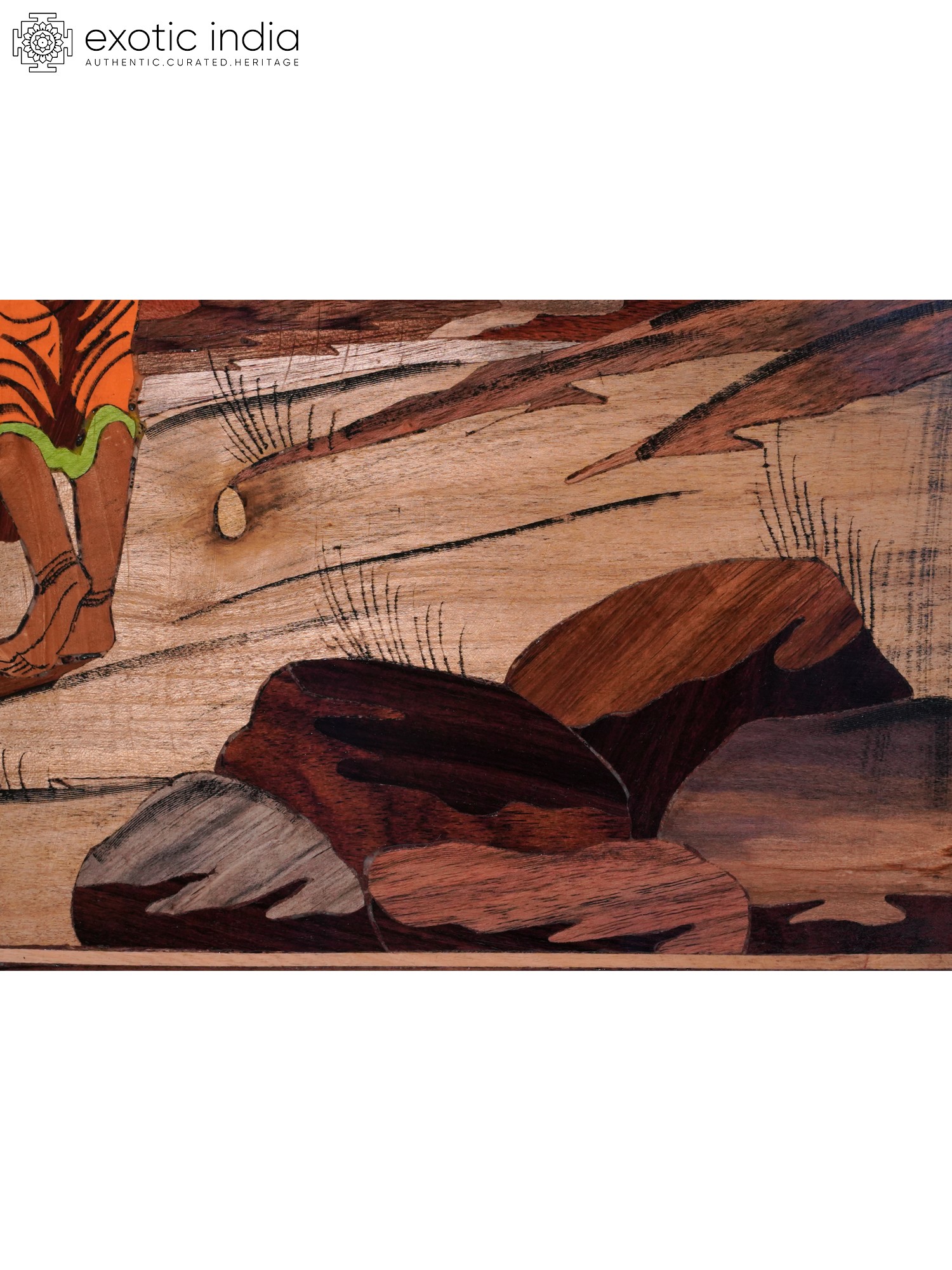
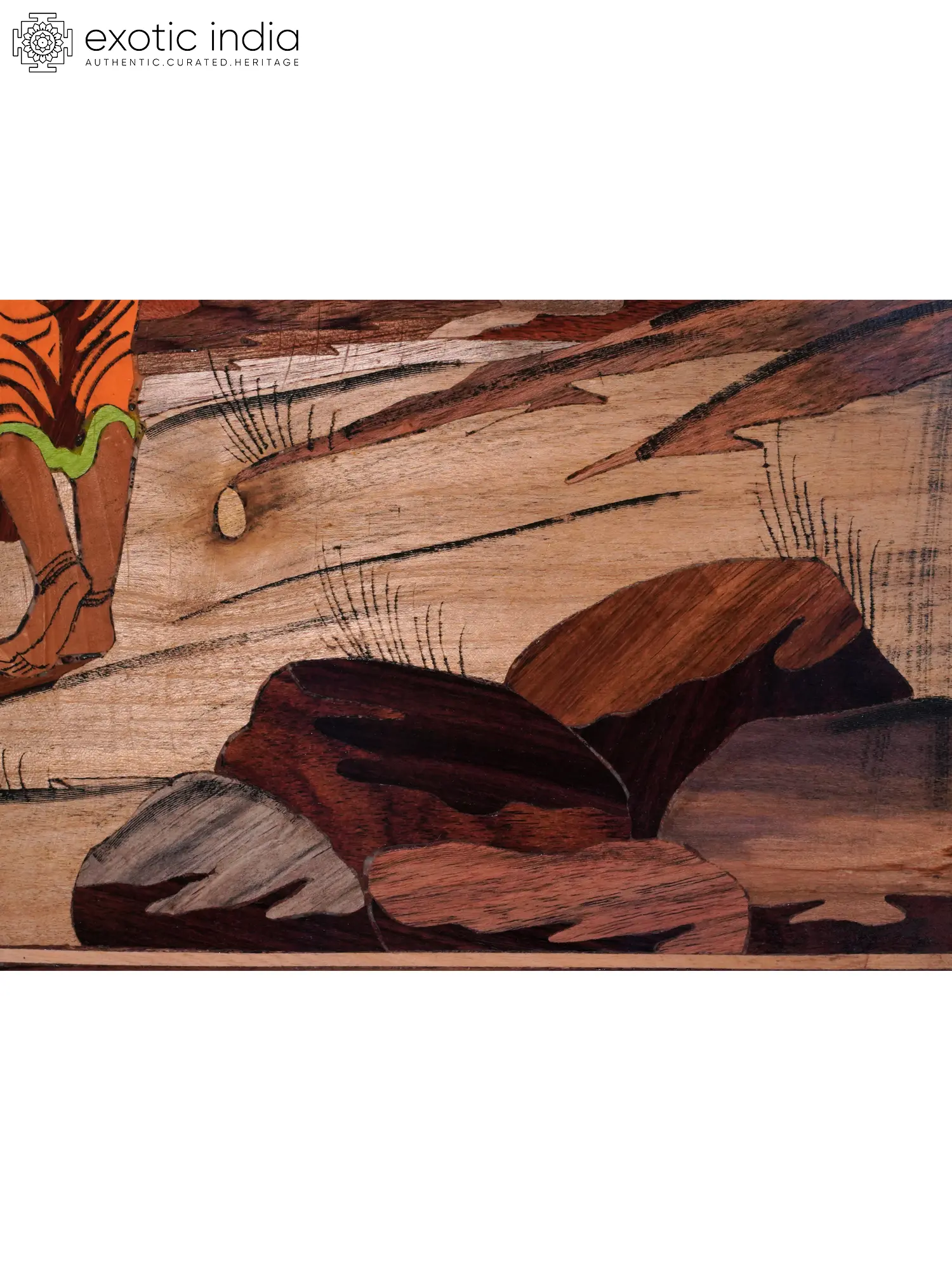
The backdrop unfolds with muted tones, suggesting a serene yet rugged landscape. Clouds drift languidly overhead, while stylized shrubs and trees dot the terrain. Rocks, rendered in varying shades of brown, add texture and depth to the foreground. The overall composition conveys a sense of peace and harmony, capturing a fleeting moment in the lives of these women and subtly speaking of the daily rhythm of rural Indian life.Water in Indian Mythology & Tradition
Water, symbolized by the "matka", holds immense significance in Indian culture and mythology. In Hindu cosmology, water is one of the five essential elements (panchabhuta) that constitute the universe. Rivers are revered as sacred entities, often personified as goddesses like Ganga, Yamuna, and Saraswati. These goddesses are not only sources of physical sustenance but also spiritual purification.
The act of fetching water, as depicted in this panel, is more than a mere chore; it’s an act connected to age-old customs and traditions. In many rural communities, it is a collective activity, offering women a chance to socialize, share stories, and strengthen their bonds. The careful handling of the "matka" reflects a respect for the preciousness of water, a resource that sustains life and connects humanity to the natural world.
This panel offers a glimpse into a world where art and life seamlessly intertwine, inviting us to appreciate the beauty and depth found in the everyday.How Mysore Wooden Inlay Paintings Are Made ?
Wood inlay is a historically significant art form from the 18th century. It arrived in India through Srirangaptnam in Mysore from Persia but has become an inevitable part of the Indian heritage. Tipu Sultan and the Wodeyars/Wadiyars are credited with the growth of this 400-year-old art form in Mysore and its neighboring areas.
Wood inlay work is usually done on a Mysore rosewood base, and other woods are used, like mango, kadam, jackfruit, rubber, doodhi, etc. Pieces of wood are adorned with beautiful motifs and patterns made from various materials. From wall hangings and paintings to jewelry boxes and furniture, many items are made using the Mysore wood inlay technique.
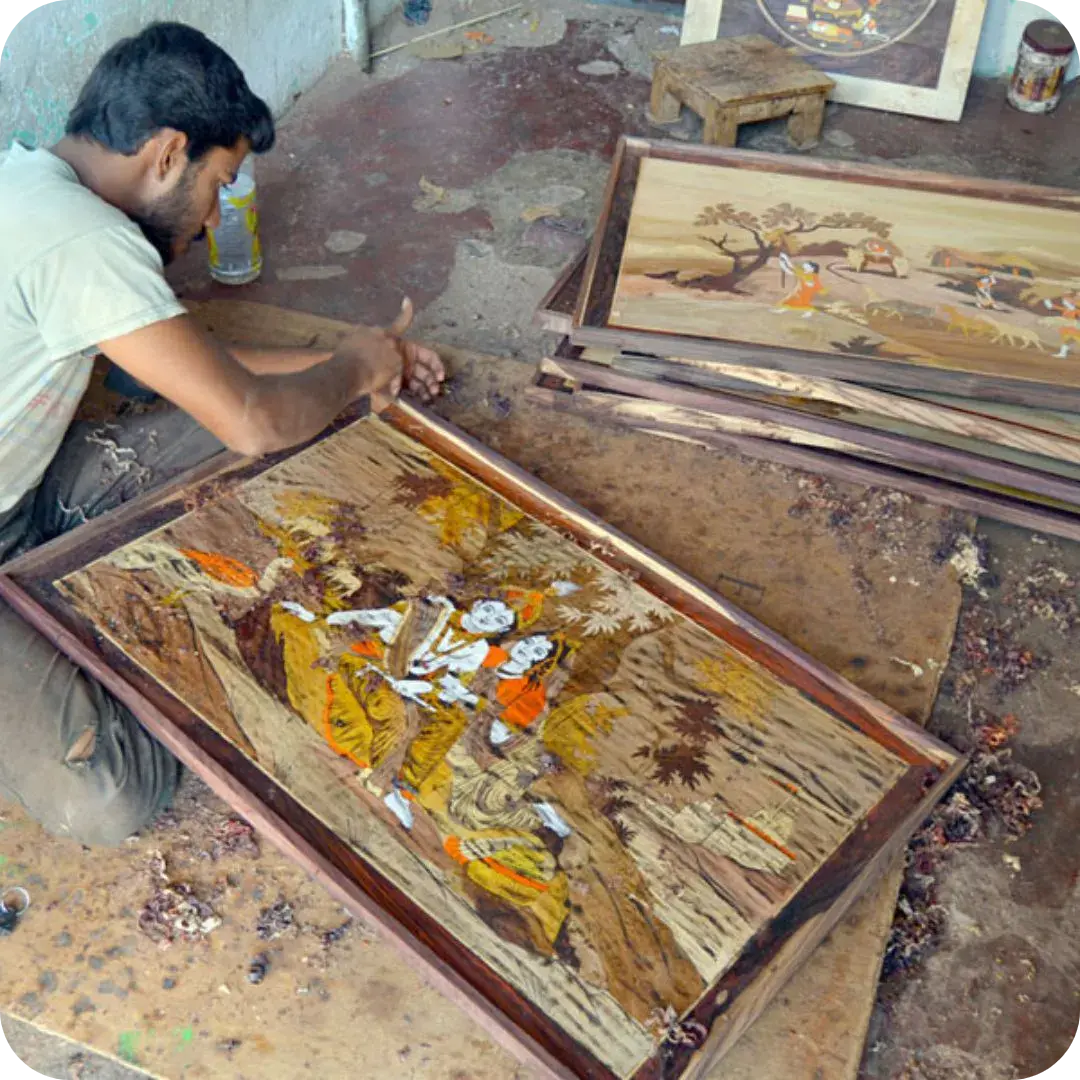
An outline is etched on a piece of rosewood with a sharp tool. Then, the area inside the outline is hollowed out, and materials like lacquer, enamel, contrasting wood, and sometimes even gold and silver are placed inside it. A sandpaper is used to give a
smooth finish to the surface.
Process of Mysore Wood Inlay Work -
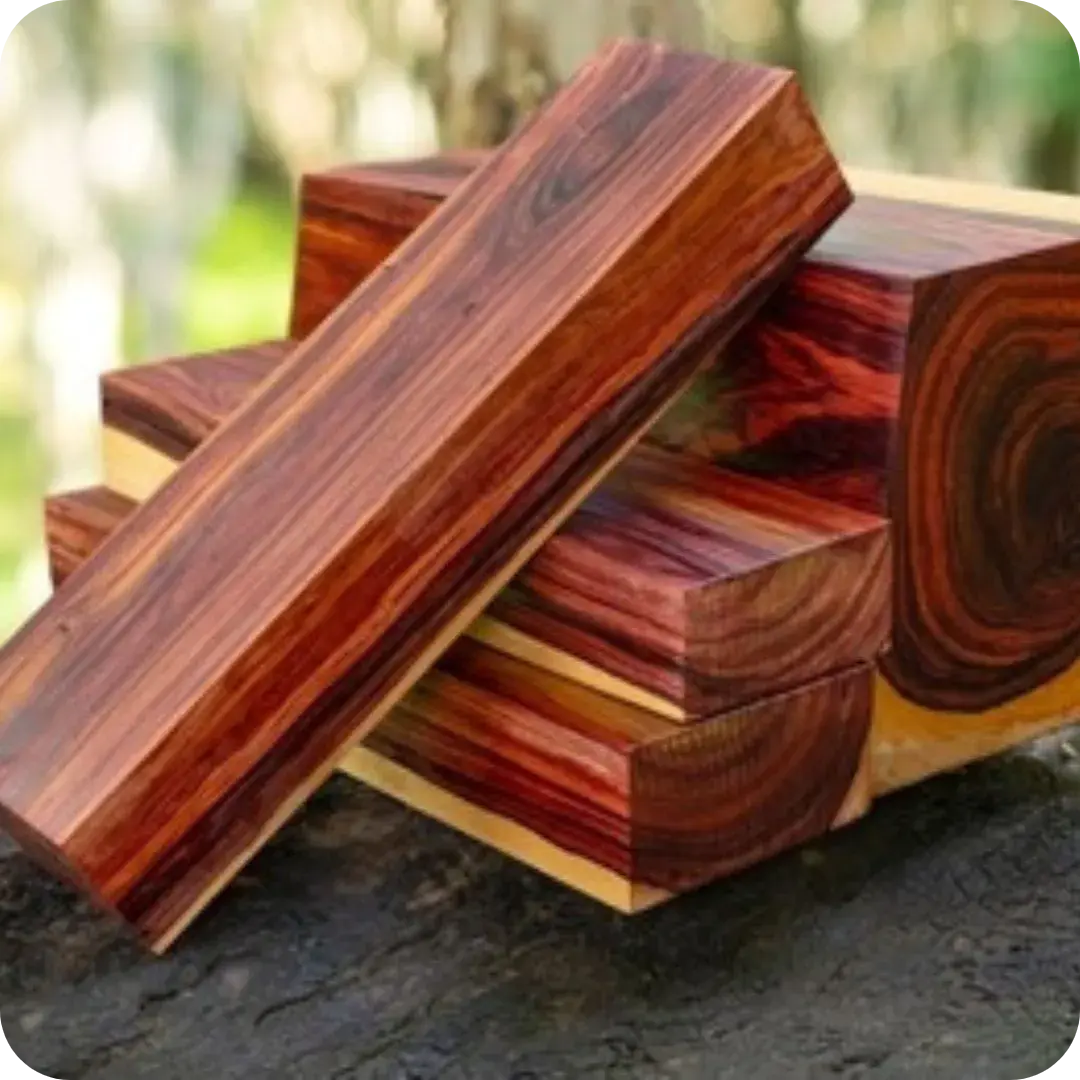
The first step in the process is selecting the base and the design to be carved onto it. Planks are cut out of Rosewood logs in many shapes like square, rectangular, oval, or even circular. The surface is smoothened, and the sides are evened out.
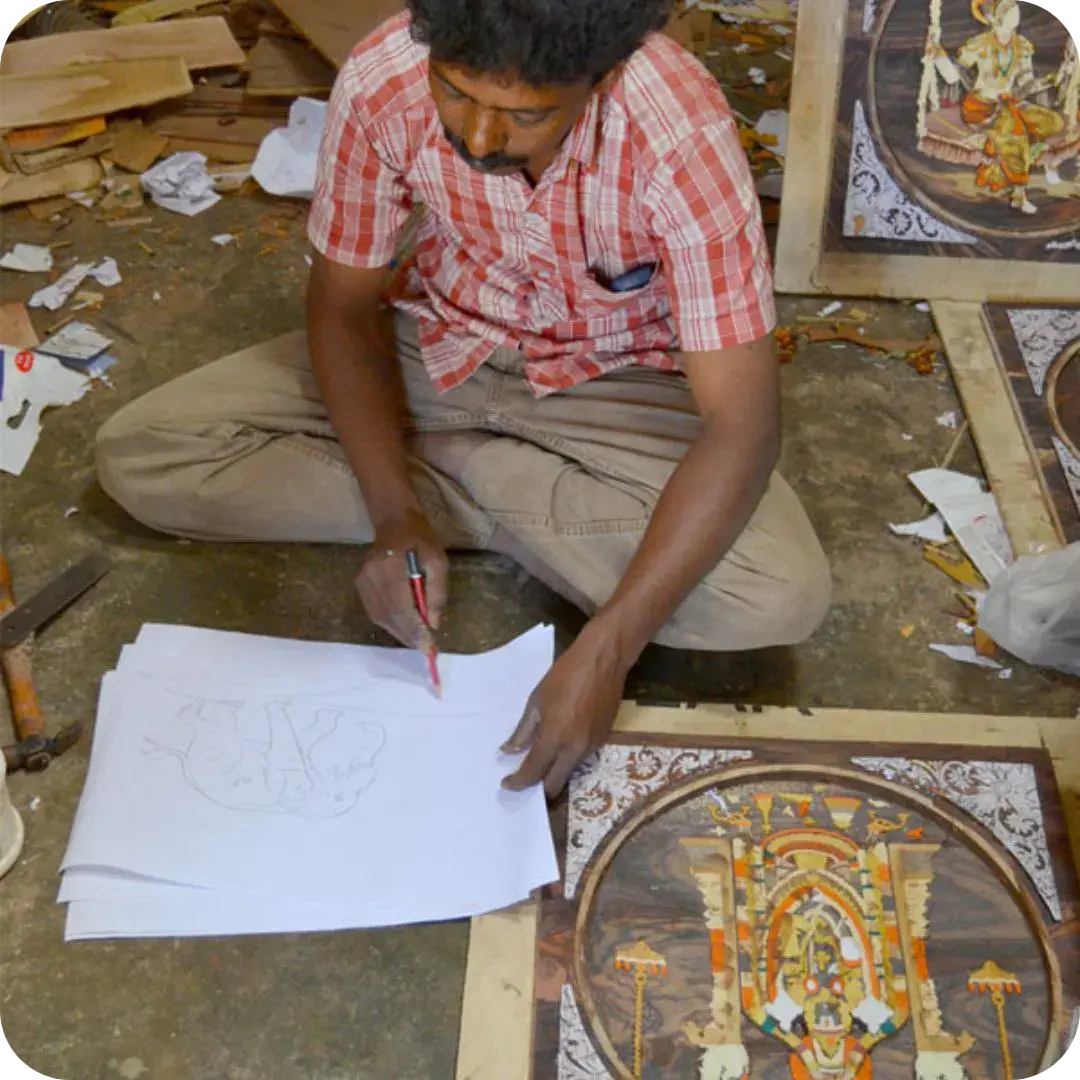
The second step is creating the designs for the inlay on paper. These designs are then traced on transparent paper and then transferred to the surface of the desired material, such as another type of wood, lacquer, plastic, etc.
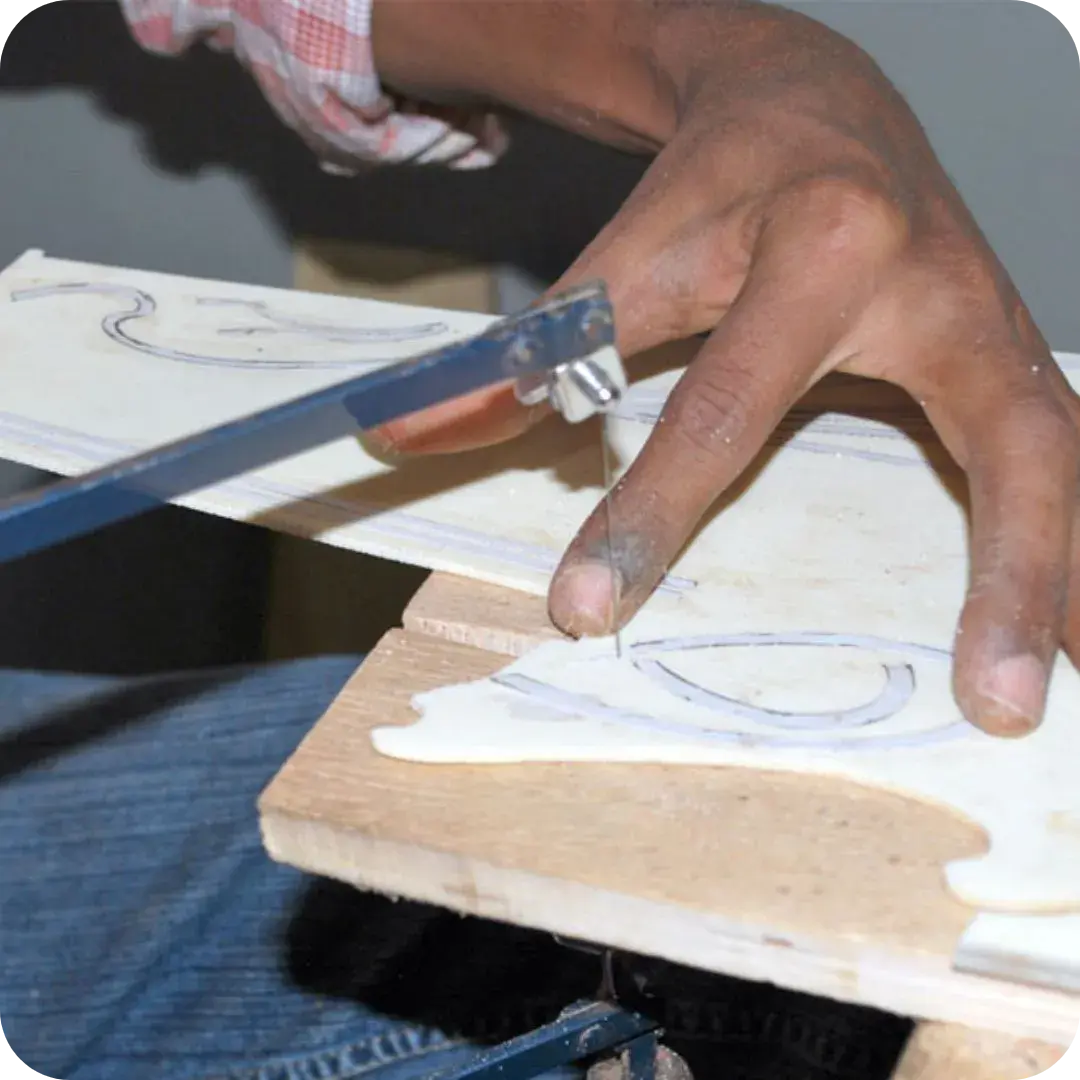
After that, the design is traced onto the rosewood planks. Using a coping saw, the designs are cut, and the rough edges are smoothened using a smooth file. Once that is done, the wood inside the outline is scooped out, leaving groves in the plank.
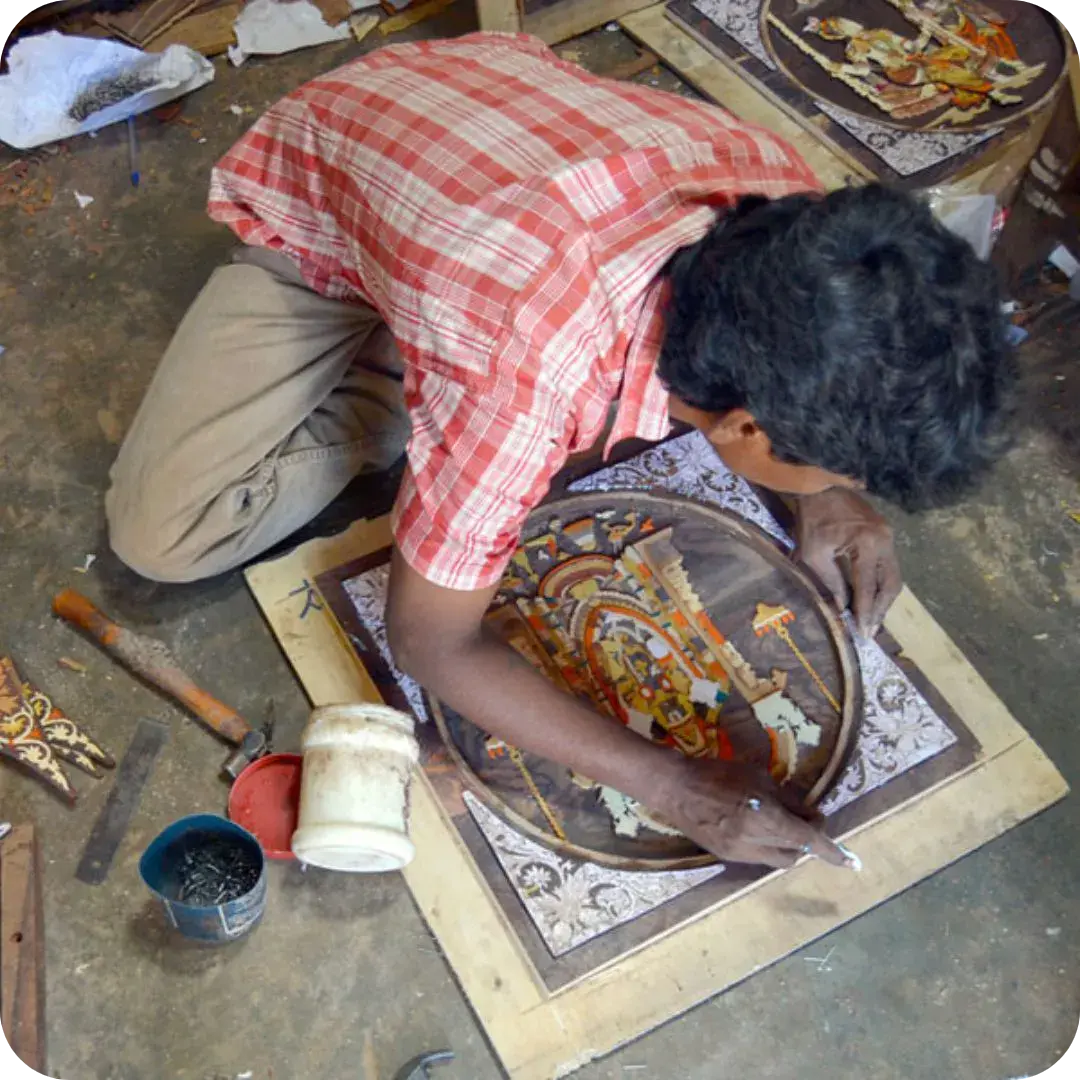
After that, the design cutouts are fitted in the groves, and the surface is beaten with a hammer to ensure the designs stay firm and in place. In case of any gaps, they are filled using a mixture of glue, rosewood, and sawdust.
The final step in creating Mysore wood inlay products is cleaning and polishing the items with beeswax. A coating of lacquer is applied to give them a glossy touch.














 Upload an Image