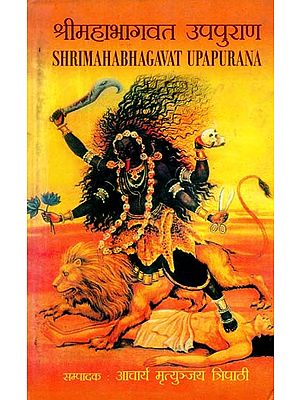
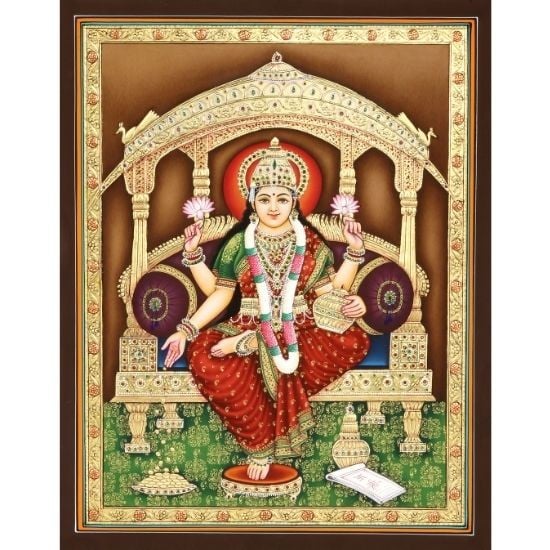
"Her epithet in the Devi-Mahatmya is Mahalakshmi. She is the wrathful four-armed goddess of battlefield represented holding in them various weapons…. A form of Lakshmi seated over a lotus laid over a golden seat and a pair of white elephants…. Except in some classical forms in Lakshmi-Narayana imagery Lakshmi is ordinarily two-armed…. Incarnation theory is the crux of Vaishnavism. Vishnu incarnates alone but Lakshmi also incarnates in simultaneity…. Though very rare some enthused artists have conceived on Ardhanarishvara line also Vishnu’s Ardhanarishvara images."
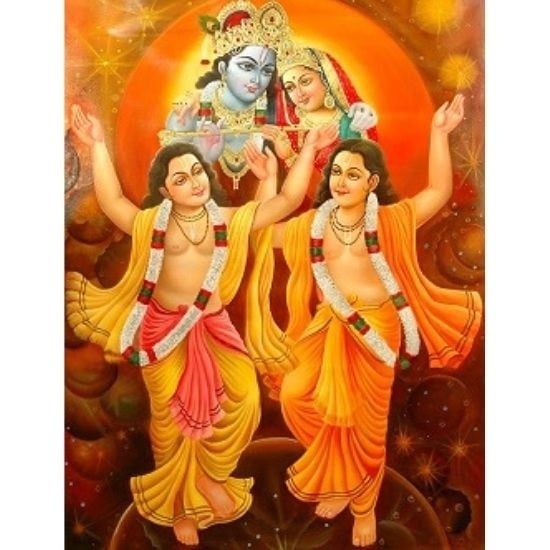
Bhakti movement constitutes a very important chapter in the socio-cultural history of India. The movement started in the 9th century A.D. by Shankaracharya which continued up to 16th century A.D. by a number of Hindu devotees, preachers and religious reformers. The word Bhakti is a very familiar word in the Hindu religious system. It is derived from the Sanskrit root word Bhaja whose literal meaning is ‘to utter’. But the inner significance of the word Bhaja is ‘to adore’ or ‘to love with honour’. In the devotional literature the word is used to mean ‘unquestionable faith and utter devotion to God’. Thus, in a general sense Bhakti means devotion to God.
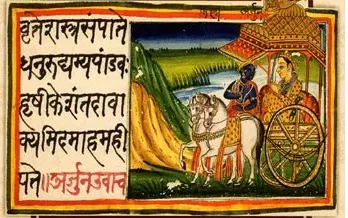
Bhagavad Gita in Hindu tradition is a one-of-its-kind book, filled with the holiness of the Vedas. The timelessness of Gita’s message can be seen from the fact that great sages such as Adi Shankaracharya and Ramanujacharya read and wrote commentaries on the text, starting a tradition of literature create around Gita which continues to date. People from different faiths and countries see a reflection of their lives in the pages of the Bhagavad Gita, which speaks for the awe-inspiring wide range of this ancient text. To explore the collection of Srimad Bhagavad Gita\'s original text, translations, and commentaries, visit Exotic India Art, and take a dip into this perennial stream of heavenly Indian wisdom.
Email a Friend
Visual Search
Upload an image to find similar items from our collection













 Upload an Image