

| Specifications |
 |
Publisher: Penguin Books India Pvt. Ltd. |
| Author Vaibhav Purandare | |
| Language: English | |
| Pages: 478 | |
| Cover: HARDCOVER | |
 |
9.5x6.5 Inch |
 |
Weight 790 gm |
| Edition: 2024 | |
| ISBN: 9780670095513 | |
 |
HBY129 |
| Delivery and Return Policies |
 |
Ships in 1-3 days |
 |
Returns and Exchanges accepted within 7 days |
 |
Free Delivery |


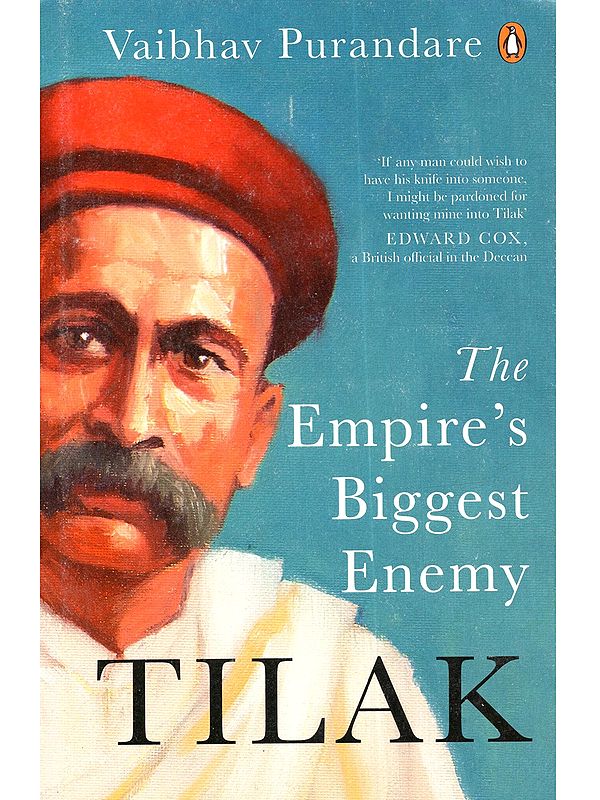
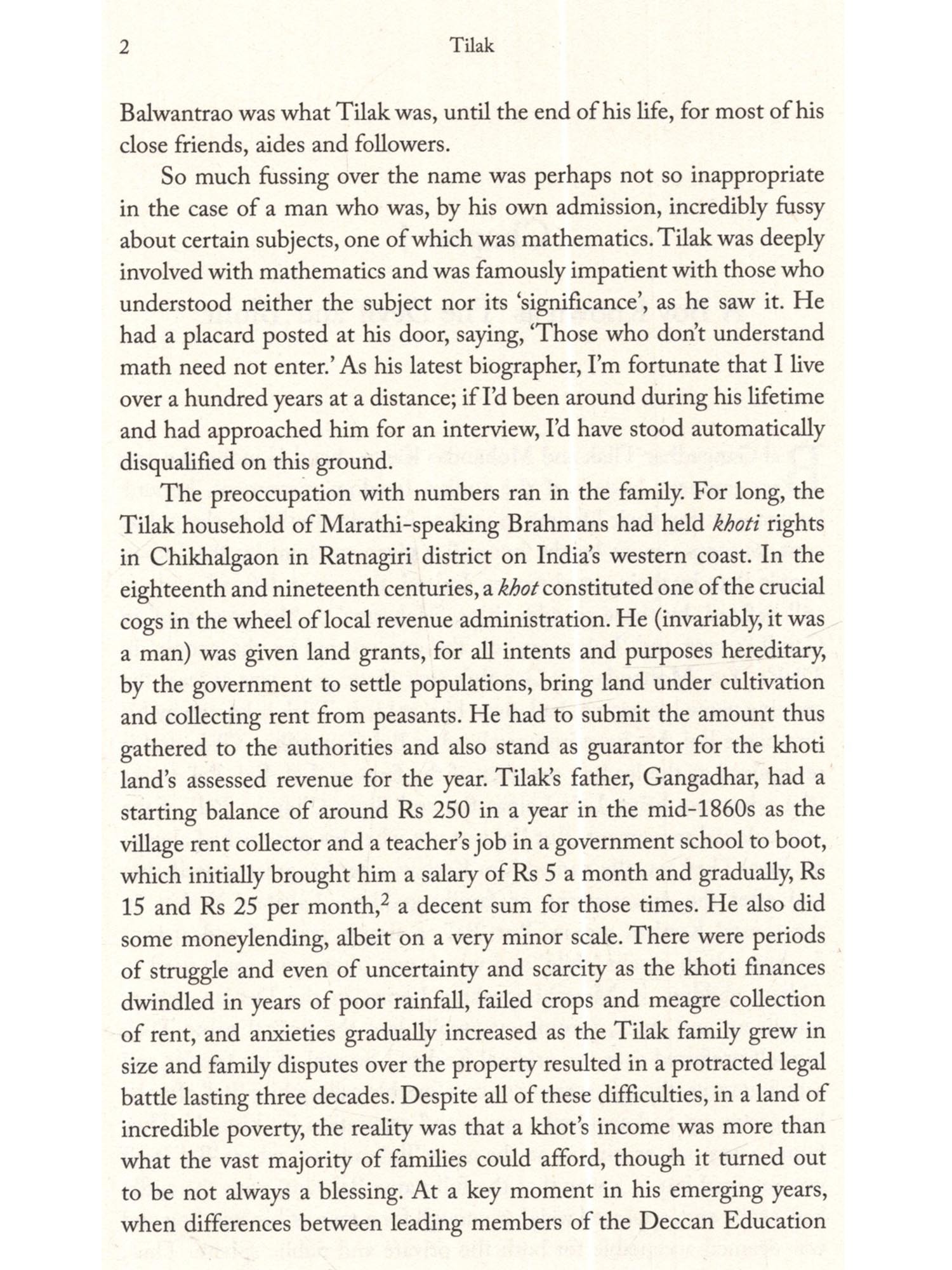
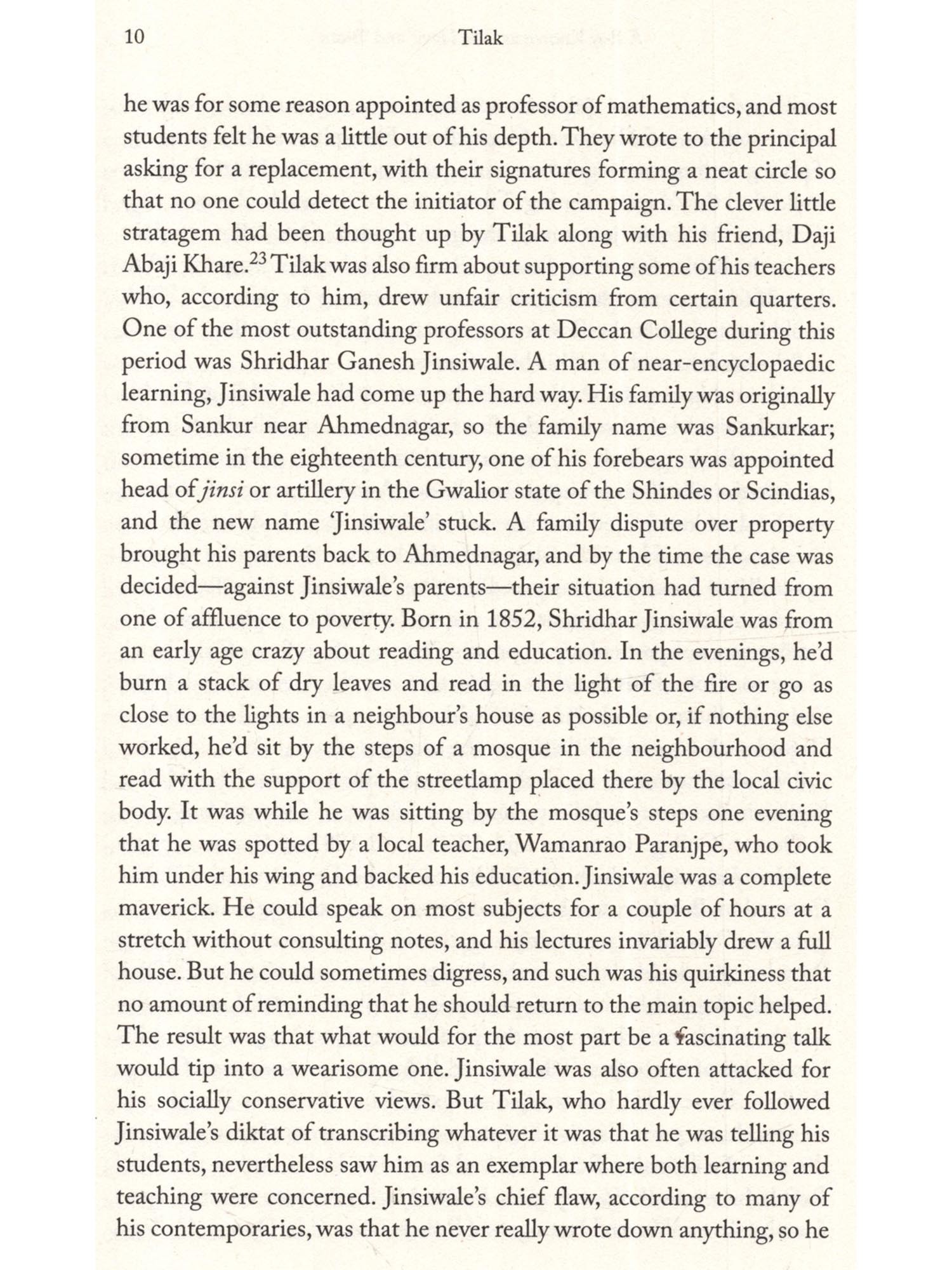
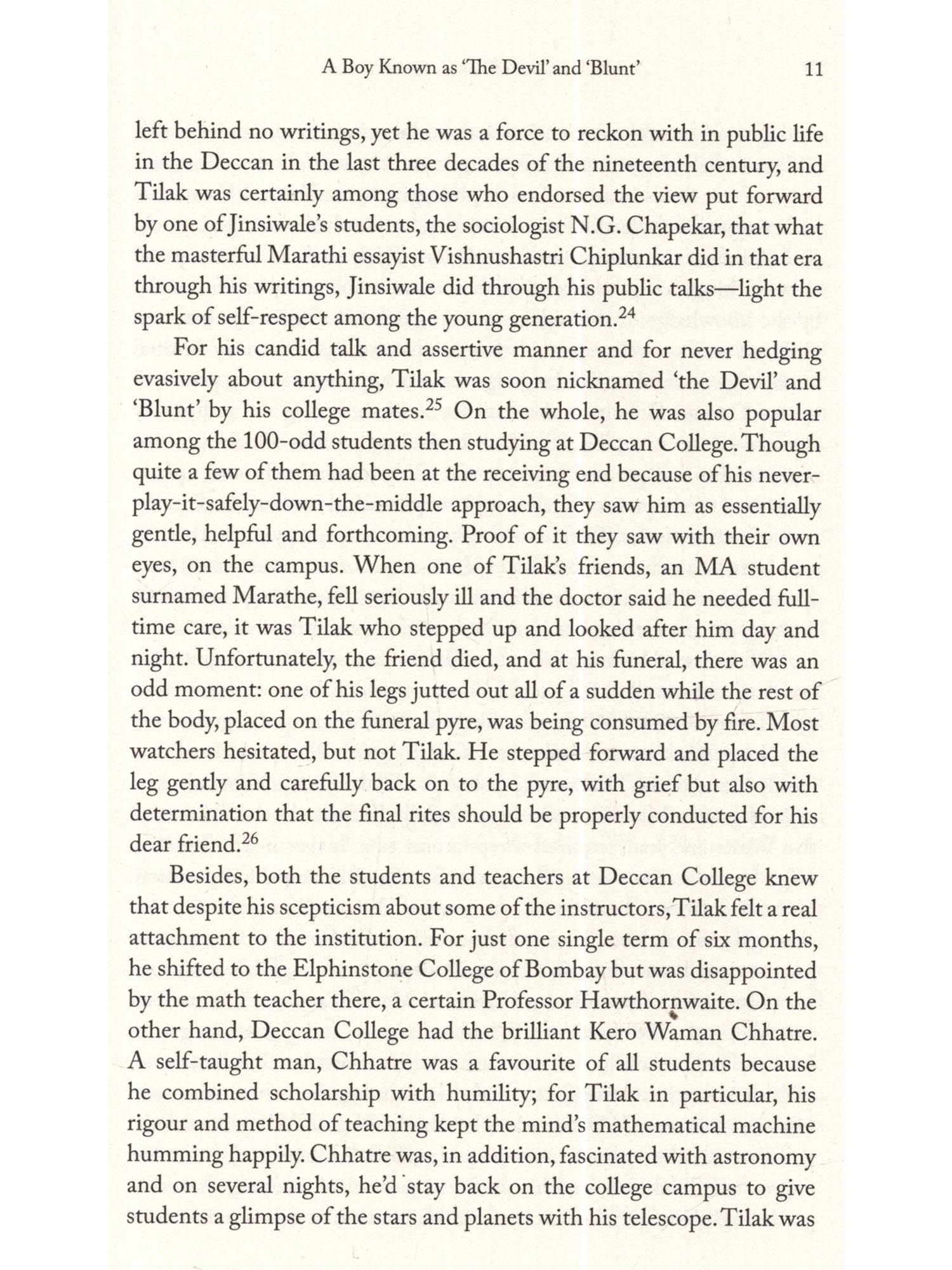
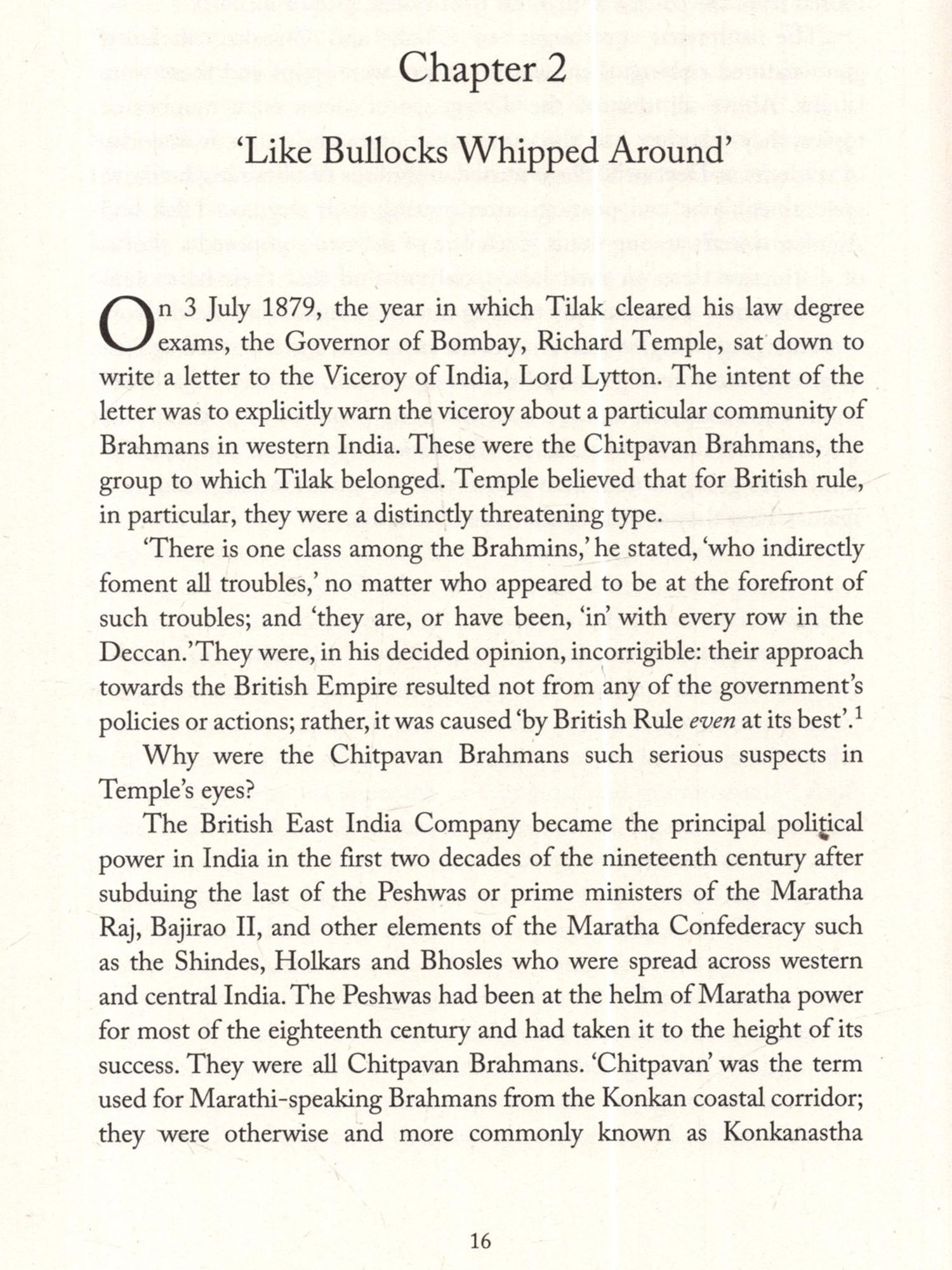
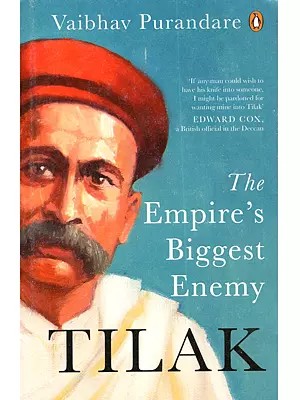
Before Mahatma Gandhi, there was Bal Gangadhar Tilak the
revolutionary who ignited the spark of Indian nationalism. The Times, London,
described him as 'the father of Indian unrest", and the one-time Secretary
of State for India Edwin Montagu felt he had 'the greatest influence of any
person' on the Indian people. Above all, for the British Raj. Tilak was
sedition-monger-in-chief it prosecuted him thrice for sedition. Hailed as
Lokmanya' or 'One Revered by the People, Tilak transformed India's fight for
freedom from a polite discourse to a mass uprising His fierce writings,
relentless activism and controversial stances earned him the title onemy of the
British government from the Raj, which saw him as its greatest threat. Ata time
the British were undermining ludian self-esteem and dismissing Indians as
uncivilized heathens', Tilak argüed powerfully and relentlessly that there was
orrormous value in India's past, its culture. heriuage and civilization,
awakening Indians sense of their own identity. Vaibhav Purandare encapsulates
Tilak's saga in this definitive biography. He traces Tilak's journey from his
early days in the Konkan to his influential role across India, highlighting his
battles against the British, imprisonments and commitment to Swaraj Rediscover
an icon of Indian history whose ideas and actions continue to resonate today.
Bal Gangadhar likak's story is not just a tale of resistance büt a testament to
perseverance and conviction.
Bal Gangadhar Tilak was considered the biggest threat to the
British hegemony. Termed as the father of Indian unrest' by a secretary of
state for India, he was convicted for his fiery writings in his nationalist
daily Kesari. Tilak is the first definitive biography of the man who raised the
slogan that freedom is my birthright, and I shall have it'.
Before Mahatma Gandhi, there was Bal Gangadhar Tilak If
Gandhi got the infinitely great Indian masses behind him in the freedom
movement, Tilak was the one who got the vast majority of the Indian people
involved and seriously invested in the fight for liberation in the first place.
Without the solid base built by Tilak, Gandhi would have had no mass movement
to build on and carry forward. Tilak made the first major cracks in the British
Raj's imposing structure, and the punch he packed in smashing its walls paved
the way for the Mahatma and his apostles like Jawaharlal Nehru, Sardar Patel
and Subhas Chandra Bose to walk through and deliver on the dream of complete
freedom. It's hard to fully understand and make sense of the Indian struggle
for political independence without taking an extremely close and searching look
at this man, who laid the foundational stones for self-assertion against the
Empire. And it would be impossible to comprehend the real nature of the
Empire's relentless repression, ruthless authoritarianism and repeated attempts
to bulldoze legitimate Indian aspirations without examining the myriad ways in
which it sought to nail Tilak, who was the most articulate voice of those
aspirations for an entire era. The strange thing is that Tilak has not been a
subject for several biographers. For a man who was the most popular Indian of
his time and the mobilizer of an entire colonized population, he has been
ludicrously overlooked and his story and its significance by and large
unrecognized. During his centenary in 1956, when India was still in the first
flush of freedom, a flurry of books came out; after that, he joined many
others, including Patel and Bose, in being relegated securely to the
background, his life either devolved into clichés around his famous slogan of
'Swaraj is my birthright' or into a blur of dates in the manner of India's
terrifically soporific textbooks. It's necessary to remove that blur to throw
light on the critical and vastly under-examined pre-Gandhi phase of the Indian
national movement and to see how Tilak faced off against the Raj and kepe going
on despite being directly targeted, prosecuted and punished over and over again
on charges of trying to overthrow the Empire. Tilak's life had four broad
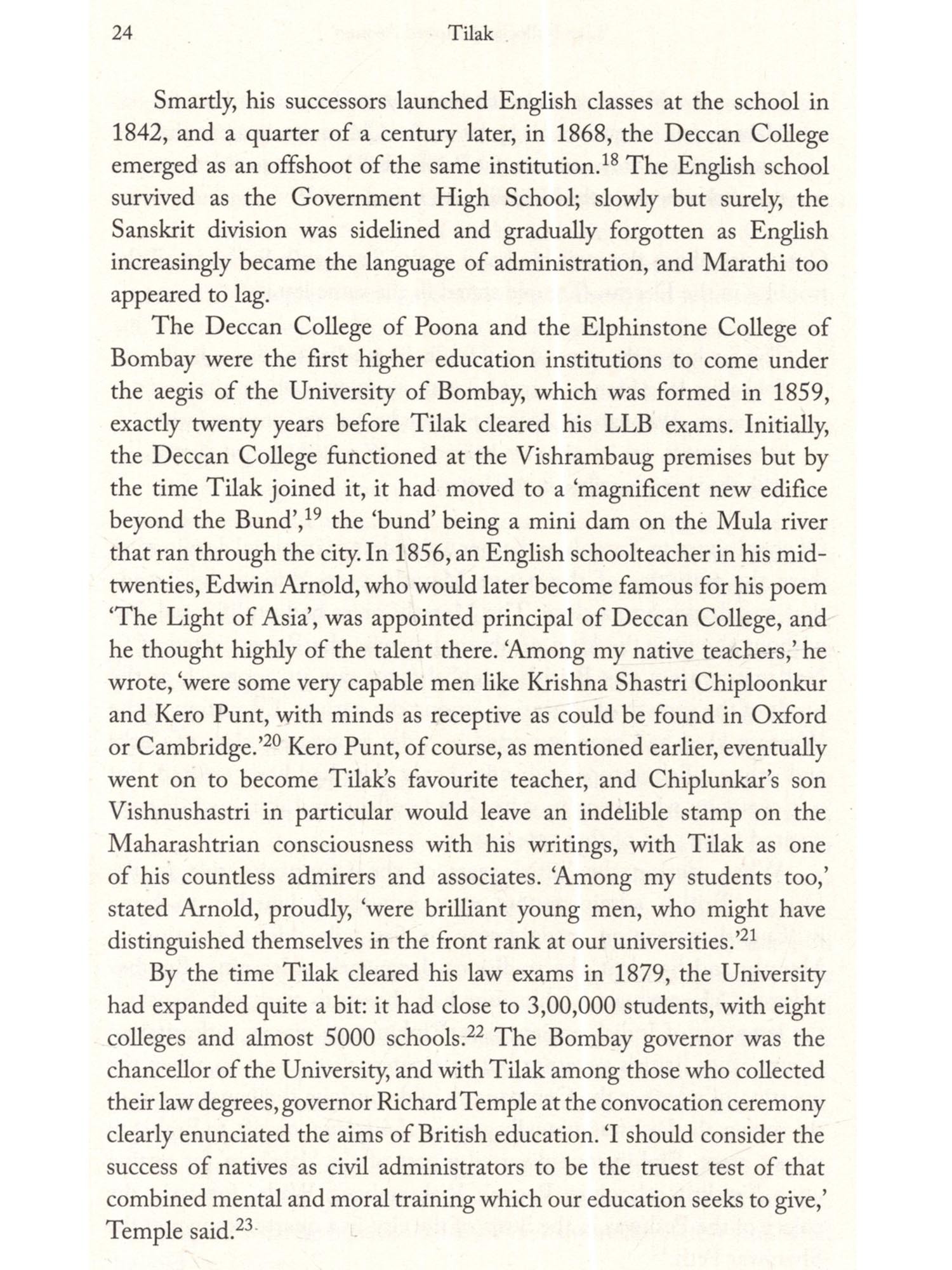
phases. The first, of twenty-eight years from his birth in 1856 to 1884, was
marked by his obsession with mathematics and swimming (both, in time, stuck
with him for his entire life) and the development of a deep love for education
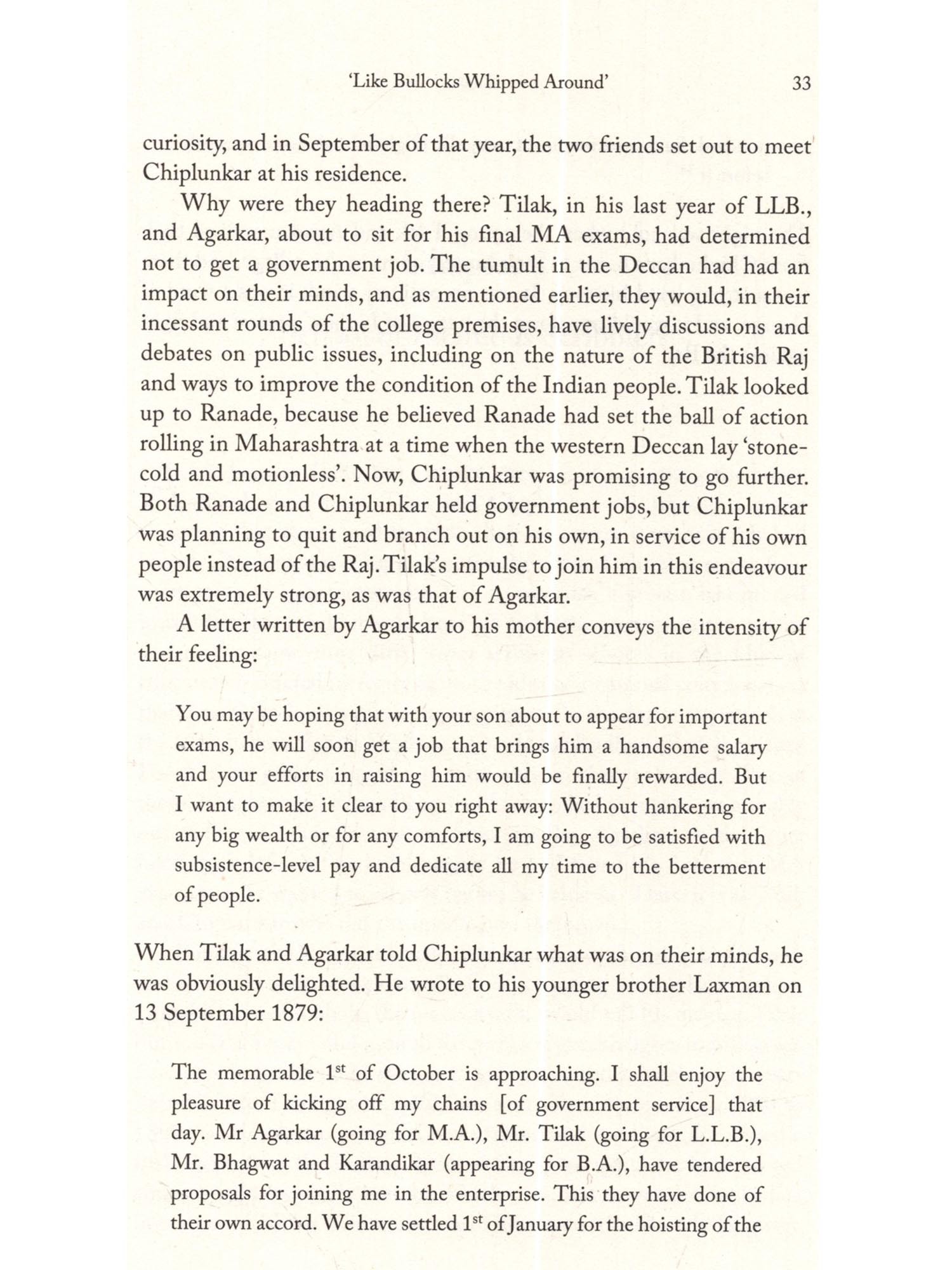
and of an ardent public consciousness, which resulted in him tying up with the
brilliant Marathi essayist Vishnushastri Chiplunkar and close friend Gopal
Ganesh Agarkar to set up a school and college that would impart national
education. In this same period, when Indians were getting used to the printing
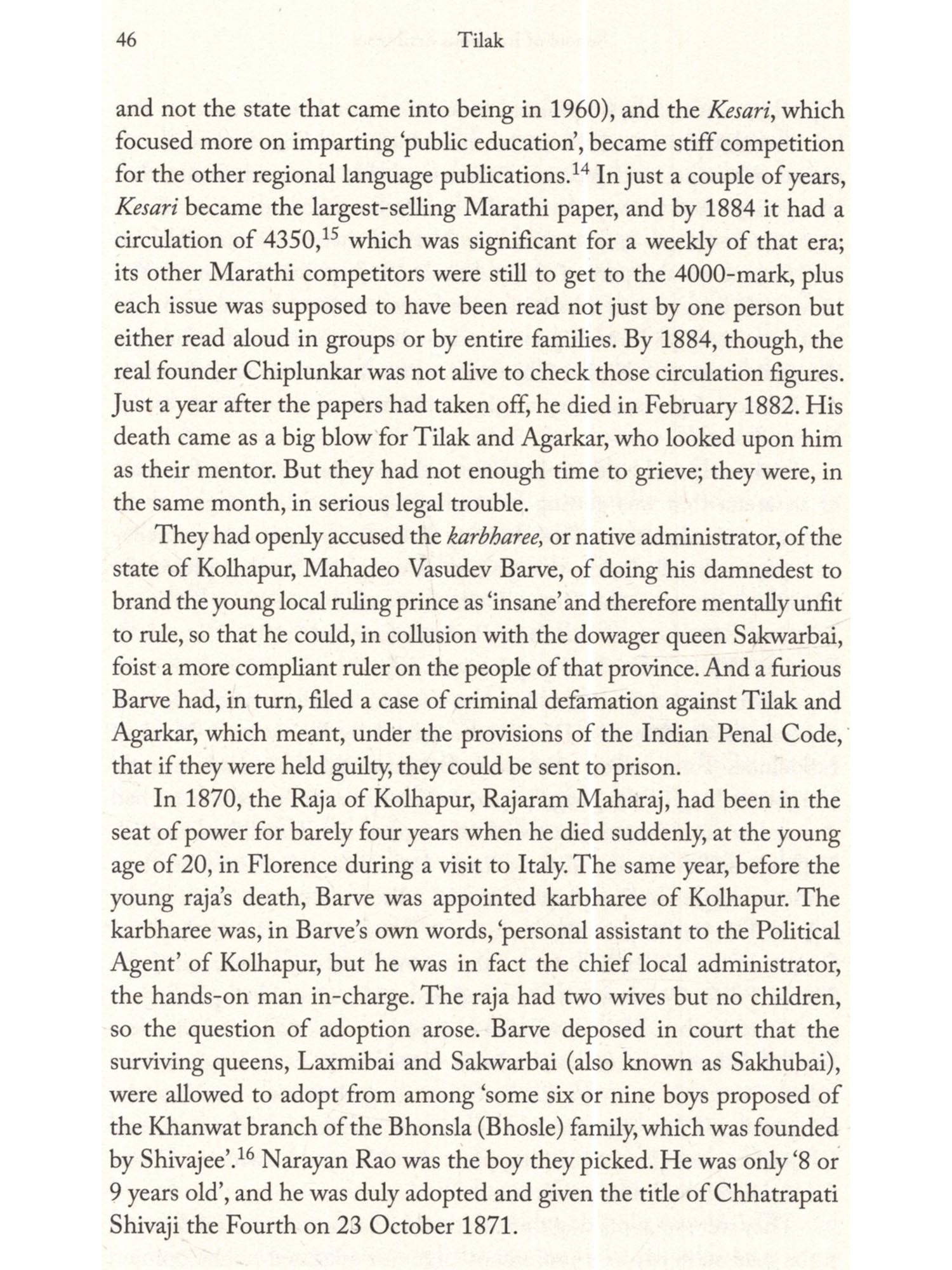
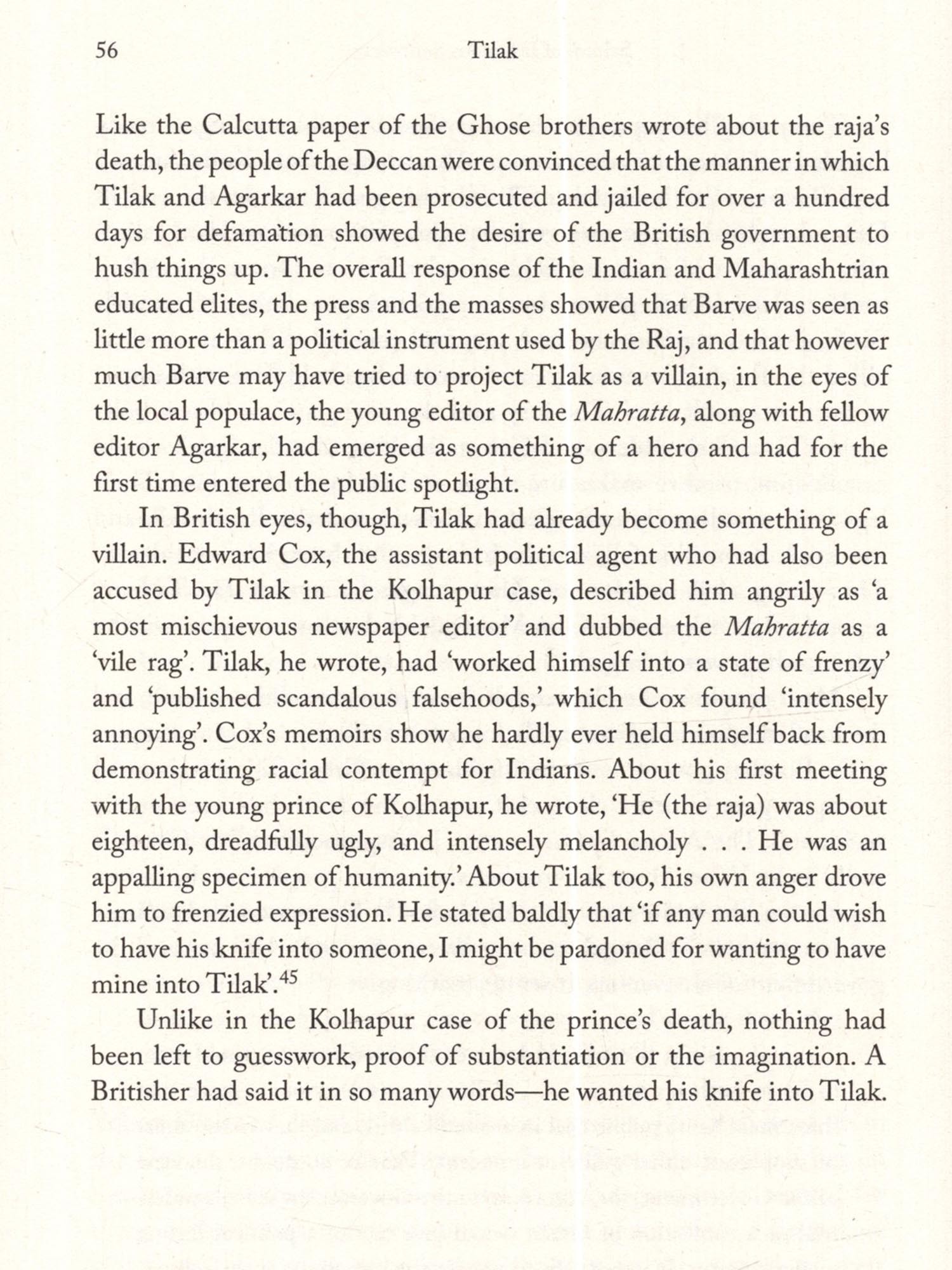
presses and daily and weekly publications, came his two newspapers, the Kesari
in Marathi and Mabratta in English. Tilak shaped both his papers into
remarkably effective vehicles of political propaganda when such advocacy
methods were not well-developed on Indian soil. The third aspect of this growth
was the formation, on his initiative, of the Deccan Education Society as the
institutional framework for what was for Tilak a profoundly desired academic
life. Politics was intricately blended with the kind of activities he had
initiated, and Tilak's politics took off in a big way in the second phase of
his life, beginning with conflicts with his colleagues Gopal Krishna Gokhale
and Agarkar within the Deccan Education Society and then inside the big tent of
the Indian National Congress. This second phase, which spanned from 1885 to
1897, was of dramatic change-Tilak exited the Deccan Education Society after
serious differences with his associates and plunged completely into public and
political life. At the same time, going by his instincts and predilections, he
embraced culture and religion, seeing them in a traditionalist society as
essential and critical parts for the construction of public unity. He launched and
built two powerful public festivals, one dedicated to Lord Ganesh and the other
to the Maratha hero Chhatrapati Shivaji Maharaj, thus roping in farmers,
artisans, and the lettered few as well as the unlettered najority for a variety
of causes linked to nation-building such as cultural generation, industrial
progress and the cultivation of the popular olitical psyche.




Send as free online greeting card