
| Specifications |
 |
Publisher: SADDLE PUBLISHERS, DELHI |
| Author Avinash Chandra | |
| Language: English | |
| Pages: 254 | |
| Cover: HARDCOVER | |
 |
9.5x6.5 Inch |
 |
Weight 550 gm |
| Edition: 2025 | |
| ISBN: 9788119312054 | |
 |
HBV917 |
| Delivery and Return Policies |
 |
Usually ships in 5 days |
 |
Returns and Exchanges accepted within 7 days |
 |
Free Delivery |


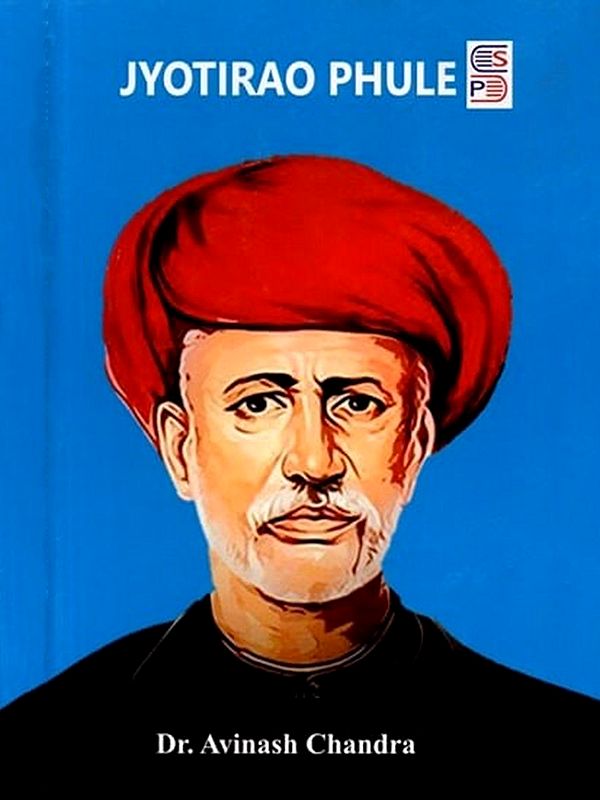
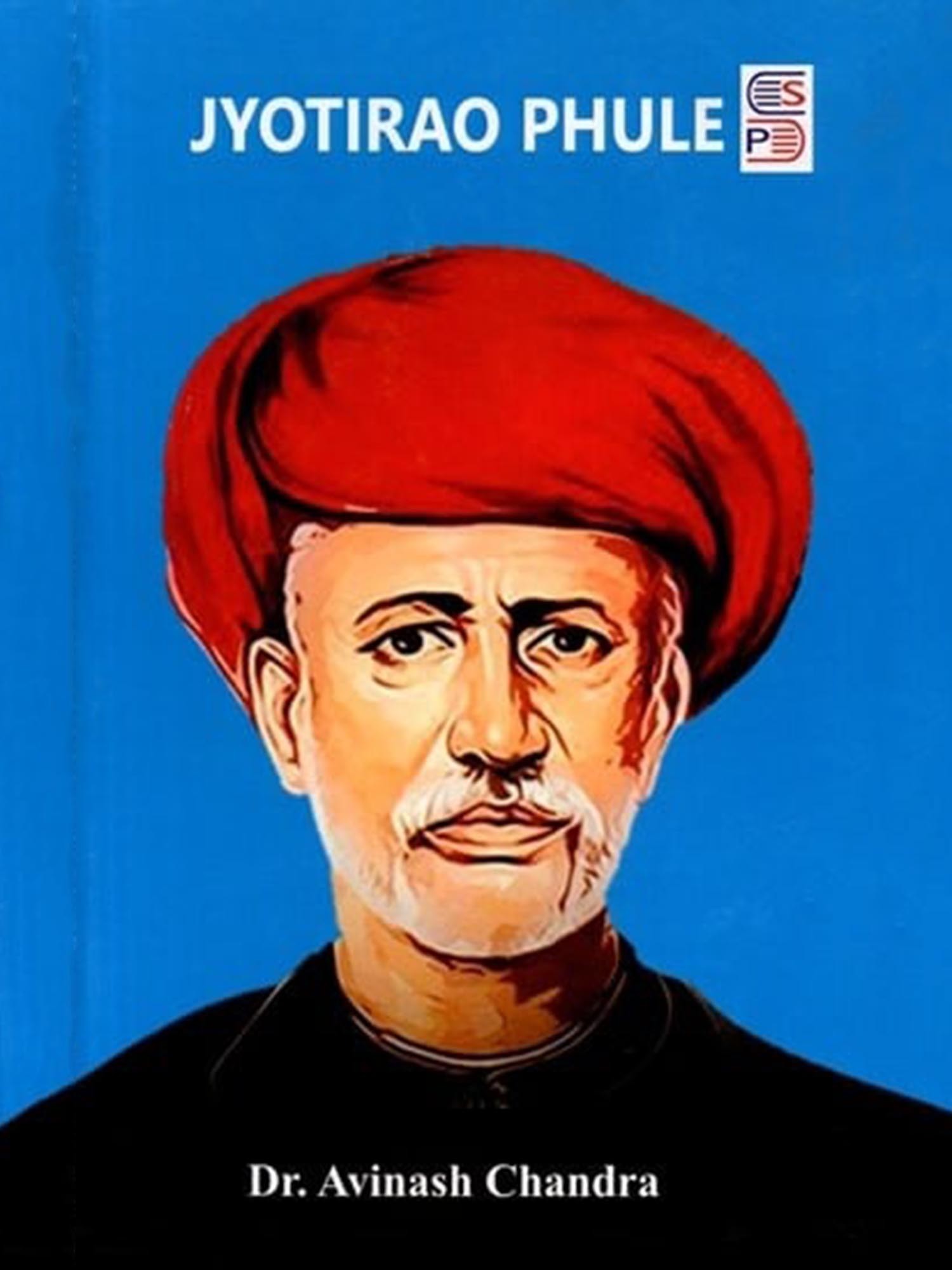
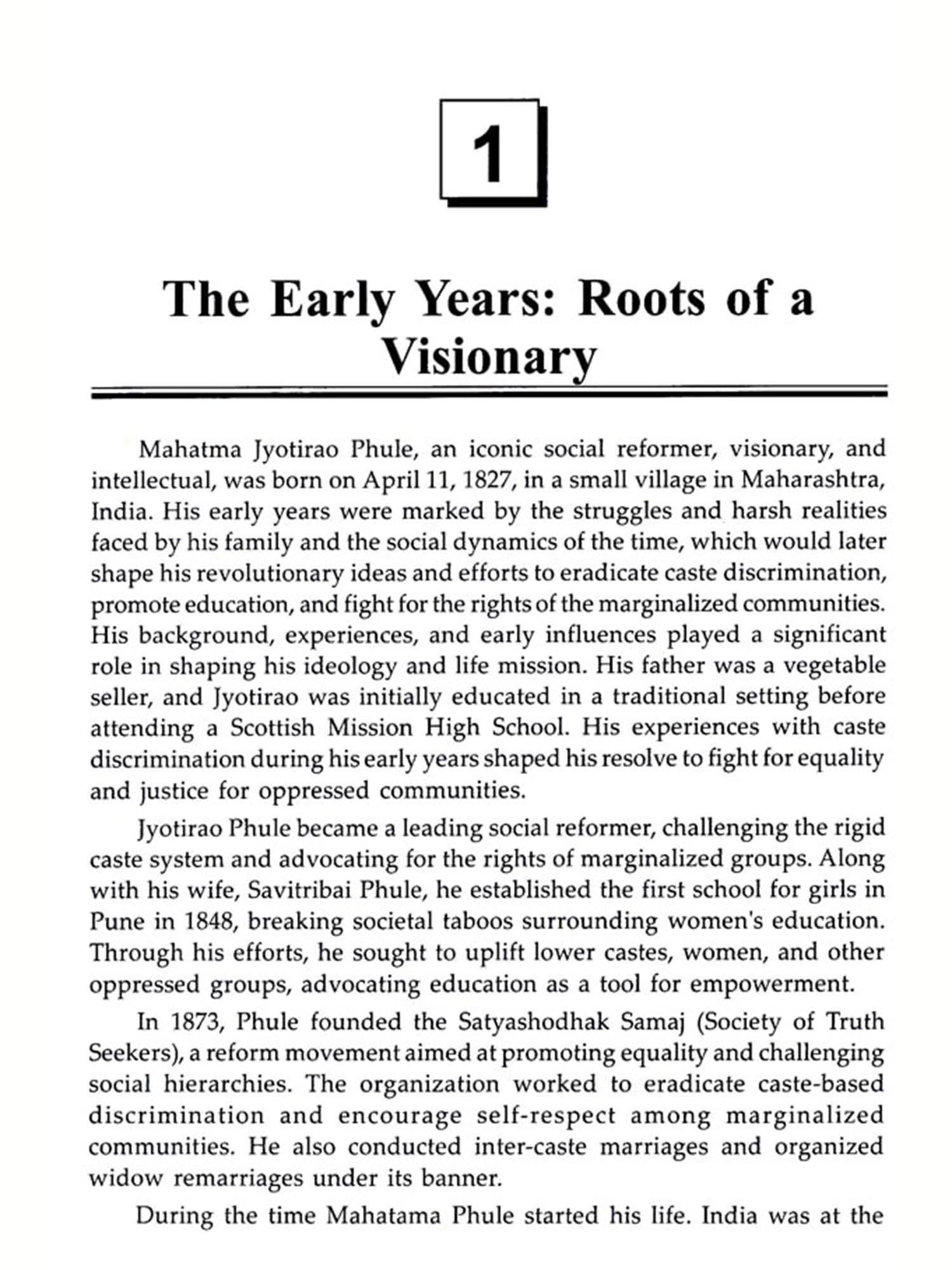
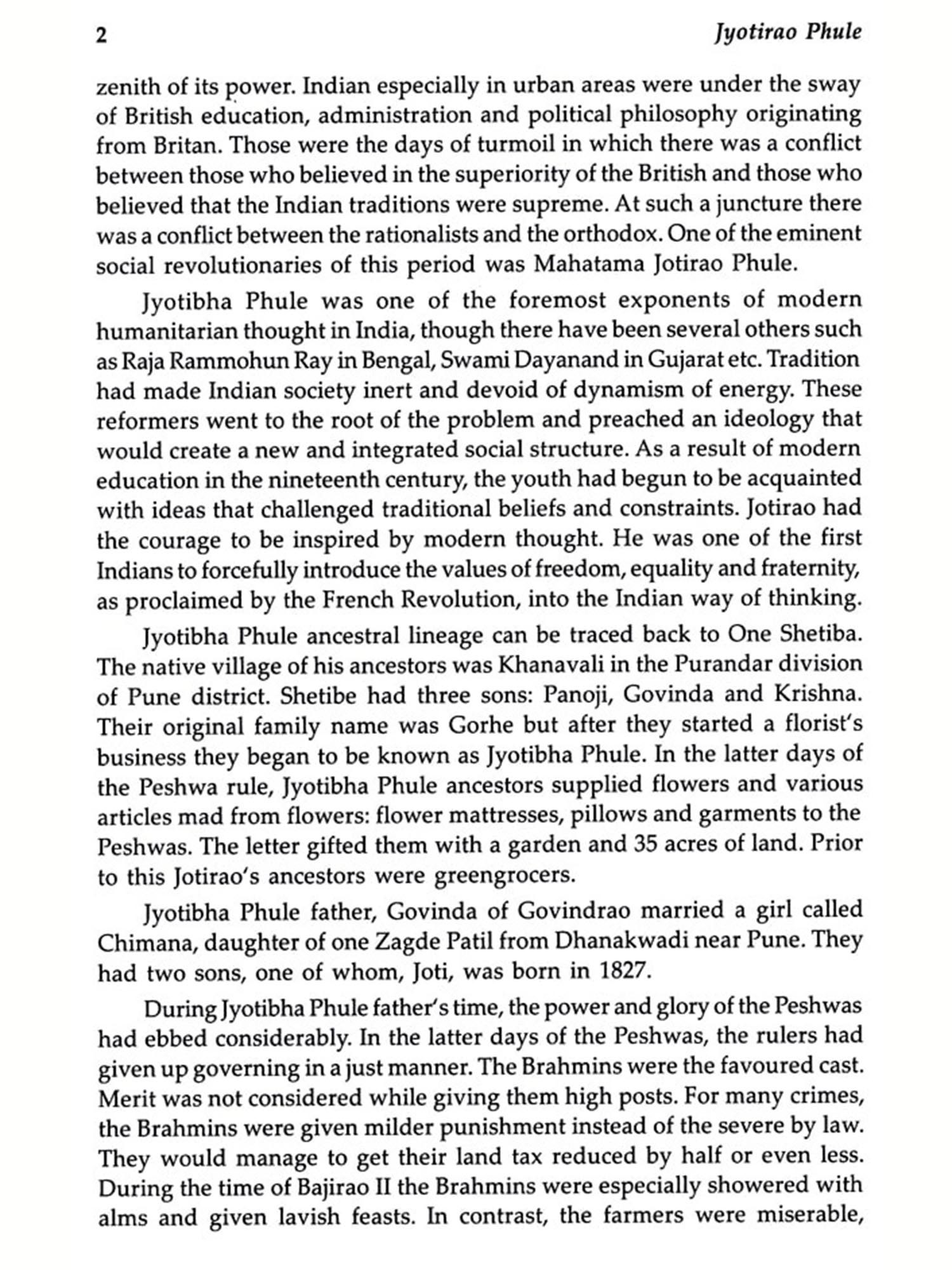
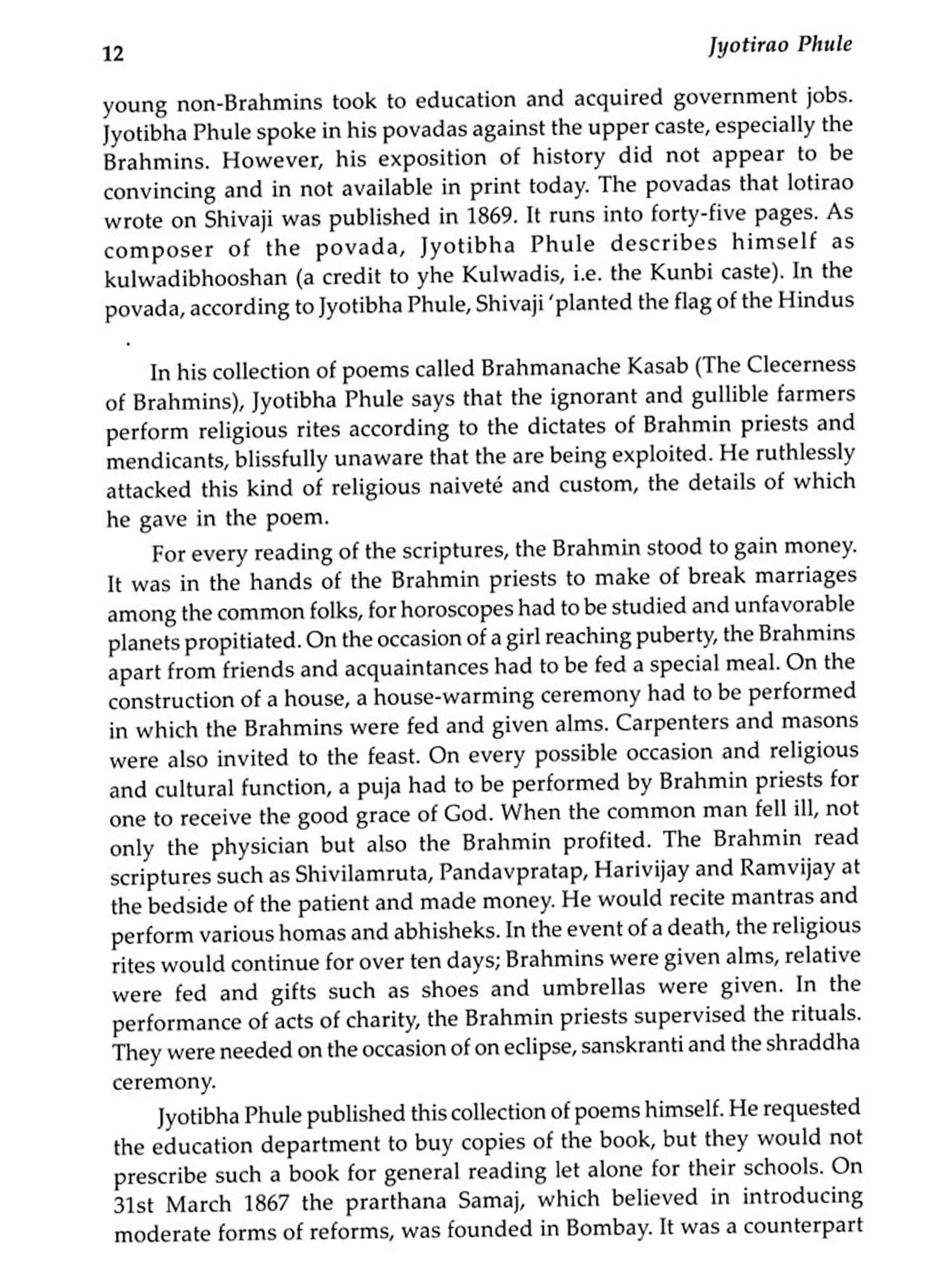
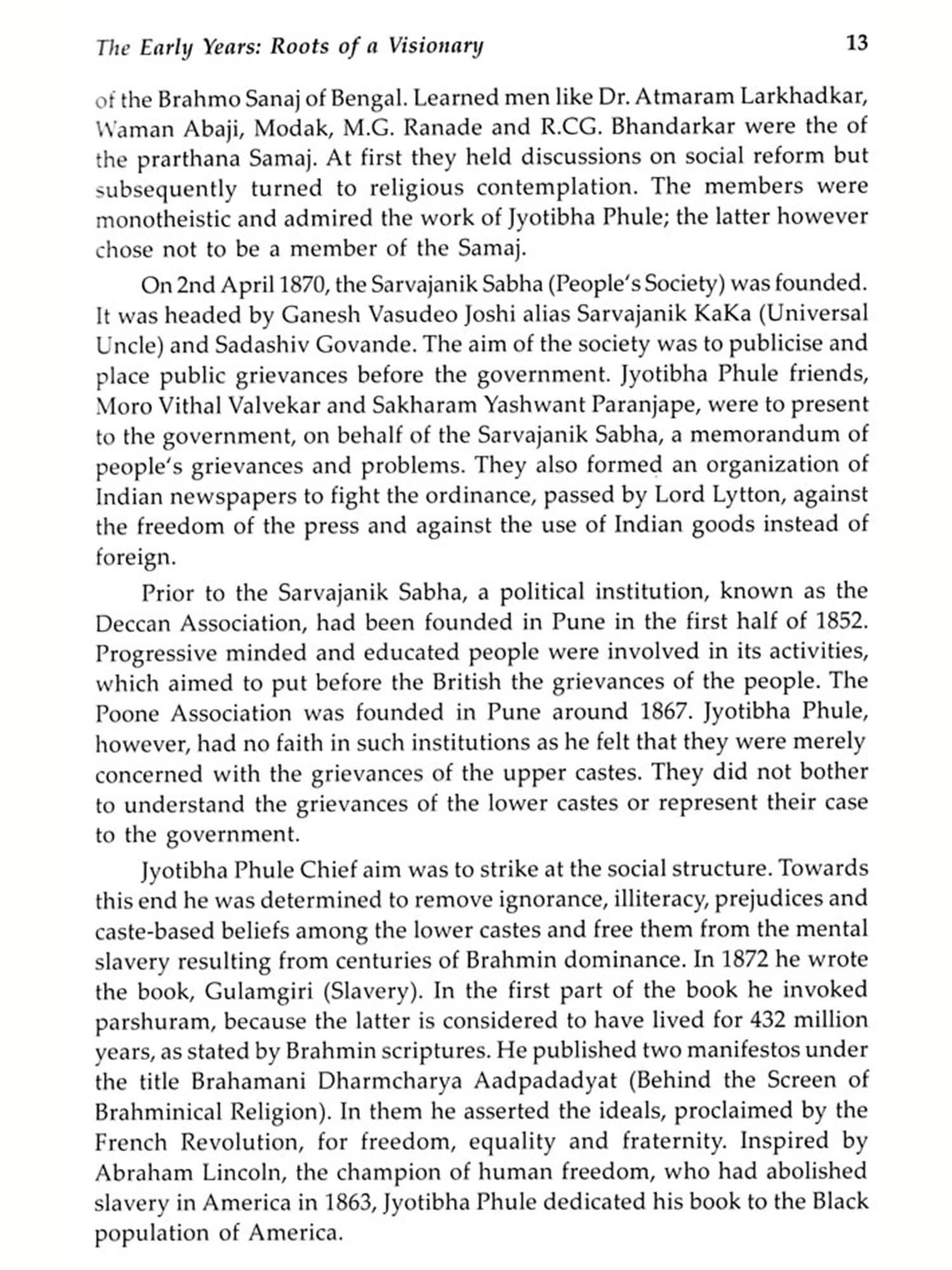
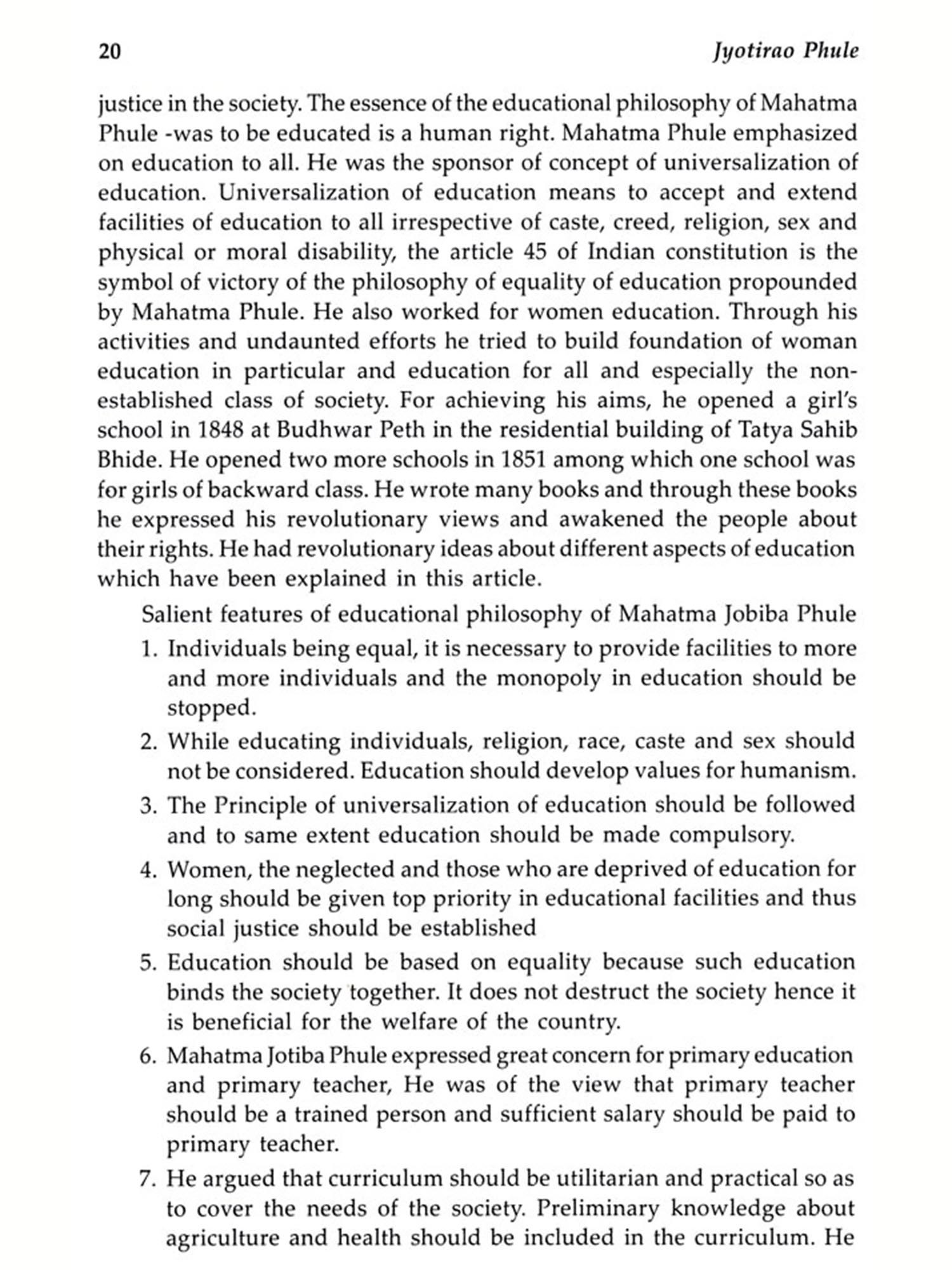
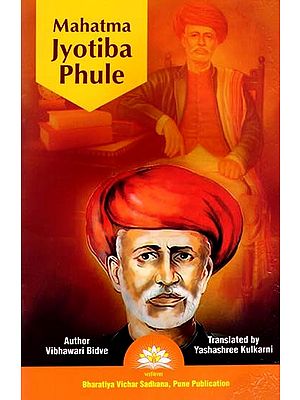
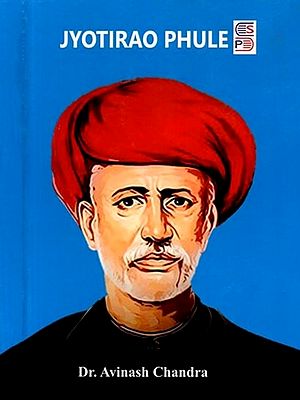
Jyotirao Govindrao Phule was born on April 11, 1827, in
Pune, Maharashtra, into a family of the Mali caste, which was considered part
of the lower strata in the caste hierarchy. Despite facing discrimination, he
showed remarkable intellectual curiosity. His exposure to progressive ideas
during his education, particularly at the Scottish Mission High School,
inspired him to question the social inequalities ingrained in the caste system,
shaping his commitment to social reform. Jyotirao recognized that education was
the most powerful tool to combat social oppression. In 1848, he and his wife,
Savitri Bai Phule, established the first school for girls in India,
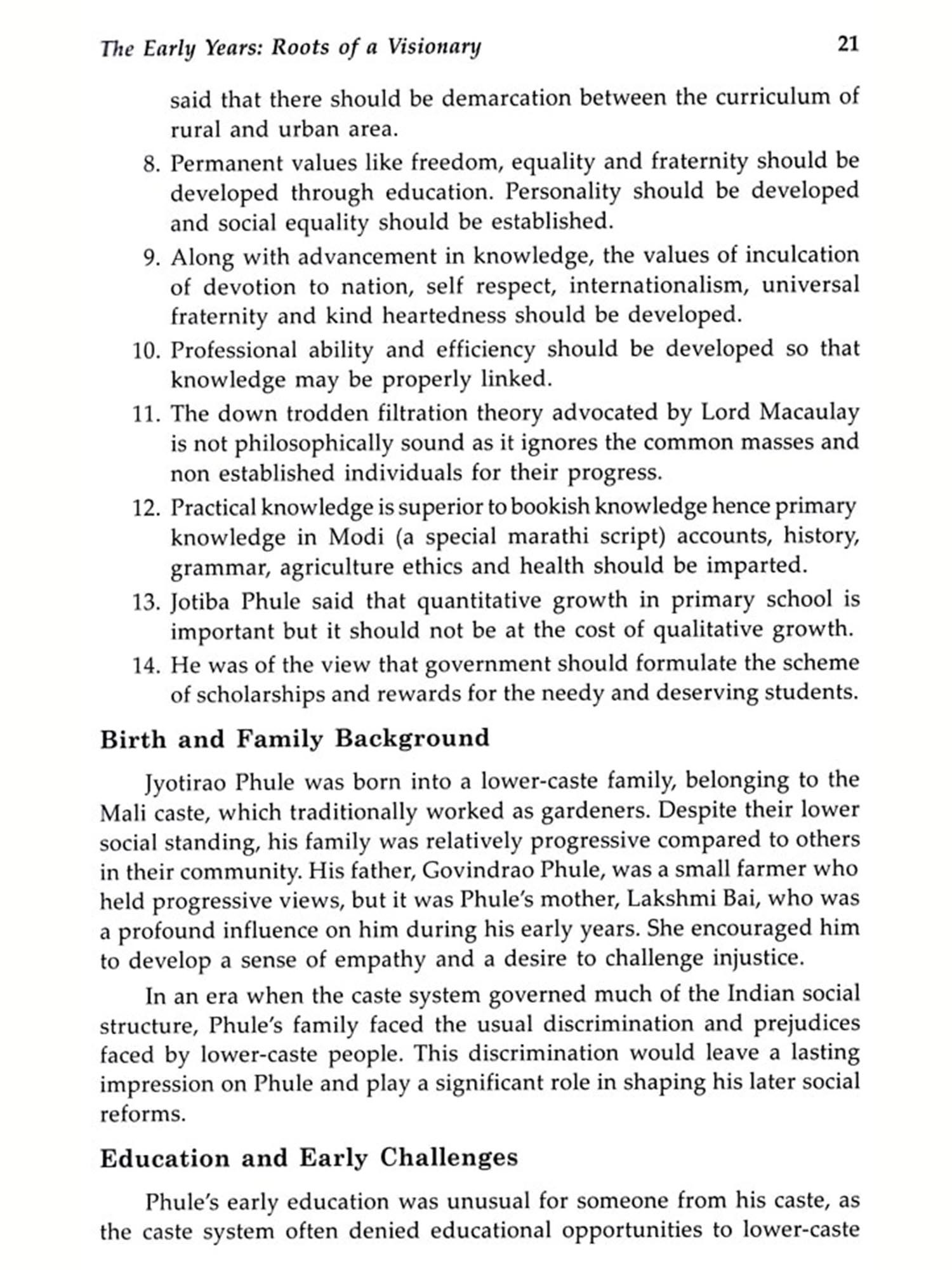
prioritizing the education of women and marginalized communities. He believed
that education could empower the oppressed to challenge exploitation and
reclaim their rights. His efforts were met with resistance, but he remained
steadfast, opening several schools and advocating for inclusive education. Jyotirao
was a fierce critic of the caste system and Brahmanical dominance.. He believed
that caste oppression was perpetuated through religious and social customs. His
seminal work, Gulamgiri (Slavery), critiqued the caste system and exposed its
exploitative nature. He dedicated his life to uplifting Dalits and other
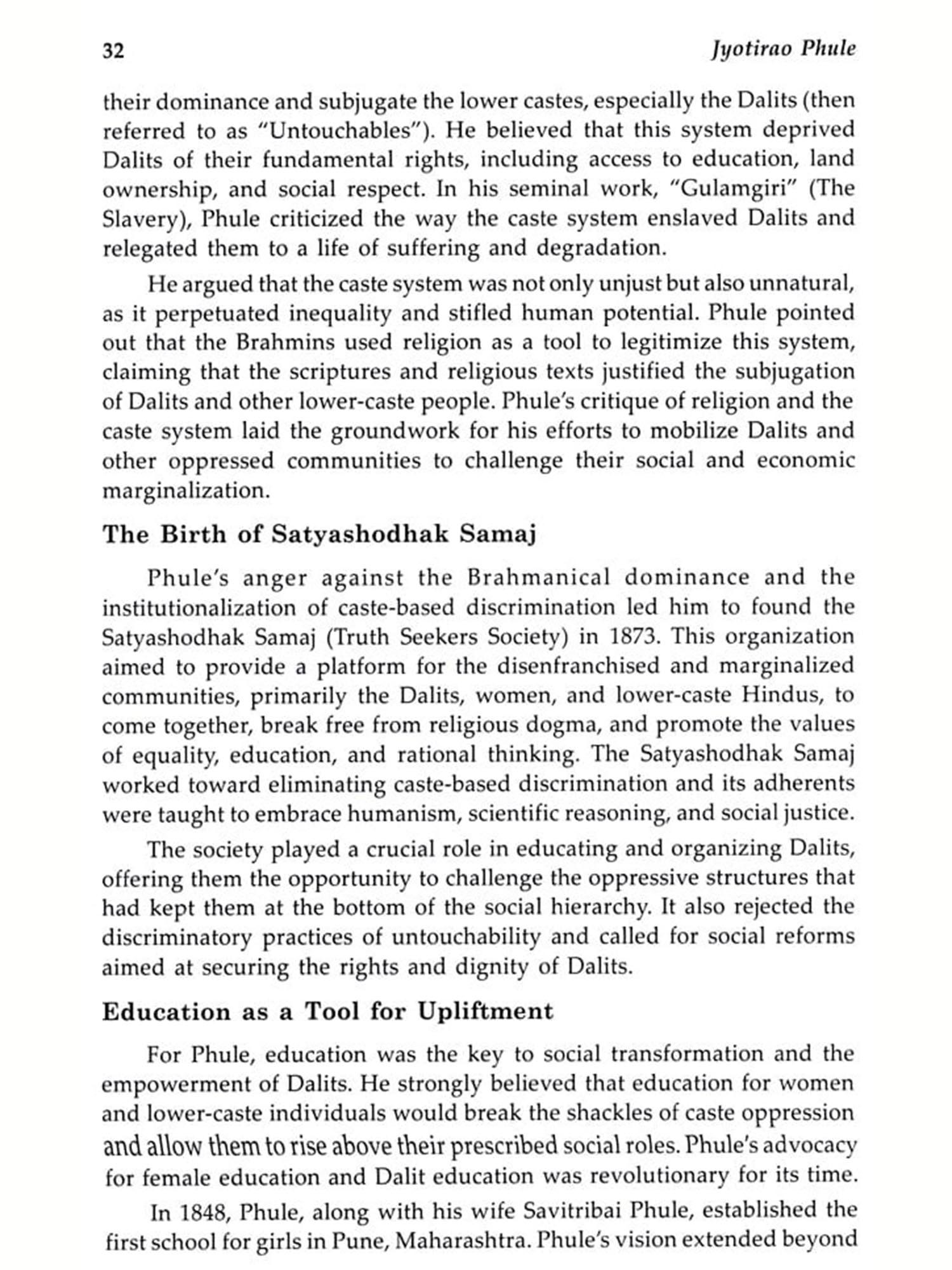
marginalized groups, promoting dignity and equality. In 1873, Jyotirao founded
the Satyashodhak Samaj (Society of Truth Seekers) to promote equality and
social justice. The organization focused on eradicating caste-based
discrimination, empowering women, and encouraging rational thinking. The Samaj
provided a platform for oppressed communities to unite and demand their rights,
marking a significant step in India's social reform movement. Jyotirao Phule
was a visionary advocate for women's rights in a deeply patriarchal society. He
opposed practices like child marriage, sati, and the exploitation of widows. He
and Savitri Bai provided shelters for widows and encouraged widow remarriage. Jyotirao
also spoke against the denial of education to women, emphasizing their role in
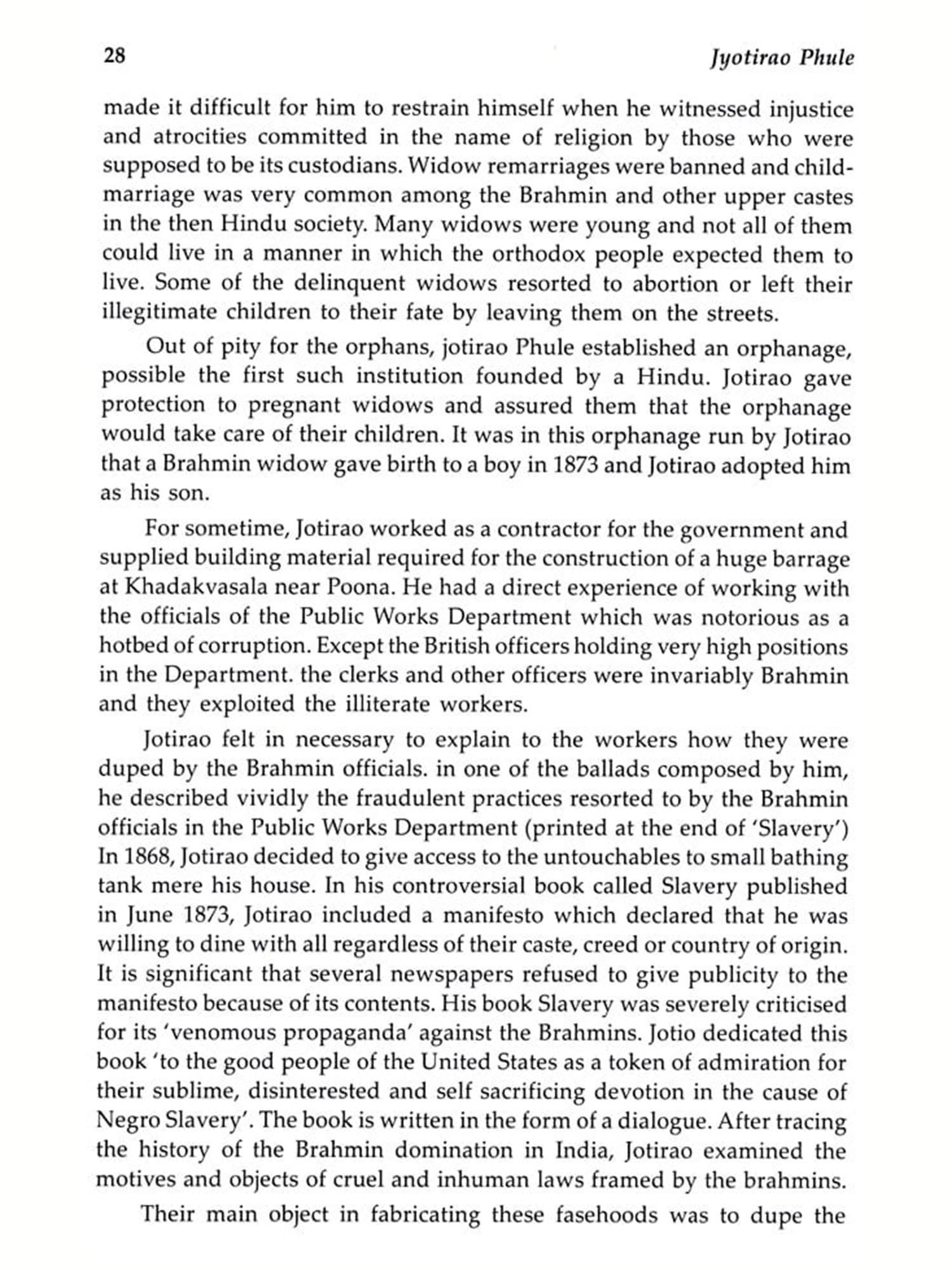
shaping an equitable society. A prolific writer and thinker, Jyotirao used his
works to spread awareness about social injustices. His notable works, including
Gulamgiri and Shetkaryacha Asud (The Cultivator's Whipcord), highlighted the
plight of marginalized served as a call to action for social reform and
inspired future generations of activists. Jyotirao Phule's contributions laid
the foundation for many progressive movements in India. His relentless fight
against caste and gender discrimination earned him the title of
"Mahatma." He remains a beacon of inspiration for those advocating for
equality and justice. Through his transformative work in education, social
reform, and activism, Jyotirao Phule created a legacy that continues to shape
India's struggle for an inclusive and equitable society. Through this book, we
explore the remarkable journey of Jyotirao Phule, whose vision and activism
challenged societal norms, paving the way for equality, ustice, and education
in India.
Jyotirao Phule (1827-1890) was a prominent social reformer,
thinker, and activist who played a pioneering role in championing the rights of
marginalized communities in India. Born into a Mali caste family in Pune,
Maharashtra, Jyotirao experienced caste-based discrimination firsthand, which
shaped his lifelong mission to fight against social inequality and oppression.
Recognizing the transformative power of education, he and his wife, Savitri Bai
Phule, started India's first school for girls in 1848, focusing on educating
women and the oppressed castes. Jyotirao was a fierce critic of the caste
system, which he saw as a tool of oppression perpetuated by religious and
social norms. He advocated for the upliftment of Dalits, women, and other
marginalized groups, using education and social reform as tools to dismantle
entrenched inequalities. In 1873, he founded the Satyashodhak Samaj (Society of
Truth Seekers), a platform to promote social justice, equality, and rational
thought. He was also a prolific writer and thinker, with works like Gulamgiri
(Slavery), where he critiqued Brahmanical hegemony and championed the cause of
social and economic justice. Jyotirao's relentless efforts laid the foundation
for social reform movements in India, earning him the title of
"Mahatma" for his profound contributions to society. This book delves
into the life and transformative work of Jyotirao Phule, a pioneering social
reformer who fought against caste oppression and championed education for all.
Dr. Avinash Chandra Ph.D in History, qualified JRF/NET is
currently working as an Associate Professor and HoD Deptt of History at Janki
Das Mahavidyalay Manhari under VKS University. He did his M.A. in History from
Delhi University (Ramjas College)and Ph.D.from.JNU Delhi.He appeared for UPSC
Personality Test. He joined the college in 2004.He is the Member of Indian
History Congress. He had attended twenty eight national and Seven International
seminars and presented Research papers. He has several articles to his credit
published in reputed journals recognized by UGC.


Send as free online greeting card