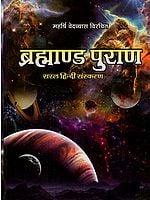
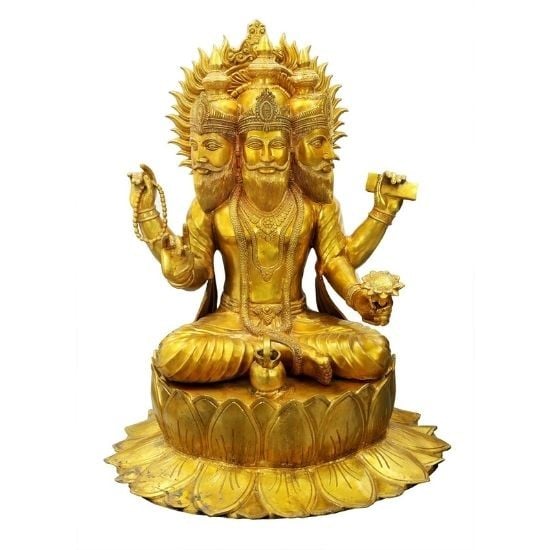
The Brahma Purana (Sanskrit: ब्रह्मपुराण; Brahma-Purana) is one of the eighteen
major PURANAS of Vaishnavi Hindu texts. Brahma Purana is a text related to Lord
Brahma who is equipped with Rajogun, therefore, this is also known as Rajas
Purana.
☀ Balam Bhatta has refered it as Adi Purana (first Purana) in his commentary on the Mitakshara.
☀ Also known as Saura Purana, because it includes many essential episodes related to Surya or the Sun God.
☀ The text is divided into Purva-Bhaga (former part), Uttara-Bhaga (later part) and a concluding part, known as Brahmottara Purana.
The first part gives importance to Lord Vishnu and The second part, to Lord Shiva.
☀ Altogether, the existing manuscript Brahma Maha Purana comprises of 245 chapters containing almost 10000 verses.
☀ It covers Cosmology, Mythology, Genealogy, Geography, ManaVantara (Cosmic Time Cycles), and other topics such as the human race, deity, animal, earth, hell, heaven, temple, pilgrimage, etc.
☀ Just like other Puranas, Brahma Purana is also in dialogue form with Brahma himself narrating the stories to Daksha Prajapathi and Maharishi Narada.
☀ Narada told this story to saga Veda Vyasa who did the writing work (Sanskrit).
☀ From Vyasaji, his disciple Romaharhana(Sut Ji) learned and published it in a conclave of Rishies in the Namisharanya forest.
☀ In this Purana, Lord Brahma is very much praised and mentioned as a supreme god equivalent to Lord Vishnu and Shiva.
Creation
The emergence of
Gods :
Before the start of creation
work, the entire universe was covered with full of darkness. At that time, a
shining light appeared in the center of the universe, Lord Vishnu and Shiva
emerged from that light.
And after a few years, as per the wishes of Lord Vishnu, Lord Brahma was born out from the navel of Lord Vishnu in the water.
Universe, Nature, etc :
Obeying the orders of Vishnu,
Brahma started his creative work. This Purana mentions creation of this universe several millions of years ago.
Water :
The self-existent God Narayan created the water. First of all, God had a rest on the water. God released his power in the water. In the beginning, there was water everywhere and the Brahman (Narayan) slept on this water in the form of Vishnu.
Since water is called Nara and Ayana means a bed, Vishnu is known as Narayana. In the water, Brahma was born. Since he created himself, he is called Swayambhu.
☀ Brahma created heaven (Devlok) and earth (Bhoolok).
☀ the Devtas and Demons
☀ Skies, directions, Kaal (Time), Mind, Speech (language)
☀ Senses, the Kama, Krodha, and Rati were created in both heaven and earth.
Manasputras :
From the powers of his mind, Brahma gave birth to eminent divine sons namely:
☀ Atri, Angira, Pulastya,
☀ Pulaha, Kratu,Vashishtha,
☀ Narada, Daksha, Devar, and Marichi.
All of them are also known as the Manas putras. After the creation of Manasputras,
☀ The birth of Shiva’s Rudragans, Sanatkumara has been mentioned.
☀ Lightning, thunderbolt, clouds, bow, Khadga, Parjanya, etc. were created.
Vedas
Brahma is the creator of the four Vedas as well. He is more popularly mentioned in the ancient Vedas and Puranas, and he is considered the main Vedic deity. The hymns of the Vedas were created for the performance of the Yagyas.
Apart from the
creation as mentioned above, it also contains the details as follows:
Brahma Temple :
Brahma Temple located at Pushkar in Rajasthan(India) is the only temple dedicated to Lord Brahma. Every year during the festival days, people would gather in large numbers to worship the creator god and our divine father, Lord Brahma. By worshipping Lord Brahma, the childless couple would be blessed with noble children.
Prajapatis :
Prajapati was the son of Daksha. Here the story of Sati – is interesting to be mentioned in short, as follows:
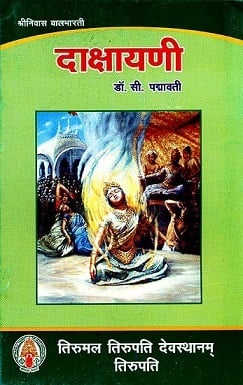
दाक्षायणी: The Story of Shiva and Sati
☸ The legend concerns the Goddess Sati, daughter of Daksha and wife of Shiva.☸ When Daksha held a great Yajna and insulted Shiva by not inviting Shiva and Sati. Sati took offense, came to the Yajna Mandap uninvited, and there committed suicide.
☸ later she was born as Parvati, daughter of Himalaya.
☸ There is a description of Shiva- Parvati marriage in a spectacular manner.
☸ Also dedicated to the daughters of Daksha and their husband Kashyapa and the birth of various creatures.
☸ Prachetas and Marisha.
Surya and Suryavansh :
☸ Lokeshwar has been described as the virtuous lineage of Lord Surya, who is the destroyer of Mahapatakas.
☸ Surya Mahatamya- Surya is considered a Vedic deity, and he is the one who gives light to the entire universe, removes the darkness, and ignite the divine light in our lives as he is the only living God.
Konarka Sun Temple
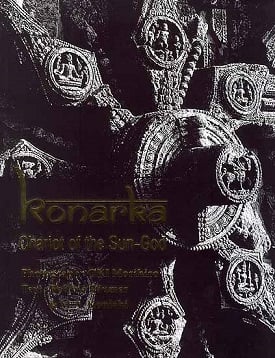
Konarka [Chariot of the Sun-God]
☸ There is an ocean to the south of Bharatavarsha. On the shores of this great ocean, there is a land named Utkala (present Orrisa).
☸ In the land of Utkala, there is an image of the sun (Surya) known as Konaditya or Konarka. The image of Konadiya is so wonderful that even if one gazes at the image, all sins are forgiven.
☸ All around the temple, there is sand. nevertheless, many trees grow around the temple.
o Worship :
i. The
best time to worship the sun there is at the time of sunrise.
ii. One
has to face the east and draw a lotus flower on the ground with red sandalwood.
The lotus flower must have exactly eight petals.
iii. A
copper vessel has to be placed at the centre of the flower and filled with
paddy, sesame, water, red sandalwood, red flowers, and sacred grass.
iv. Pray
to Surya to descend on the lotus flower that has thus been drawn.
v. If one worships Konaditya according to these prescribed rites, the sins of the seven preceding generations are forgiven.
Brahma once recounted to the sages the one hundred and eight sacred names of Surya, listed in The Brahma Purana.
o The Chandravansh;
o The story of Rama-Krishna from the ancestry of Yayati/ Puru;
o Krishna – Leela;
Due to the detailed explanation of Lord Krishna in the form of Brahma, it is famous by the name of Brahmapuran.
o Formation of Bharatvarsha
o The rendering of the Sankhya principles - the guidance of Brahmavad
o Salvation-dharma- the method of yoga :
o The details of Yamlok;
o Shradhkarmas of ancestors
o Description of Varnas and Ashrams,
Manvantras/ Manu- Lineage:
The universe did not
develop due to Rishi Bhava, so Brahma thought of creating Maithuni.
i. divided
himself into two parts.
ii. The
man and woman were created from the southern left part.
iii. Their
initial names were Manu Swayambhuva and his wife Satarupa - and the birth of
their descendants.
iv. It
was this Manu who developed the Maithuni world.
v. The
form of fourteen Manvantaras was accepted in the name of this Manu.
vi. Dedicated
to the origin of Vaivasvata Manu, his descendants, Vajranabha, etc
Prathu- Lineage :
i. A
son named Veer was born to Manu and Shatrupa.
ii. Prithu
was born with a bow and armor coil.
iii. King
Prithu made the earth blissful and fertile with his hard work.
iv. The
earth has since been called as Prithvi.
v. Due
to his hard work and public interest, people started considering him Vishnu.
vi. Pururava
was born.
vii. Manu handed over the central part of the earth to his best son Ikshvaku.
Dhruva:
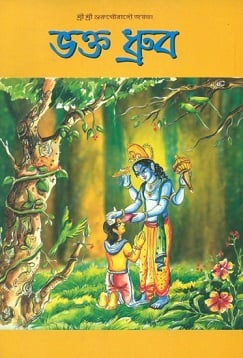
i. The details about the Vishnu devotees like Dhruva, Markandeya, and Prahalada are mentioned in this holy text.
ii. Dhruva’s
penance as advised by sages - pleased god Vishnu.
iii. by reciting the mantra - ‘OM NAMO BHAGWATE VAASUDEVAAY’
iv. Received a boon from Lord Vishnu, Dhruv occupied a fixed position ‘Dhruva Tara’ in the northern sky.
v. that even ‘Saptarishis’ go
around him.
vi. That pivotal position of Dhruv would continue even in the ages to come.
Prahalad & Narsingha Avatar:
o Hiranyakashipu and Hiranyaksha were born.
o The Yakshas - the birth of Gandharvas.
o The conflict between the gods and the Demons.
o Salvation-dharma- the nature of Brahma- the method of yoga :

(attainment of salvation
has been highlighted by explaining the philosophy of Samkhya and Yoga). The
formulation of Yogas,
Trishnku:
in short, it is mentioned as follows :
i. King
Satyavrata did not follow the righteous path. King Trayaruni’s chief priest was
the great sage Vashishtha.
ii. Vishvamitra
was another great sage.
iii. Due
to a long spell of drought, there was a devastating famine in the kingdom.
iv. Satyavrata
had however taken care of Vishvamitra’s family when the sage was away on
his Tapasya.
v. Vishvamitra,
pleased with the care taken for his wife and children, granted him a boon.
vi. Trishanku
desired the boon that he wished to go to heaven in his own physical body.
Thanks to Vishvamitra’s immense powers, he was on the way to heaven.
vii. When
there was famine everywhere, Satyavarata stole sage Vashishtha’s cow.
viii. He
killed the cow and served the meat to Vishvamitra’s sons, apart from eating it
himself.
ix. Vashishtha
was in a terrible rage when he got to know about this incident.
x. Satyavarata
had committed three sins (shanku) - Firstly, he had angered his father Trayaruni.
Secondly, had stolen and killed a cow. Thirdly, had eaten beef, forbidden meat.
xi. Because of these three sins, Satyavrata has
eternally been cursed to henceforth be
known as Trishanku.
xii. Vashistha cursed Satyavrata to remain hanging midway in the sky (neither to heaven nor to return to the earth).
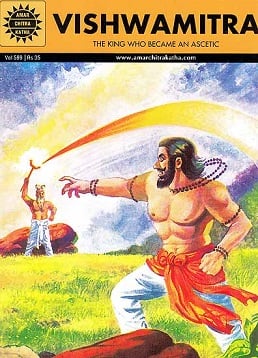
Vishwamitra (The King Who Became An Ascetic)
In this Purana the
details about the following are also contained :
Sagara - the Unique Karma Bhumi in Jambudwipa and an outline
of other places in the world - Paatalaas (Bilwa Swarga) Loka - Ordeals of
hells(Narakas) and Possibilities of Atonement - Bhur-Bhuva-Suvaadi lokas and
Sishumaara Chakra - Avatarana - Dwadasadityas - Indradyumna - Purushottama
Kshetra.
Markandeyopakhyana-
Darshanaas of Pralaya Bala Mukunda - Sweta Madhava and Matsya Madhava Mahatmyas
- King Bali - sage gautama. - Theertha Mahatmya and Puja Vidhana-
Kandopaakhyana - Indra and Viswamitra - Kubera - Garuda and Maninaga -
Vriddhagoutama - Sage Dandhichi donating his bones for Vajrayudha - Sage
Pippilada - Nageshvara - Sage Veda and hunter Bhilla - The Chandala and the Brahmarakshasa -
Principles of Righteous Way of Living(Sadaachaara Varnana) - Phalashruti of
Brahma Purana.
APPEARANCES :
Brahma Purana beautifully
expresses the gracious appearance of lord Brahma, his consort Maa Sarasvati, Maa Lakshmi, and lord Vishnu.
APPEARANCE OF LORD BRAHMA:
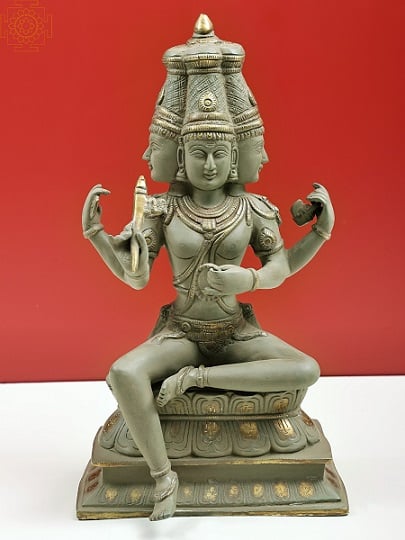
i. According to the scriptures, Brahmaji was born on the lotus that had arisen from the navel of the omnipresent Lord Narayan (Vishnu).
ii. Scriptures describe the appearance of Brahmaji as follows:
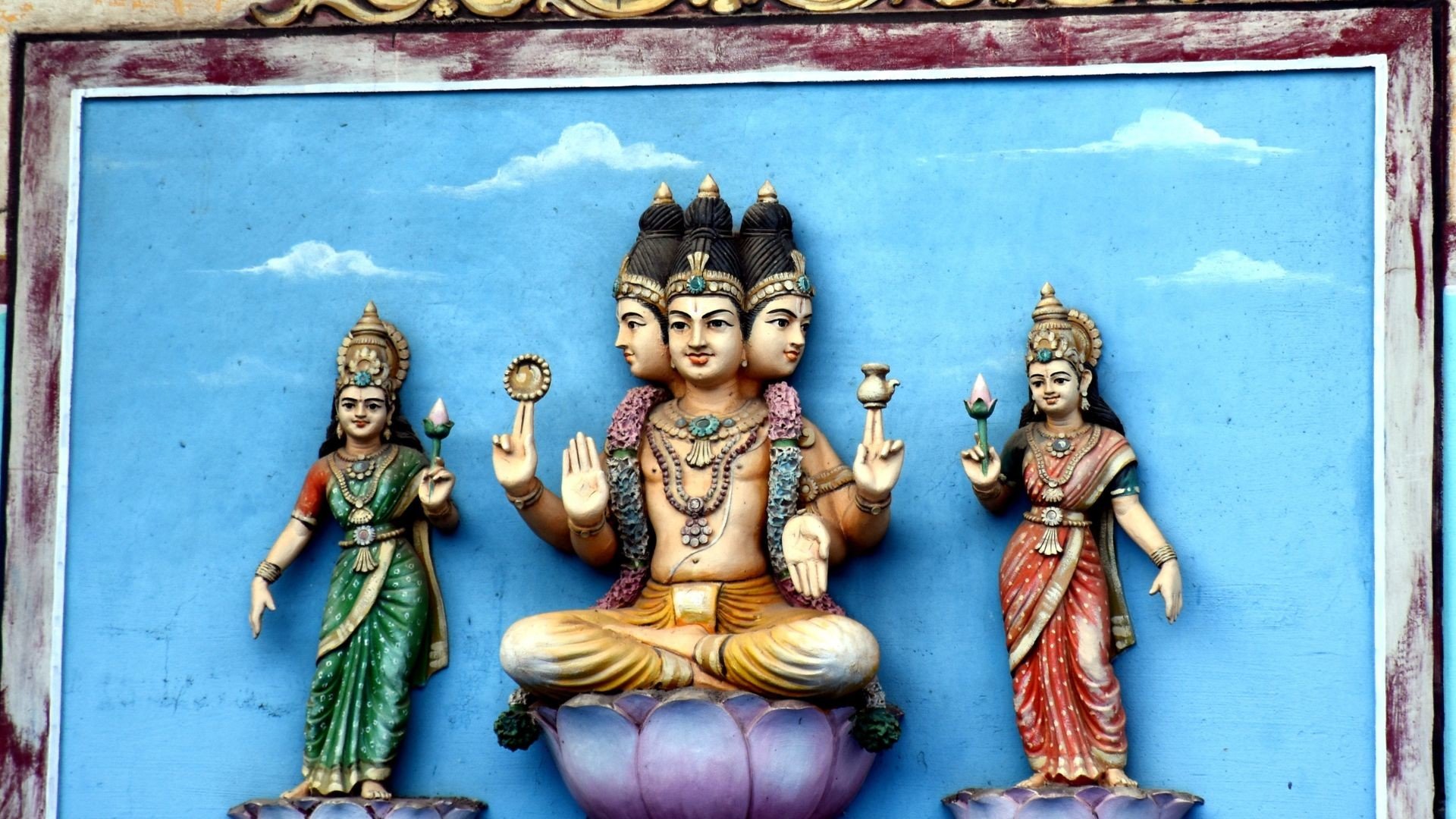
having four heads, holds Vedas, Rosary, Yagyopavita (Sacred thread), and Kamandalu (bowl); wears red clothes and rides a swan. He is none other than Brahmaji, the grandfather of all of us.
(A) Why Brahma has Four Heads?
Brahmaji is shown with
four heads. Besides being the creator of the universe, Brahmaji is an
eyewitness to the deeds of all the creatures as well.
He has to allot the
creatures' various lives as per their deed. Hence the full knowledge of a
creature’s deed is an indispensable precondition before deciding on a living
form for it.
Hence to look around in all directions,
Brahmaji is shown with the four heads.
(B) The white beard ?
Brahmaji is the great-grandfather of all of us. Hence his appearance must match his status.
Since Brahmaji has such
an eternal ancient existence, his appearance must match his eternity, so that
feelings of respect could naturally arise among the people for him.
Hence, Lord Brahma is shown with a white
beard, a sure symbol of longevity.
(C) The Swan as a Vehicle?
Swan( Hansha) is a white bird. God has bestowed it with unique virtues, which can’t be found in any other creatures of the universe.
Its virtue is ‘NEERA-KSHEERA VIVEKA’, that is, if water is
mixed with the milk, a swan is capable of gulping milk only and rejecting the
water.
It symbolizes that people
should absorb only the worthy part of a thing and discard the worthless. Only
then they would be regarded as a doer of good deeds and receive admiration in
society.
(D) Brahma holding Vedas in one hand?
Brahmaji is also shown as holding Vedas. Vedas are the most ancient and pious scriptures in the universe. Even the great deluge (Pralaya) could not destroy the Vedas since almighty Brahma himself protected the Vedas during the deluge.
Vedas have no beginning
and no end, they are Anadi( AMAR- immortal). Vedas also remind
Brahmaji of the previous Kalpa (the grand period that includes all four Yugas).
Vedas teach us that
everything in this world is perishable except the truth, that is God. Hence,
never forget the immortal, eternal, almighty Paramatma.
(E) Rosary in other Hand?
Lord Brahma teaches that human creation is not just for monotonous jobs. keeping the rosary in his hands, Brahmaji reminds one and all, to always evoke and recite the holy name of God in all situations for our wellbeing.
(F) Kamandalu (Coconut-Shell Bowl)?
It is well said in our scriptures that ‘JALAMEV JEEVANAM’ means- water is life. Water is the basic physical element that caused the whole creation to exist. This earth has been born out of water. The coconut shell bowl (Kamandalu) held by Brahmaji, is filled with water, portraying the hassle-free, continuous existence of this universe.
(G) The Lotus- seat?
Lotus also adorns Lord Vishnu and is an essential item to worship Lord Shiva. Lotus shows that despite being born within filth or mud, it remains pure and unstained.
In the same way, all
human beings are born out of filth consisting of passion and illusion. Thus the
lotus seat of Brahmaji imparts that regardless of his origin, the human being
must strive to remain as pure – flawless, and unstained as possible.
In other words, humans must abstain from the passion and illusion of the world despite being surrounded by them.
GODDESS SARASVATI:
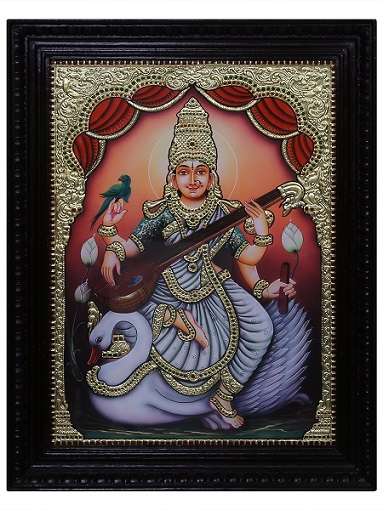
Goddess Of Knowledge Saraswati Tanjore Painting|Traditional Colour With 24 Karat Gold | With Frame
Saraswati means SARAH -
Knowledge, STHANAMYASYAH
ASTITI.
Thus, Saraswati is the goddess who rules all kinds of knowledge, wisdom ,
awareness. Without worshipping her no one can be a learned person. Hence followers
of other religions also worship Saraswati, though the name and appearance may
differ slightly.
Brahma-Purana describes
Maa Saraswati as follows-
Appearance of Maa Sarasvati:
i. Attired
in white clothes - reflect the essence
of Brahma, the supreme power
ii. Holder of Veena (Lyre) and Book
iii. Beaded rosary
iv. The benevolent Goddess is seated on a lotus –
imparting knowledge to mankind
(A) Significance of Book and Veena (Lyre)
Noted sage Bhartrihari has written that without literature and music, a man is not more than an animal.
Hence the book and veena
in the hands of Saraswati teach that if humans wish to do away with their
ignorance and illiteracy, knowledge of literature and music is a must for them.
Hence, Goddess Saraswati is shown with a book
and Veena is the symbol of literature and music respectively.
(B) Beaded Rosary, swan, and Lotus
The ultimate goal of knowledge is salvation. Salvation is possible only by unification with God. the rosary is a means for an alliance with God.
But why a rosary of white
beads only? It is so because white beads depict spotless purity. Thus it
teaches us to rise above the blemishes of passion, anger, greed, ego, lust,
envy, enmity, etc., and make our mind as spotless as the beads.
Similar teachings are taught
by the lotus seat and swan vehicle of the Goddess Saraswati.
Lord Vishnu:
Worship of Lord Vishnu is
extremely essential for those who wish to receive supreme salvation. A common
rule of worship is that the worshipper must essentially have the virtues of the
worshipped. Hence, Lord Vishnu gives his virtues through physical appearance.
Appearance Of Lord Vishnu
Description of his infinite form in reclining (stretched- out) posture:
Lord Vishnu has a
peaceful body (postures) - rests on Sheshanaga (the mighty Cobra serpent ) -
has a lotus in his navel - is the base of the world - is like the sky - has a
colour like a cloud - has eyes like the lotus - is seen by yogis in their
meditation - is the only Lord of all the three Lokas (Worlds).
The first virtue of Lord
Vishnu is his peaceful appearance. Hence his worshipper must also acquire a
peaceful appearance, have peace within. This is also the need of the hour in a
world that is presently full of conflicts, disputes, tensions, and all that
could pose a potential danger to the earth itself.
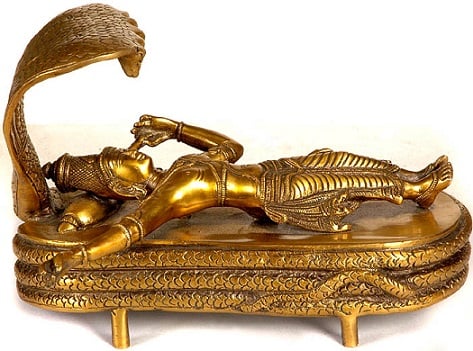
Sheshshayi Narayana Vishnu in Brass | Handmade | Made In India
(A) Why does Lord Vishnu rest on Sheshanaga?
i. Scriptures
describe Sheshanaga as Kala also. Sheshanaga is supposed to be a highly
poisonous snake.
ii. But
Lord Vishnu is resting on him without fear or worries. It teaches us not to
lose patience even while facing the Kala itself,
iii. One must strive to ride on it, and only then can one remain in a peaceful appearance. If fear overpowers us, it may smash our peace.
(B) Why is Lotus in the Navel?
i. The
third virtue of Lord Vishnu is that he bears a lotus on his navel, hence he is
also known as Padmanabham.
ii. From
the lotus rises Lord Brahma. Brahma has only royal virtues (Rajoguna).
iii. Thus
to remain in peaceful form , Lord Vishnu has discarded all the royal (Rajoguna)
virtues through his navel.
iv. Similarly,
he has made the snake, which has Tamoguna (virtue of darkness), as his seat.
Thus only Satoguna (Virtue of the truth) remains with him, and God thus
acquired the form of Shantakaram, peaceful.
v. Hence, if a worshipper wishes to be in peaceful form, he must first discard the virtues of royalty and darkness.
(C) Why does Vishnu stay in the Sea of Milk?
All the oceans are mammoth deposits or locations of Saline water. How then it encompasses the sea of milk? A stanza of Chanakyaneeti enlightens it thus :
i. God
Vishnu is known as VISHVAMBHAR (feeder of the world),
so one need not to worry about survival.
ii. In
case of his non-existing, then where from the milk would be produced in the
breasts of a mother before the child's birth? Thus god has already arranged the
complete food, i.e; milk for the newborn baby.
iii. It
is clear from the above, that Lord Vishnu assumes different forms only to feed
all the creatures of the world. Milk is one of these different forms.
iv. According
to another principle of the scriptures, God is present in every grain. Hence he
is present in the milk also.
(D) Reason for holding the Wheel
i. The
famous Sudarshana Chakra (wheel) is whirling on the finger of Lord Vishnu.
ii. Through
this wheel, God teaches humankind that the cycle of the universe is whirling at
his will.
iii. If
anybody tries to go against his will (i.e. wheel) or gives up religion and
begins to behave otherwise, he would be punished severally.
(E) Reason for holding the Conch
i. White
color and sound are the main virtues of the conch.
ii. Through
the colour of the conch, God Vishnu teaches us to follow the path of the truth.
iii. The sound is like a warning call that if the path of truth is not followed, the defaulter would be opposed and punished.
(F) Purpose of Kaustubhamani
Kaustubha is the best jewel among all the gems. It signifies virtues of gentleness, wisdom, virtue, etc. The person will feel the eternal light in his life, desired unification with God, and ultimate salvation.
(G) Why does Lord Vishnu hold a Mace?
Mace is a weapon that shows and dares for physical strength. With the mace, God warns anti-social and wicked elements that if they try to violate the sanctity of religion and torment his devotees, god would not spare them.
(H) Why is Garuda (Eagle) the Vehicle of Vishnu?
Garuda (eagle) is the king of the birds. It is the most dreaded and fastest among the birds. Thus God assures his devotees to be fearless because in case of any mishap he will reach them in no time.
Goddess Laxmi
Appaearance Of Goddess Lakshmi
Depicting as Goddess Lakshmi (wealth) seated pressing feet of stretched –out (resting)Lord Vishnu on Sheshnag.
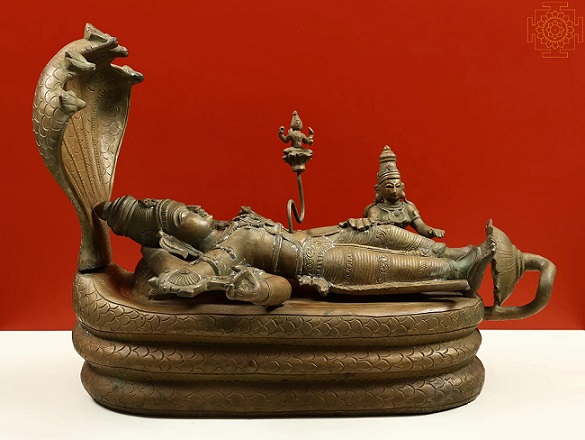
(A) Why Goddess Laxmi presses the feet of God?
i. Goddess
Lakshmi presents an example of an ideal spouse before the world. The supreme
duty of a woman remains in the service of her husband.
ii. The second aspect of the message is- the people who want to be rich and wealthy, must devote themselves to the feet of Narayana, for Lakshmi (Goddess of wealth) is to be found there and nowhere else.
(B) Why is the owl the vehicle of Laxmi?
i. The
owl is the vehicle of the goddess Lakshmi. An owl can see only during the
night. Hence, Lakshmi makes trips to those devotees who worship that Goddess
only, on her vehicle owl.
ii. Whereas,
in the case of devotees who worship Lord Vishnu first and thereafter Lakshmi,
Then she visits those devotees with Vishnu riding on his vehicle Garuda.
iii. It also implies that at places where black money is prominent wealth, Lakshmi rides over an owl. Since the owl can see only in the darkness, symbolizing ignorance, lack of morality, black money, and misdeeds.
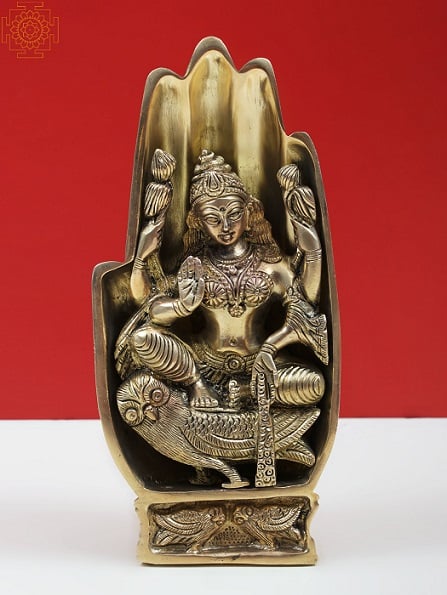
Brass Goddess Lakshmi Carved Inside Hand Sitting on Owl
FINALE :
o Our scriptures mention that the God who keeps an account of the numerous deeds of those countless creatures and arranges for their lives is called Brahma.
i. A
brahmin who listens to a recital of the Brahma Purana becomes learned,
ii. A Kshatriya becomes victorious,
iii. A vaishya becomes rich and
iv. A shudra achieves happiness.
o Thus anyone who listens to the recital faithfully attains all his wishes. The fruits of listening to such a recital are superior to visiting the holiest of Hindu Tirthas( pilgrimage places) or performing the supreme of Yajnas.
o It is also mentioned that the secrets of the Puranas should never be revealed to atheists who did not believe in God.
o The Brahma Purana describes that the entire universe is covered with full of illusion, and to come out from that illusion, Brahma puts us to develop Bhakti for god to generate righteous, moral habits in our life.
Although Lord Brahma is not the doer- he is in the cycle of Birth and Death. Even then
He is the donor of boons
and fulfils the wishes of the devotee impartially whomsoever he may be, the
divine devas or the demons. He could be worshipped by placing his picture in the
Puja room, and chanting his mantra, “OM SRI PARAMA PURUSHAYA
BRAHMA DEVAYA NAMAHA”, to get all kinds of prosperities in our life.